
Casinos That Accept Solana UK 2026 — Offshore Sites, Fees and the Risks
 Available in GB
A UK player looking for a Solana casino in 2026 runs into a regulatory brick wall and a maze of conflicting casino lists. The UK Gambling Commission has licensed no operator that accepts cryptocurrency. Every casino reachable with SOL sits offshore, outside GamStop and beyond the UK’s consumer protections. Some of the biggest names in crypto gambling (Stake, Cloudbet, BC.Game) list Solana among their coins but block UK registrations outright.
What remains are smaller operators licensed in Curaçao or Anjouan. They take SOL, they pay out quickly, and they ask far fewer questions than a British bookmaker would. That last point is not a perk. An operator that serves customers in Great Britain without a UKGC licence is acting unlawfully, and the checks it skips (identity, affordability, GamStop) are the same checks that protect you when things go wrong. This guide sets out where SOL actually works, how each operator differs, and what the offshore route really costs.
The short answer — who takes Solana from a UK player, and who only pretends to
Eight operators dominate UK-facing “Solana casino” lists. Five say they accept UK players: Wild.io, Metaspins, FortuneJack, TrustDice and BetPanda. Three do not: Stake exited the UK market on 11 March 2025, Cloudbet lists the UK among its restricted territories, and BC.Game blocks the UK alongside the US and much of Europe. Generic crypto casino rankings routinely place the blocked trio at the top without saying they are unusable, which sends UK players straight into registration walls.
The five that remain hold Curaçao or Anjouan licences, have no UKGC oversight and are not connected to GamStop. SOL deposits settle in about a minute. Withdrawals can clear faster than a UK bank transfer, but they carry no chargeback right and no protection if the operator folds or refuses a payout. Access terms change often, so check each operator’s own restricted-countries list before assuming it still takes British customers.
Why do Stake and Cloudbet show up in Solana casino lists if UK players can’t use them?
Global crypto casino rankings sort operators by size and payout speed, not by whether a UK resident can register. Stake and Cloudbet pay out SOL quickly and rank near the top, so they appear on generic lists. Both block UK sign-ups, and they are mentioned here only to explain why they are not options.
Ranking sites earn referral fees when visitors click through, so whether a British visitor can actually complete sign-up is often not their concern. A UK-specific list should flag the block clearly or drop the brand entirely.
The Solana casinos that say they accept UK players in 2026
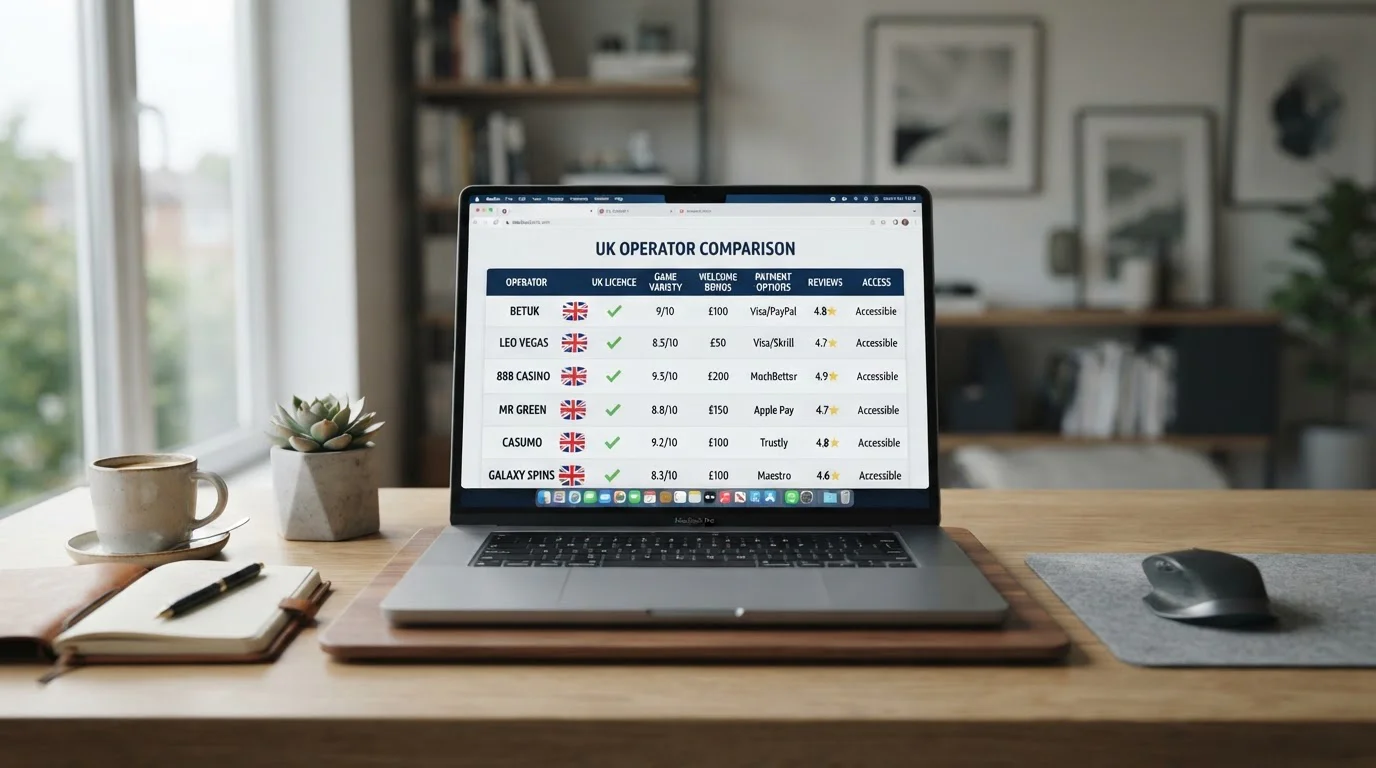
Here’s how the eight names compare. Minimum deposits are approximate GBP equivalents at 2026 rates, and withdrawal times are typical figures once an account has no pending checks.
| Operator | Licence | SOL Withdrawal Speed | Minimum Deposit | UK Access | Distinguishing Feature |
|---|---|---|---|---|---|
| Wild.io | Curaçao (Nonce Gaming B.V.) | Under 10 minutes | ~£8–£10 | Says it accepts UK; check terms | 100+ Evolution live tables |
| Metaspins | Curaçao | ~25 minutes | ~£8–£12 | Says it accepts UK; check terms | Up to 60% rakeback; ~7x wagering on select packages |
| FortuneJack | Anjouan | ~15–30 minutes | ~£8–£15 | Says it accepts UK; check terms | Running since 2014; mission-based welcome across 4 tiers |
| TrustDice | Curaçao (Satoshi Gaming Group N.V.) | Advertised as instant | ~£5–£8 | Says it accepts UK; check terms | Faucet and TXT token staking; email-only registration |
| BetPanda | Unclear; check the site footer | 5–60 minutes | ~£4–£8 | Says it accepts UK; check terms | Email-only sign-up; 80x welcome wagering |
| Stake | Curaçao | Seconds | ~£8–£12 | UK blocked | Largest crypto casino by volume; left UK 11 Mar 2025 |
| Cloudbet | Curaçao (OGL/2024/328/0599) | Under 5 minutes | ~£15–£25 | UK blocked | Running since 2013; high limits; named adjudicator in terms |
| BC.Game | Anjouan | Under 5 minutes | ~£8–£12 | UK blocked | 10,000+ games; 130+ coins |
Which casinos let a UK player deposit with Solana in 2026?
Wild.io, Metaspins, FortuneJack, TrustDice and BetPanda say they accept UK sign-ups and list SOL among their coins in 2026. None holds a UKGC licence, so none is permitted to serve Great Britain, and UK dispute routes do not apply. Stake, Cloudbet and BC.Game list Solana but exclude UK players.
Wild.io
Wild.io launched in 2022 and is operated by Nonce Gaming B.V. under a Curaçao licence. It says it accepts UK players, is not part of GamStop, and lists SOL alongside BTC, ETH and USDT on its payment page. The site carries 9,000+ games from providers including Pragmatic Play, Nolimit City, Hacksaw Gaming and Play’n GO, and its live casino is deeper than most crypto-first rivals manage, with more than 100 Evolution tables covering roulette, blackjack, baccarat and game shows.
SOL withdrawals usually clear in under ten minutes. The welcome package runs from $500 to $10,000 depending on deposit tier, with wagering of around 35x to 40x and a seven-day validity window. There is a sportsbook, but it is thin next to the casino. The headline figure looks generous; the turnover needed to unlock it is roughly four times the 10x ceiling a UK-licensed site is now allowed to set.
Metaspins
Metaspins runs on a Curaçao licence with a crypto-only cashier covering BTC, ETH, USDT, LTC, TRON and SOL. It says it accepts UK players, sits outside GamStop and offers roughly 2,500 games. Its pitch is structural rather than headline-driven: rakeback of up to 60% and some promotional packages with wagering as low as 7x, well under the 30x to 40x common offshore.
SOL withdrawals take around 25 minutes. Metaspins asks for verification documents earlier than many peers and reviews betting patterns more often, so expect a document request before a larger cash-out. The rakeback model is built around players who wager heavily over weeks, which is precisely the pattern that tends to precede gambling harm. A one-off depositor gets little from it.
FortuneJack
FortuneJack has operated since 2014 and now holds an Anjouan licence. It lists SOL among the 11 or 12 coins shown in its footer and runs 3,120+ games, including a range of provably fair titles whose outcomes can be checked against published seed hashes. The welcome is mission-based across four deposit tiers, with cumulative wagering of 30x to 40x depending on the tier.
SOL withdrawals clear in 15 to 30 minutes. FortuneJack says it accepts UK players and operates outside UKGC and GamStop oversight. Its customer service has drawn complaints about slow and inconsistent responses, and longevity alone does not give a British player anywhere to escalate a refused withdrawal. Treat any deposit as money you can afford to lose outright.
TrustDice
TrustDice launched in 2018 under Satoshi Gaming Group N.V. with a Curaçao licence. It began on the EOS blockchain and keeps a crypto-native feel: SOL sits alongside BTC, ETH, USDT and a house TXT token used for staking and rewards. Registered users get a free faucet, and the site offers provably fair dice and crash games plus a reasonably deep esports book.
An email address is enough to open an account and deposit SOL, with identity checks deferred until later. That sounds convenient until a large withdrawal triggers the checks you skipped at sign-up. Withdrawals are advertised as instant, though real timing depends on operator queues. The welcome package reaches up to 3 BTC across three deposits, a headline figure undercut by heavy wagering requirements.
BetPanda
BetPanda runs around 4,000 games from more than 40 providers, including Pragmatic Play, BGaming, Play’n GO, Nolimit City, Hacksaw Gaming and Evolution. It says it accepts UK players, asks for no documents up front and lets you sign up with an email address alone. SOL is part of a broader crypto cashier, and minimum deposits sit around $5 to $10 (roughly £4 to £8), the lowest here.
The welcome offer matches 100% up to 1 BTC with 80x wagering, a $10 maximum bet during playthrough and a seven-day expiry. A 5% daily rakeback offsets a little of that. Withdrawals take 5 to 60 minutes depending on amount and verification status. The licensing position is not clearly set out on the site, so confirm who holds the licence, and in which jurisdiction, before depositing anything.
Stake
Stake launched in 2017 and grew into the highest-volume crypto casino in the world, with a Curaçao licence, a full sportsbook and in-house Originals such as Crash, Plinko and Dice. SOL is one of more than 20 coins it accepts directly, and deposits and withdrawals settle in seconds with negligible fees.
On 11 March 2025, Stake withdrew from the UK market, and the United Kingdom now appears on its prohibited-jurisdictions list. UK registrations are blocked and existing UK accounts were closed during the exit window. It appears in Solana rankings because of its global scale and SOL speed, not because British players can use it.
Cloudbet
Cloudbet launched in 2013 as one of the first Bitcoin sportsbooks and is operated by Halcyon Super Holdings B.V. under Curaçao Gaming Authority licence OGL/2024/328/0599. It has a dedicated Solana casino page, lists SOL among more than 30 coins, and caters to high-limit players with published fee schedules and a named independent adjudicator in its terms, which is unusual offshore.
The United Kingdom is listed among Cloudbet’s restricted markets, and a UK address or connection triggers a registration block. Getting round that block would breach its terms and put any balance at risk of confiscation. For a UK resident, it is simply not an option.
BC.Game
BC.Game has operated since 2017 and moved to an Anjouan licence after a 2024 restructuring. It lists SOL among 130+ coins and claims over 10,000 games, including slots, live casino, a sportsbook and in-house Originals. Its welcome package stacks to roughly $4,000 plus 400 free spins across several deposits, with 40x wagering and a 5% contribution rate on Originals that pushes players towards slots.
The United Kingdom sits on BC.Game’s restricted list alongside the United States, Germany, Austria, Spain, France and the Netherlands. Its game count and coin coverage explain why it features in generic “Solana casino” lists; the UK block removes it from consideration.
Why no UK-licensed casino takes Solana — and whether that will change
The UK Gambling Commission has licensed no operator that accepts cryptocurrency as of 2026. The Gambling Act 2005 and the UKGC’s Licence Conditions and Codes of Practice require anti-money-laundering checks, source-of-funds evidence and affordability assessments, all of which lean on traceable bank accounts. Pseudonymous transfers from a self-custodied wallet satisfy none of these at the standard a licensed operator must meet.
A player depositing £500 from a Barclays current account leaves a trail: the bank verified their identity at account opening, the payment carries a sort code and account number, and the operator can ask for bank statements if deposit patterns raise concern. A player depositing £500 of SOL from a Phantom wallet leaves a transaction hash and little else. That SOL could have come from a UK salary, a foreign exchange, a peer-to-peer trade or a mixing service built to obscure its origin. Licensed operators cannot accept money they cannot trace to source.
In February 2026, UKGC executive director Tim Miller told the Betting and Gaming Council AGM that the regulator was exploring whether licensed operators could accept crypto under a future framework. His argument was about consumer protection: crypto is one of the main payment routes drawing British players to illegal offshore sites, and a blanket ban on licensed platforms leaves that demand entirely outside regulation. The UKGC asked its Industry Forum to map technical and compliance options. Anti-money-laundering specialists pushed back, warning that crypto could reopen a door the fiat-only framework has kept shut. No formal consultation has opened, no timeline has been published and no licensed trial has been approved.
Any route to licensed crypto gambling runs through the Financial Conduct Authority’s crypto-asset regime. Its application window for authorised crypto-asset firms was scheduled to open in September 2026, with the new regime taking full effect on 25 October 2027. A UKGC operator wanting to accept SOL would need to partner with an FCA-authorised custodial provider or become authorised itself. A custodial model, where the player pays in pounds, the provider converts within a regulated wrapper and the casino receives SOL with full identity data attached, might satisfy both regulators. Sending SOL from your own Phantom wallet almost certainly will not. A UK-licensed Solana casino is unlikely before 2027 at the earliest.
Are Solana casinos legal for UK players, and is any of them UKGC-licensed?
No Solana casino holds a UKGC licence in 2026. Every operator taking SOL from British players is offshore and is breaking UK law by serving them. The offence is the operator’s, not the player’s, but you give up UKGC protection, GamStop coverage, approved dispute resolution and any realistic way to recover a refused payout.
Providing gambling facilities to people in Great Britain without a licence is an offence under section 33 of the Gambling Act 2005. In practice, enforcement against companies in Curaçao or Anjouan is slow. The UKGC can issue cease-and-desist notices, pressure payment processors and seek domain blocking, but it cannot compel an offshore operator to pay a British winner. The risk to you is not prosecution; it is depositing with a business that can ignore your complaint because UK courts and regulators cannot reach it.
GamStop, self-exclusion and what “offshore” really costs you
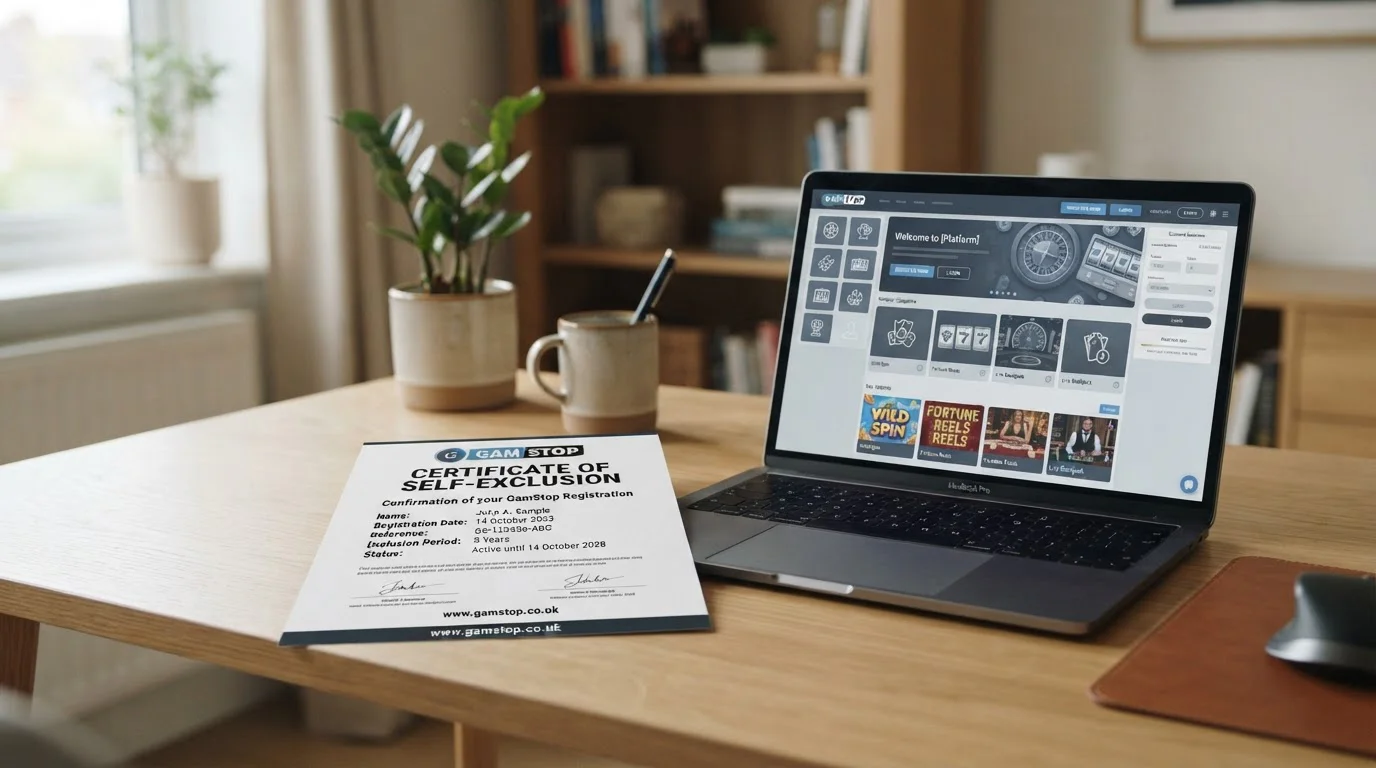
GamStop is the UK’s national self-exclusion scheme, covering every UKGC-licensed operator. Once registered, for six months, one year or five years, a player cannot open an account or deposit at any licensed casino, sportsbook or bingo site; registration can take up to 24 hours to take effect. Offshore casinos do not check the register at all.
Offshore marketing calls this “GamStop-free”, presenting the missing check as a selling point. For someone who self-excluded during a difficult period, it is the opposite: instant access to exactly what they chose to shut out. The comparison is not regulatory freedom against red tape. It is immediate access against a cooling-off mechanism designed to prevent harm. Offshore operators offer their own deposit limits, time-outs and site-level exclusions, but these apply to one site only, with no shared database behind them.
If you have self-excluded, or are thinking about it, the tools that actually work sit outside the casino. Contact GamCare or the National Gambling Helpline on 0808 8020 133 (free, 24 hours a day), register with GamStop, and switch on the gambling block offered by most UK banking apps. Blocking software such as Gamban or BetBlocker adds a further layer on your own devices, including against offshore sites.
Your balance is also less safe. The UKGC does not require licensed operators to ring-fence customer money, but it does require them to disclose how well balances are protected if the business fails (not protected, medium or high), so you can see the risk before depositing. Offshore operators face no equivalent duty. Your deposit most likely sits in the operator’s working accounts, and if the casino folds, is hacked or quits a market overnight, you become an unsecured creditor at best.
Disputes are harder too. A player at a UKGC site whose withdrawal is refused can escalate to an approved Alternative Dispute Resolution provider such as the Independent Betting Adjudication Service (IBAS) and report the operator to the Commission. There is no UK compensation scheme, but the dispute route is real and time-limited. A complaint about a Curaçao-licensed casino goes to the Curaçao Gaming Authority, which sets no fixed response timeline for players, has limited leverage beyond licence sanctions and runs no compensation fund. Unresolved complaints against offshore operators can drag on for months.
Can I lose access if I’m on GamStop, or do these sites ignore it?
Offshore Solana casinos do not check the GamStop register, which is a gap in protection, not a loophole to use. The exclusion exists to protect you, and using an unlicensed site undoes a decision you made for good reason. If you are on GamStop and tempted, talk to GamCare or the National Gambling Helpline first.
Device-level blockers such as Gamban or BetBlocker, and your bank’s gambling block, cover the gap GamStop cannot reach. Excluding yourself at one offshore site does nothing at the next, so a per-site exclusion is a weak substitute for those wider tools.
From pounds to SOL to a live game — the actual steps
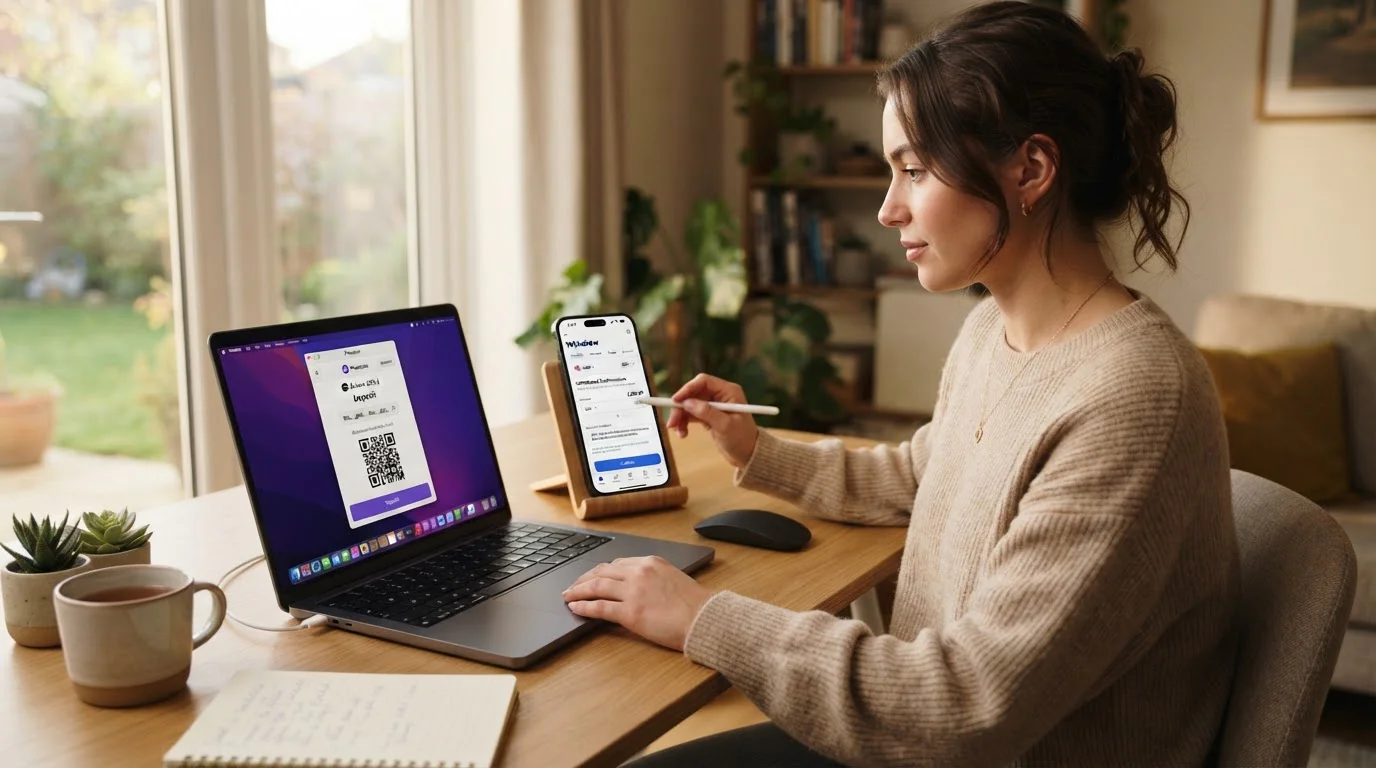
Moving from pounds in a bank account to SOL in a casino cashier involves three hops: buying SOL on an exchange, moving it to a wallet you control, and sending it to the casino’s deposit address. Each hop adds a fee, a delay and a point where a mistake is permanent.
Coinbase, Kraken and Binance all serve UK customers, run full identity checks and list SOL. Exchange fees typically come to a fraction of a per cent plus a spread; card-based on-ramp services such as MoonPay or Ramp, which send SOL straight to a wallet, usually cost 3% to 5% more. Verification needs photo ID, proof of address and a selfie, and can take from a few hours to a few days. Note that several exchanges’ terms restrict the use of their accounts for gambling transactions, and coins moved to a self-custody wallet have no exchange support behind them.
Phantom is the most beginner-friendly Solana wallet in 2026, with a browser extension and mobile apps; Solflare and Backpack do much the same job. Setting one up generates a seed phrase of 12 or 24 words. Write it on paper and store it offline. Do not screenshot it, because cloud backups, lost phones and malware can all expose an image. Lose the phrase and the wallet is gone for good, since no support desk can recover it; share it and whoever holds it controls your funds. Anyone claiming to be wallet support who asks for it is running a scam. Send a small test amount first, confirm it arrives, then move the rest.
At the casino cashier, choosing SOL displays a deposit address. Paste it into your wallet’s send field and check it character by character, because a single wrong character sends SOL to an address nobody controls and the transfer cannot be reversed. On-chain settlement takes well under a second, and most casinos credit the balance within a minute. Some sites support WalletConnect, which lets you approve a transaction without copying an address, at the price of trusting the site’s integration.
Clipboard-hijacking malware, which swaps a copied wallet address for an attacker’s, has been documented on Windows and Android. After pasting, compare at least the first four and last four characters with the address the casino displayed. If they differ, do not send: your device is compromised.
Which Solana wallet should a UK player use for casino play?
Phantom is the most widely used Solana wallet for beginners, with a browser extension and iOS and Android apps that connect to most crypto sites via WalletConnect. Solflare adds richer transaction history and staking, and Backpack combines wallet and exchange features. All three are non-custodial, so you alone secure the seed phrase.
Hardware wallets such as Ledger support Solana and are far harder to compromise than a browser extension, at the cost of plugging in and confirming every transaction on the device. Holding a large balance in a hot wallet between sessions is the bigger risk of the two.
Speed and fees — what SOL actually delivers at the cashier
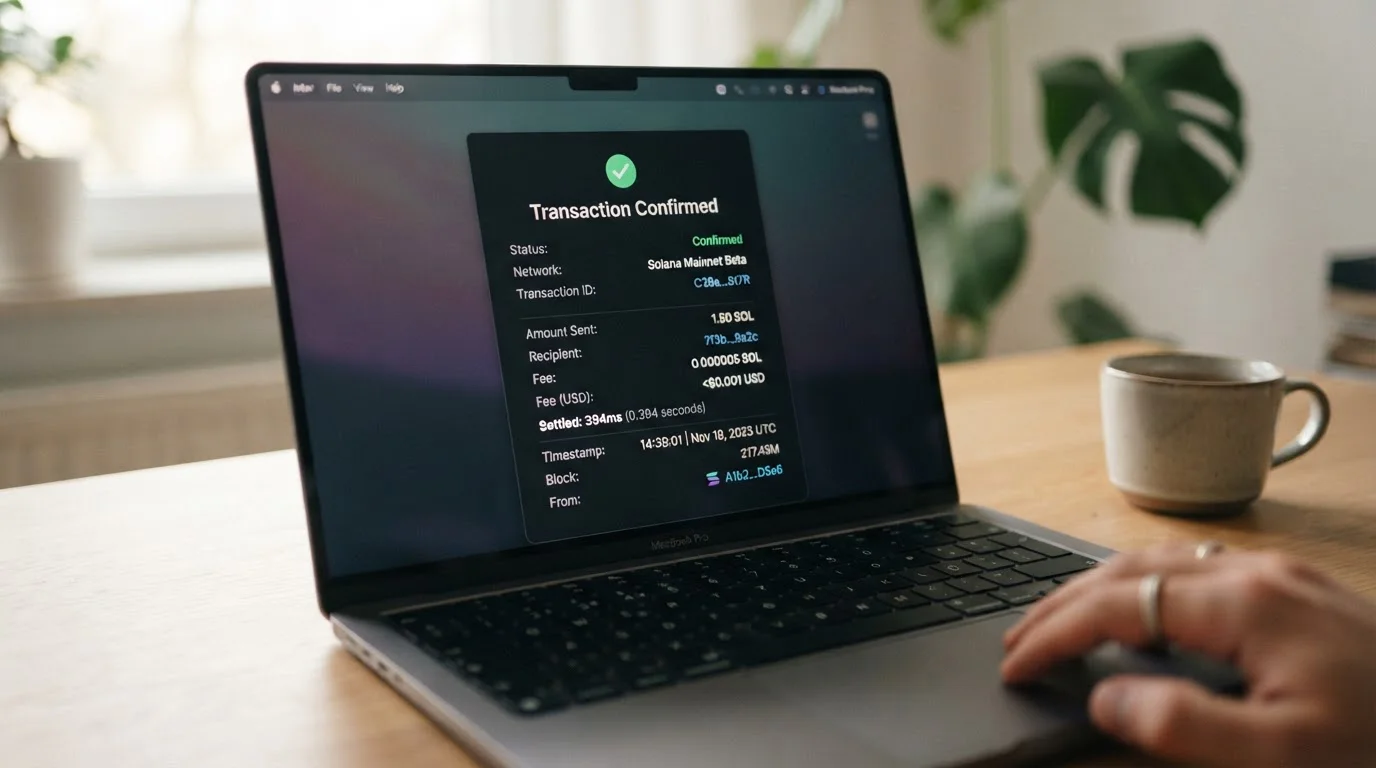
Solana is built for high throughput, with confirmations typically well under a second and a base network fee of 5,000 lamports per signature, a fraction of a penny at 2026 prices. At a casino, deposits and withdrawals usually take up to about a minute from send to balance update, because operators batch transactions and update balances on their own schedule, and network congestion occasionally adds delays.
Casino fees on SOL transactions are usually below $0.01. Wild.io and Metaspins pass through the network fee without markup, while BetPanda and TrustDice advertise zero-fee crypto transactions and absorb the cost. Bitcoin, by contrast, typically costs $1 to $5 in miner fees depending on congestion, and an Ethereum token transfer can run from $0.50 to $15.
How long does a Solana deposit or withdrawal actually take, and what does it cost?
A Solana deposit at an offshore casino typically lands within about a minute of leaving your wallet, and an approved withdrawal arrives in a similar time. Network fees sit below $0.01. When a payout takes longer, the cause is almost always the operator’s own checks or processing queue rather than the Solana blockchain itself.
Identity requests, manual review of large withdrawals and weekend queues are the usual culprits; BetPanda’s 5-to-60-minute window reflects its risk checks, not the network. Volatility is the other cost. A £100 deposit in SOL can be worth £95 or £107 by the time you withdraw. USDT on Tron removes that swing against the dollar, though its value in pounds still moves with the GBP/USD exchange rate.
Here’s how SOL compares with the three coins UK players most often use offshore, under typical rather than worst-case network conditions:
| Cryptocurrency | Average Settlement Time | Typical Network Fee | Volatility | Casino Acceptance (offshore) |
|---|---|---|---|---|
| Solana (SOL) | Under a minute (casino-side) | <$0.01 | High (volatile asset) | Growing; 5–8 major offshore operators in 2026 |
| Bitcoin (BTC) | 10–60 minutes | $1–$5 | High (volatile asset) | Universal; accepted at nearly all crypto casinos |
| Ethereum (ETH) | 1–5 minutes | $0.50–$15 | High (volatile asset) | Near-universal; second only to BTC |
| Tether (USDT) on Tron | ~30 seconds | <$0.02 | Low against USD (stablecoin) | Universal among crypto casinos |
The games behind the SOL cashier — slots, live tables, crash
The game library at a Solana casino reflects the operator’s provider deals, not the deposit method. Wild.io runs over 9,000 games, Metaspins roughly 2,500, and BC.Game claims 10,000+, though variants and reskins inflate that count. The slot catalogue looks much like a UKGC-licensed site’s: Book of Dead, Gates of Olympus, Sweet Bonanza, Wolf Gold and Starburst all turn up.
Live dealer content at these operators comes almost entirely from Evolution. Wild.io’s 100+ tables cover roulette and blackjack variants, baccarat and game shows such as Crazy Time and Monopoly Live. Metaspins and FortuneJack offer smaller selections of around 20 to 50 tables, and TrustDice and BetPanda lean heavily on slots.
The real difference is provably fair “originals”: crash, dice, plinko and mines games whose outcome derives from a client seed and a server seed hashed before each round, so a player can check afterwards that the result was not altered. Stake built its brand on them, and TrustDice and FortuneJack both offer them. Some UKGC-licensed casinos now carry crash and plinko-style games from certified suppliers, but UK-licensed games must pass the regulator’s RNG testing, and a player-side hash check is not treated as a substitute. Provably fair also says nothing about whether you will be paid.
Mobile play runs through the browser. None of the five operators offers a native app on the Apple App Store or Google Play, as both stores restrict real-money gambling apps to operators licensed in the user’s market.
Bonuses, wagering and the “free” that isn’t
Offshore welcome bonuses follow a familiar formula: match your deposit up to a headline figure, add free spins on a featured slot, and bury the conditions in a dropdown. Wild.io offers up to $10,000 at 35x to 40x. Metaspins advertises around 7x on select packages, a figure that sounds friendly until you notice the business model depends on heavy volume. BetPanda’s 1 BTC welcome carries 80x wagering, a $10 maximum bet and a seven-day expiry, which makes it practically impossible to clear on a casual budget. For comparison, UKGC-licensed sites have been barred from setting wagering above 10x since 19 January 2026.
Wagering requirements set how many times you must turn over the bonus before withdrawing. A £100 deposit matched with a £100 bonus at 40x wagering on the bonus means £4,000 of bets before the bonus converts to cash. Game weighting matters: slots usually count 100%, live dealer games 10%, and provably fair originals 5% or nothing. A £10 hand of blackjack therefore contributes £1, and a £10 round of crash may contribute nothing. At the top end, an 80x requirement on a 1 BTC bonus with bitcoin at $60,000 means $4.8 million of slot stakes, a sum no recreational bankroll gets near.
Free spins carry their own wagering, typically 30x to 50x on winnings. Win £20 from 100 free spins at 40x and you must stake £800 before withdrawing it, and win caps of £100 to £500 commonly apply however lucky the spins were. Treat any bonus as a loan repaid in turnover.
Rakeback is the offshore alternative. It returns a share of the house edge on your stakes, win or lose: up to 60% at Metaspins and 5% daily at BetPanda. Because it grows with volume, it rewards exactly the long, frequent sessions that UK rules try to slow down. If you notice you are playing longer to “earn” rakeback, that is a signal to stop, not a strategy.
Network outages and the “did Solana close?” worry
Some UK players still ask whether Solana “closed”, a worry left over from outages that briefly made it look as if the chain had stopped. Solana suffered several full-network halts between 2021 and early 2024, the longest lasting about 17 hours in September 2021. Each time, validators restarted the chain and transactions resumed, and no funds were lost on-chain, though casino withdrawals were delayed until the network stabilised.
In 2026, Solana is running normally, casinos accept SOL and transfers clear within about a minute. The most recent full halt, in February 2024, lasted around five hours. The live question is not whether Solana works but whether a future outage could leave a withdrawal in limbo while the network restarts. That risk sits at the network layer and affects every Solana application equally.
Critics also point to stake concentration among validators and token-supply concentration as long-term decentralisation concerns. Neither affects your ability to deposit or withdraw today.
Tax, records and staying on the right side of HMRC
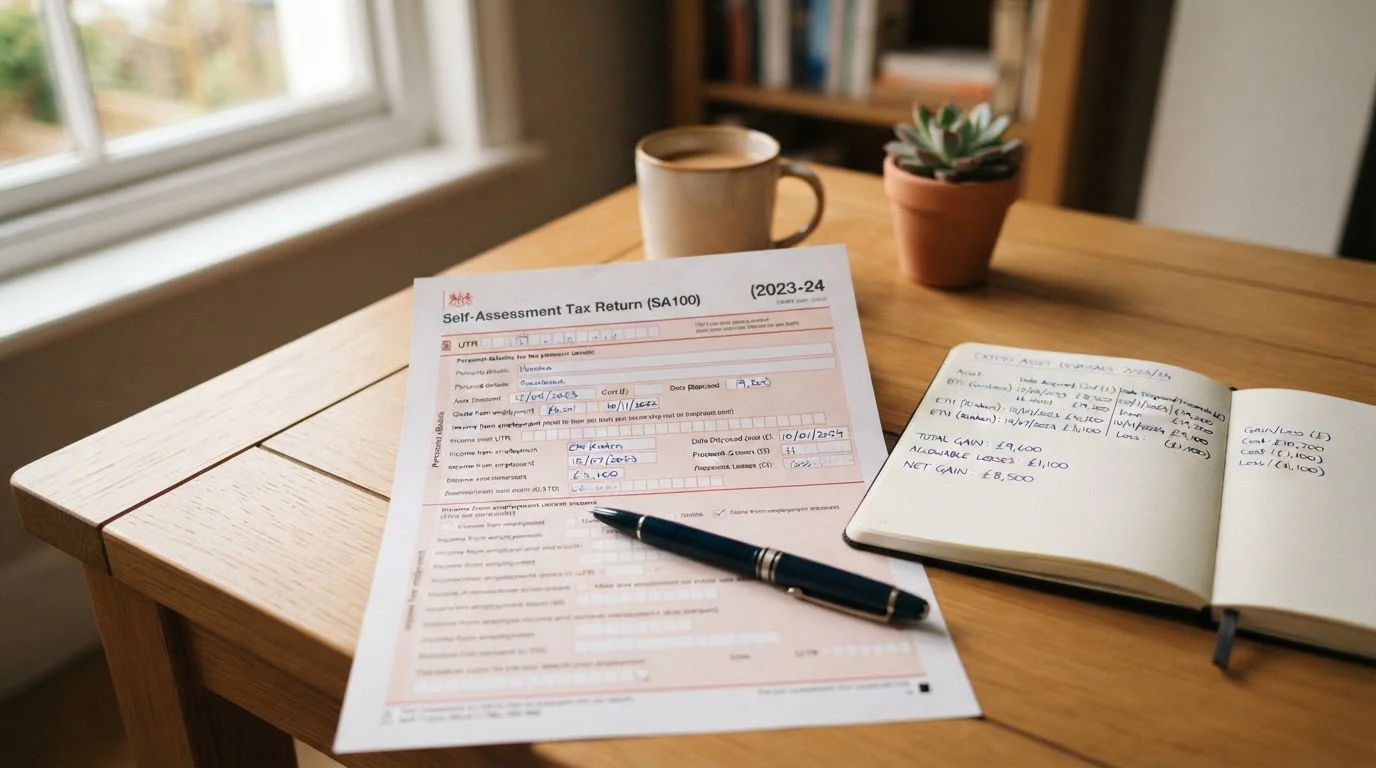
Gambling winnings in the UK are not taxed. A UK resident who deposits £500 of SOL, wins £5,000 and withdraws owes no income tax on the £4,500 profit, whether the casino is UKGC-licensed or offshore.
Solana, however, is a cryptoasset under HMRC guidance, not currency, and disposing of a cryptoasset at a gain is a chargeable event for Capital Gains Tax. Converting withdrawn SOL to pounds at a higher value than its acquisition cost is a disposal. If your total gains for the tax year exceed the £3,000 annual exempt amount, you pay CGT on the excess at 18% as a basic-rate taxpayer or 24% at the higher rate, the rates in force since 30 October 2024. The taxable event is not the win; it is the later sale.
Do I pay tax on Solana casino winnings in the UK?
No. Gambling winnings are not taxed in the UK, whether the casino is UKGC-licensed or offshore. Solana is a cryptoasset, though, so converting won SOL to pounds at a gain over its acquisition cost can trigger Capital Gains Tax at 18% or 24% above the £3,000 annual exempt amount.
HMRC expects gains to be calculated per disposal using the same-day and 30-day matching rules, then the section 104 pool. How coins received as winnings are valued for cost purposes is worth confirming with a tax adviser before you convert a large balance.
Keep records from the start. Export a CSV or statement from the exchange where you bought SOL showing dates, amounts and GBP cost, and save the casino’s deposit and withdrawal confirmations with timestamps. Without proof of what you paid, you will struggle to justify a cost base, and the gain you report may be overstated. If HMRC opens an enquiry, that chain of evidence shows which part was a gambling win and which part, if any, was a taxable gain.
Reading a licence claim before you trust it
A licence logo in a casino footer proves very little on its own. Curaçao’s system changed in 2024: the old master-licence arrangement, under which sub-licensees traded under numbers such as Antillephone’s 8048/JAZ, came to an end, and operators now need a licence issued directly by the Curaçao Gaming Authority. A site still displaying an old sub-licence number, or a seal that does not link to a live entry on the regulator’s register, has not shown you that it is currently licensed anywhere. Anjouan licences are issued by a small regulator in the Comoros with limited public information and even less capacity to handle individual player complaints.
Look for the operating company’s name, its registration number and the licence number together, then check that they match the regulator’s own published list. Read the restricted-countries clause in the terms: if the United Kingdom is listed, any account you open breaches those terms and the operator can void winnings on that basis alone. Read the withdrawal section too, paying attention to maximum weekly or monthly cash-out limits, the documents they reserve the right to request, and any clause allowing them to close accounts “at their sole discretion”. None of this makes an unlicensed-for-GB site safe; it only tells you how exposed you are.
Some warning signs are worth treating as a hard stop: a support team that cannot name the licence holder, bonus terms that change after you deposit, pressure to deposit again before a pending withdrawal is processed, and a requirement to “unlock” a withdrawal by paying a fee or tax up front. The last one is a recognised scam pattern and no legitimate operator asks for it.
What the UK-licensed side offers instead
No UKGC-licensed casino accepts SOL, but many British players looking at crypto sites are really after fast withdrawals and familiar games, and the licensed market covers both. Debit card and open-banking withdrawals at large UK operators often arrive the same day once identity checks are complete, and the slot catalogues come from the same providers. What you get on top is the protective layer offshore sites lack.
That layer is concrete. Age and identity must be verified before you can deposit or play, a rule in place since May 2019. You can set deposit limits at any time; a reduction applies immediately, while an increase only takes effect after a cooling-off period. Credit cards have been banned for gambling since 14 April 2020, bonus wagering is capped at 10x, and every licensed site must tell you how well your balance is protected if the business fails. Disputes go to an approved ADR provider such as IBAS, and GamStop applies across the whole market. Those protections are the point of a licence, not paperwork for its own sake.
Playing offshore without losing the plot — a sober checklist
A Solana casino open to British players is, by definition, unlicensed for Great Britain. Faster withdrawals and fewer questions come bundled with no disclosed protection level for your balance, no UKGC-approved dispute resolution and nothing to fall back on if the operator folds. For anyone who has self-excluded, the missing GamStop check is a hazard, not a perk. If what you actually want is crypto-free play with full protections, UKGC-licensed casinos offer the same slot catalogue with deposit limits, reality checks, wagering capped at 10x and stake limits on online slots (£5 per spin, or £2 for 18 to 24-year-olds).
If you go ahead regardless, set your own limits, because no regulator will enforce them for you. Decide a monthly amount before you load a wallet, and treat each deposit as spent the moment it leaves. Never chase a loss with a fresh transfer, and never fund play with money set aside for rent, bills or debt. If offshore play is becoming a daily habit, or you are borrowing to keep going, stop and use the support routes above, including GamCare, Gamblers Anonymous UK and GamStop, before the balance you cannot afford to lose disappears into a wagering requirement you will never clear.
This market moves quickly: operators exit markets, licences lapse and UK access changes without notice. Check each operator’s current terms before relying on anything above.
Crypto Casinos UK 2026 — Crypto Payments and Risks Explained
Content created by the «Bankrol Bridge» team