
Best Online Casino Payment Methods UK 2026: Speed, Bonuses and Limits Compared
 Available in GB

Picking a payment method at a UK-licensed casino looks simple until you hit the cashier. Debit cards everywhere. E-wallets that void your bonus. Instant bank transfers you’ve never heard of. Mobile billing capped at £30. Prepaid vouchers you can deposit with but never withdraw to.
Each method carries its own speed profile, bonus eligibility and set of trade-offs the operator won’t surface until you’ve already chosen. A PayPal deposit clears in seconds but rules you out of a large share of welcome offers. Trustly withdrawals can land within a couple of hours, but some casinos set a higher minimum deposit for it than for a card. Apple Pay keeps your card number private, then sometimes turns up in the bonus exclusions list the moment you try to claim an offer.
This guide sets out how the UK casino payment market looks in 2026: which methods work, how they compare on speed and cost, which ones are most likely to cost you bonus eligibility, and how to match a method to your actual priority instead of clicking the first icon in the cashier.
Understanding UK Casino Payment Methods: The 2026 Landscape
Six payment categories operate at UK Gambling Commission-licensed casinos. Debit cards anchor the system — Visa and Mastercard debit are accepted almost everywhere, with minimum deposits from £5 and withdrawals in one to three business days. E-wallets — PayPal, Skrill, Neteller, MuchBetter — offer faster payouts but carry bonus restrictions at many sites. Instant bank transfers via Trustly or other open banking providers cut out the card layer entirely, connecting your bank account to the casino with verification baked into the deposit flow. Prepaid vouchers like Paysafecard let you fund an account with cash from a corner shop. Mobile billing through Boku charges deposits to your phone bill. Digital wallets — Apple Pay and Google Pay — tokenise your debit card for biometric one-tap deposits.
The UK Gambling Commission shapes what you see in that cashier. Credit cards have been banned for all gambling payments since 14 April 2020, cutting off access to borrowed money. E-wallet providers serving UK customers must be authorised by the Financial Conduct Authority. Operators must offer deposit limits and take part in GamStop, and they must verify your age and identity before you can deposit or gamble, a rule in force since May 2019.
Two regulatory shifts in 2026 changed how payment methods interact with bonuses and spending controls. The 10x wagering cap took effect on 19 January 2026, limiting casino bonus wagering requirements to ten times the bonus value — down from the 30x–65x range that dominated the market through 2025. A £50 bonus that once required £1,500–£3,250 in bets now clears after £500. The gross deposit limit reform took effect on 30 September 2026, requiring operators to count deposit limits based on total money paid in, not deposits minus withdrawals. That second change closes a loophole where withdrawing £500 after depositing £1,000 gave you another £500 of limit headroom under the old net-deposit calculation.
Can I use a credit card to deposit at UK casinos?
No. The UK Gambling Commission banned credit card gambling deposits at all licensed operators from 14 April 2020 to stop players gambling with borrowed money. Only debit cards are permitted for card-based casino transactions, and e-wallets or other services cannot be loaded with a credit card for gambling either.
Here’s how the six payment categories stack up on the dimensions most players actually care about:
| Category | Deposit Speed | Withdrawal Speed | Typical Min Deposit | Bonus Eligibility | KYC Timing | Best For |
|---|---|---|---|---|---|---|
| Debit Cards (Visa/MC) | Instant | 1-3 business days | £5-£10 | Almost always eligible | Before first deposit | Universal acceptance + bonus eligibility |
| E-Wallets (PayPal/Skrill) | Instant | 0-4 hours | £5-£10 | Often excluded | Wallet has its own checks; casino before first deposit | Fastest payouts (if bonus not priority) |
| Instant Bank Transfer (Trustly) | Instant | 0-2 hours where supported | £10-£20 | Mixed | Casino before first deposit; bank login confirms account ownership | Fast payouts + smoother first withdrawal |
| Prepaid (Paysafecard) | Instant | Not supported (withdraw via another method) | £10 | Often eligible | Casino before first deposit; myPaysafe needs its own KYC | Cash funding with a fixed budget |
| Mobile Billing (Boku) | Instant | Not supported (withdraw via another method) | £10 (max £30/transaction) | Often eligible | Before first deposit | No bank account needed + small deposits |
| Digital Wallets (Apple/Google Pay) | Instant | 1-3 business days (to linked card) | £10 | Mixed, check terms | Before first deposit | Mobile convenience + tokenised security |
Debit cards sit at the centre of the UK casino payment ecosystem because they balance acceptance, cost and bonus eligibility better than any alternative. Fees are rare, and welcome bonuses almost always accept a debit card deposit. The trade-off is slower withdrawals than e-wallets, and your card number passes through the casino’s payment processor, albeit encrypted.
E-wallets flip that equation. Casumo’s PayPal payouts have landed in around 35 minutes and Ladbrokes’ Skrill payouts in around 45. But many UK casinos exclude PayPal, Skrill and Neteller deposits from welcome offers, for reasons covered in the bonus section.
Speed Matters: Fastest and Slowest Payment Methods
Deposit speed is barely a contest. Debit cards, e-wallets, Trustly, Apple Pay, Google Pay and Boku all update your balance within seconds of confirming the payment. The only slow deposit is a manual bank transfer, where you copy the casino’s account details into your own banking app; the money moves quickly, but someone at the casino has to match it to your account, which can take a day or more. A few cashiers still offer it, though open banking has made it largely redundant.
Withdrawal speed tells the real story. The method you choose determines whether your winnings land in hours or days, and operator pending periods add a layer of delay on top of payment-method speed.
Trustly leads the withdrawal speed hierarchy at casinos that support instant payouts, with zero to two hours typical; Betway’s Trustly payouts have landed in about 50 minutes. PayPal and Skrill follow closely. Neteller behaves like Skrill — both are owned by Paysafe Group and run on similar backend infrastructure. MuchBetter, the newer mobile-first e-wallet, usually pays within a day, though operator support remains spottier than for the established wallets.
Debit card withdrawals take one to three business days as standard. Visa Fast Funds shortens that to hours at casinos that support it — Casumo’s Visa payouts have arrived in about an hour — but adoption is far from universal, and three-day waits remain common at operators still using legacy card payout rails. Mastercard’s equivalent push-payment services are less commonly used by UK casinos.
Standard bank transfer withdrawals typically take one to five business days, most of it the casino’s own processing time. Paysafecard and Boku don’t support withdrawals at all, so you must nominate a debit card, e-wallet or bank account to receive payouts.
What is the fastest withdrawal method at UK online casinos?
Trustly is usually the fastest UK casino withdrawal method where a casino supports instant payouts, typically clearing in zero to two hours, with PayPal and Skrill close behind at up to four hours. Debit cards take one to three business days, and the casino’s own pending period can slow any method down.
How long does it take to withdraw from a UK online casino?
Withdrawal time depends on payment method and operator processing. E-wallets and Trustly: up to four hours. Debit cards: one to three business days. Standard bank transfers: one to five business days. Add the casino’s pending period, often 24-48 hours, and allow extra time if a first payout triggers ownership or source-of-funds checks.
Most UKGC-licensed casinos hold requests in a “pending” state for up to 24-48 hours while they run fraud checks, even when the payment method itself would clear instantly. The quickest operators — Casumo and Betway among them — cut pending time to under an hour for verified accounts, so e-wallet and Trustly speed actually reaches the player. The slowest stretch pending to the full 48 hours regardless of method, turning a 35-minute PayPal capability into a two-day wait.
| Method | Typical Range | Quick Example | Operator Variance Notes |
|---|---|---|---|
| Trustly | 0-2 hours | About 50 minutes (Betway) | Some operators still treat it as a standard bank transfer (1-5 days) |
| PayPal | 0-4 hours | About 35 minutes (Casumo) | Depends on casino pending period; 24-48hr pending negates speed |
| Skrill | 0-4 hours | About 45 minutes (Ladbrokes) | Same Paysafe backend as Neteller |
| Neteller | 0-4 hours | Similar to Skrill | Paysafe Group sibling to Skrill |
| MuchBetter | 0-24 hours | See operator terms | Newer wallet, fewer operators optimise for it |
| Visa Debit (Fast Funds) | 1 hour – 3 days | About 1 hour (Casumo) | Fast Funds not universal; legacy rail still common |
| Mastercard Debit | 1-3 business days | Standard card timescale | Fast-payout options less common at UK casinos |
| Apple Pay / Google Pay | 1-3 business days | Paid as a debit card withdrawal | Returns to the linked card, not the wallet |
| Bank Transfer | 1-5 business days | Same day at the quickest operators | Speed depends almost entirely on casino processing |
First-withdrawal checks sit outside payment-method speed. UK casinos must verify your age and identity before you deposit, but a first payout can still trigger extra checks, such as proof that you own the payment method or documents showing where your money comes from, and document review adds 24-48 hours when that happens. Trustly has an edge here because authenticating through your own bank’s login confirms account ownership during your first deposit.
Weekends and bank holidays mostly hurt card and bank withdrawals. Faster Payments itself runs 24/7, but many casinos’ payment teams approve requests only in business hours, and card payouts move on the card networks’ working-day schedules. A Friday evening debit card withdrawal can easily reach your account on Tuesday. E-wallet and Trustly payouts from operators with automated approvals are the least affected.
Bonus Eligibility: Which Methods Qualify for Welcome Offers
Deposit £50 with a Visa debit card and your welcome bonus lands. Deposit £50 with PayPal at the same casino and you may get a Terms & Conditions page explaining why e-wallet deposits don’t qualify. The payment clears either way. The difference: operators exclude certain methods from bonus eligibility to manage chargeback risk and close bonus-abuse loops.
Debit cards are the near-universal qualifier. Visa and Mastercard debit deposits count towards welcome offers, free spins packages and reload bonuses at almost every UKGC-licensed operator. Paysafecard and Boku often qualify as well, because prepaid vouchers and phone-bill charges are small and hard to reverse. MuchBetter sits in the middle — excluded less often than the established e-wallets, but far from universally accepted for bonuses.
PayPal, Skrill and Neteller face the harshest restrictions. Apple Pay and Google Pay get mixed treatment despite processing through the Visa and Mastercard networks: some operators treat them as cards, others classify them as digital wallets and apply e-wallet restrictions. Trustly varies in the same way, counted as a bank transfer at some casinos and lumped in with e-wallets at others.
| Method | Bonus Treatment at UK Casinos | Why Restricted (Where Applicable) |
|---|---|---|
| Visa/Mastercard Debit | Almost always eligible | Rarely restricted; strongest verification trail + lower reversal risk |
| Paysafecard | Often eligible | Prepaid and small-value; some operators still restrict |
| Boku / Pay by Mobile | Often eligible | £30 per-transaction cap limits abuse potential |
| Trustly | Mixed | Treated as bank transfer (eligible) by some, as e-wallet (restricted) by others |
| MuchBetter | Mixed | Newer wallet without Skrill/Neteller’s bonus-abuse history |
| PayPal | Often excluded | Dispute risk + bonus-abuse loop (card deposit → e-wallet withdrawal) |
| Skrill | Often excluded | Long association with bonus hunting |
| Neteller | Often excluded | Paysafe Group sibling to Skrill; treated the same way |
| Apple Pay | Mixed, check terms | Sometimes classified as a digital wallet despite card backend |
| Google Pay | Mixed, check terms | Same digital-wallet classification question as Apple Pay |
Which payment methods qualify for casino welcome bonuses?
Debit cards (Visa and Mastercard) have the widest UK casino bonus eligibility and qualify almost everywhere. Paysafecard and Boku often qualify too. PayPal, Skrill and Neteller are frequently excluded, and Apple Pay and Google Pay are hit and miss, so read the qualifying-method line in the bonus terms before depositing.
Why are PayPal and e-wallets excluded from casino welcome bonuses?
E-wallets like PayPal, Skrill and Neteller carry higher reversal risk than debit cards because disputes can be raised inside the wallet, and the casino sees less about the payer. Bonus abuse adds to the cost: players deposit with a card, claim a bonus, withdraw to an e-wallet and repeat elsewhere.
Chargeback risk sits at the top of the operator’s worry list. The e-wallet holds the customer relationship and runs its own dispute process, so a player who deposits via PayPal and later disputes the payment through PayPal’s resolution centre can leave the casino out of pocket for both the deposit and any winnings paid against it.
Verification gaps are the second issue. When you deposit with a debit card, the casino sees your name, card number and issuing bank. When you deposit with PayPal, it sees a transaction ID and an email address. That makes duplicate accounts harder to spot.
The bonus-abuse loop closes the case. The pattern: open an account, deposit £50 by debit card, claim a £50 bonus with 10x wagering (£500 in bets under the UKGC cap), clear it, withdraw to Skrill, move to the next casino, repeat. Card deposits create a payment-method record the casino can track across accounts; e-wallet deposits make that harder. Excluding e-wallets from bonuses forces bonus hunters to leave a trail.
MuchBetter’s comparatively friendlier treatment stems from its age. It arrived in 2017, well over a decade after Skrill and Neteller became the go-to tools for bonus farming. Operators who spent years fighting Skrill-based abuse extended those restrictions to PayPal when it entered the casino market, but some treat MuchBetter as a fresh start. That calculus will shift if MuchBetter builds the same history.
The 10x wagering cap did nothing to loosen e-wallet restrictions. Lower wagering makes bonuses quicker to clear, which if anything increases the incentive for operators to restrict fast, low-visibility payment methods.
Apple Pay and Google Pay get caught up in this because the tokenisation that keeps your card number private also hides it from the casino’s cross-account checks — covered in detail in the mobile wallets section below.
If you want both a bonus and fast payouts, the usual approach is to make the qualifying deposit with a debit card and then use an e-wallet or Trustly for later deposits. Be aware that many casinos expect withdrawals to go back to the method you deposited with, at least up to the amount deposited, so a card-funded balance may have to return to the card first.
Safety and Security: Protecting Your Money
Three layers of rules govern UK casino payments: the Gambling Commission licenses operators, the Financial Conduct Authority authorises and supervises e-money and payment institutions, and the UK’s payment services regulations — which carried the EU’s PSD2 rules into UK law — set the standards for open banking and strong customer authentication. Every payment you make at a UKGC-licensed casino passes through at least one regulator’s oversight, and often two.
The Gambling Commission sets baseline requirements: licensed operators and the payment processors they use must meet anti-money laundering standards and keep records that support dispute resolution and audits. The Commission does not force casinos to segregate player balances; it requires each operator to tell you how well your funds are protected if it goes bust (not protected, medium or high), and there is no statutory compensation scheme. Operators must complete Know Your Customer checks before you can deposit or gamble, usually electronically and, where those fall short, with a passport, driving licence or other photo ID plus proof of address dated within three months.
FCA rules apply to the e-wallets. PayPal, Skrill, Neteller and other e-money institutions serving UK customers must be FCA-authorised, which brings capital requirements and safeguarding rules. When you load £100 into an e-wallet, the provider must safeguard that money separately from its own operating funds, which is designed to protect your balance if the firm fails. Your debit card is covered through your bank’s own FCA authorisation.
Open banking payments such as Trustly use strong customer authentication: you log in to your bank and confirm the payment in its app or with a one-time code, so a stolen password alone is not enough. Card payments now use strong authentication too, but a card number and CVV are static details that can leak; an open banking payment never exposes anything reusable to the casino.
Encryption across UK casino payment methods uses TLS 1.2 or higher — the same protocol that secures online banking and e-commerce. Your payment data travels encrypted from your device to the payment processor and on to the card network or bank.
Chargeback protection works differently across methods. Debit card payments fall under Visa and Mastercard chargeback rules, which let you dispute a transaction through your bank if a merchant fails to deliver or charges you incorrectly — though a gambling deposit you simply regret is not a valid dispute. E-wallets run their own dispute processes, controlled by the provider rather than the card networks. Open banking payments generally have no chargeback route because you authorised the transfer directly through your bank.
Verification is where payment choice affects convenience. Every UKGC-licensed casino must verify your age and identity before you deposit or gamble, usually through electronic checks at sign-up, but a first withdrawal can still trigger requests for proof that you own the payment method. Trustly reduces that friction because you authenticate through your own bank during the deposit, confirming the account is yours. Paysafecard keeps bank details out of the deposit, but the casino still verifies you at registration and needs a card or bank account for payouts — it never takes you outside KYC.
Fraud prevention on the casino side runs quietly in the background. Operators monitor for rapid deposit cycles, mismatched account details, locations that don’t match the payment method, and cards reported stolen. Those checks can block a deposit or trigger manual review. Methods with weaker identity signals — an e-wallet showing only an email address, a voucher with no name attached — face stricter thresholds.
The safety tools that matter most, though, are the ones that protect you from overspending. Every licensed casino offers deposit limits (decreases apply immediately, increases only after a cooling-off period), time-outs and self-exclusion. Most UK banks also let you switch on a gambling block in their app, which stops card and often bank payments to gambling sites. GamStop self-excludes you from every UKGC-licensed online operator for six months, one year or five years, and can take up to 24 hours to take effect. If gambling is becoming a problem, the National Gambling Helpline run by GamCare (0808 8020 133) is free and confidential, around the clock.

Debit Cards: The Universal Standard
Visa and Mastercard debit cards sit at the centre of the UK casino payment ecosystem because they balance three qualities no other method matches at once: near-universal acceptance, wide bonus eligibility and, at most operators, no fees. There are no withdrawal fees at most sites and no currency conversion charges unless you fund an account in a currency other than sterling.
Visa and Mastercard debit: Acceptance and limits
Visa debit is accepted at effectively every UK-licensed casino, and Mastercard debit is close behind. Minimum deposits typically range from £5 to £10, with £10 the most common threshold. Maximum deposits depend on the casino, your account’s affordability checks and your bank’s own daily card limits; your bank’s fraud systems may also ask you to confirm an unusually large payment.
Withdrawal limits follow a similar pattern. Most casinos set minimum withdrawals at £5 to £20, and apply per-transaction, weekly or monthly maximums that vary by operator and account status. If you are expecting a large payout, check the banking terms: some operators pay big wins in instalments.
Processing time for debit card deposits is instant: you click deposit, confirm with your card details or saved card, and your balance updates within seconds. Withdrawals take one to three business days as standard — the casino’s pending period first, then the card payout itself, with weekends and bank holidays adding to the wait.
Your card statement will show the casino’s brand or its payment processor, depending on how the operator handles merchant identification. Either way, the payment is coded as gambling, and since the April 2020 credit card ban only debit cards can be used.
Visa Fast Funds: Faster withdrawals where available
Visa Fast Funds sits on Visa Direct, Visa’s push-payment platform, which can move money to an eligible card in minutes rather than days. When a casino supports it and you deposited with a Visa debit card, your withdrawal can reach your card in near real time once the casino’s pending period ends. Casumo’s one-hour Visa payouts show what it can deliver.
The catch is that operator adoption is well below universal. Larger operators with modern payment infrastructure are more likely to use it; smaller operators often stick with legacy card payout systems. Unless a casino advertises fast card payouts on its banking page, you won’t know until you request a withdrawal.
Fast Funds doesn’t eliminate the casino’s pending period. The full withdrawal time is pending period plus payout time, so a casino with a 48-hour pending period and Fast Funds still takes two days, while a casino with a one-hour pending period and legacy card processing might also take two days. Only the combination — sub-hour pending and Fast Funds — delivers payouts that rival e-wallet speeds.
When to choose debit cards over other methods
Debit cards make sense as your main payment method if bonus eligibility matters and you can live with one-to-three-day withdrawals. You’ll qualify for welcome offers, free spins and reloads at almost any casino you join, with no separate account, no e-wallet fees and no learning curve.
Pick an e-wallet or Trustly instead if withdrawal speed is your top priority and you either don’t care about bonuses or are joining one of the casinos that allow e-wallet bonuses. A 35-minute PayPal withdrawal beats a three-day card payout by enough to justify the bonus restriction for players who value cash in hand over promotional credits.
Paysafecard suits a narrower case: funding play with cash in fixed amounts. You still need a card, e-wallet or bank account for withdrawals, and acceptance is lower than for cards.

E-Wallets: Speed vs. Bonus Restrictions
E-wallets deliver the fastest UK casino withdrawals — up to four hours from approval to cleared funds in your wallet at most operators — but pay for that speed with frequent bonus restrictions. PayPal, Skrill, Neteller and MuchBetter all work the same basic way: you load funds from your bank or debit card, then use the wallet to deposit at casinos. Withdrawals go back to your wallet, not your bank account, cutting out the card network and banking layers that slow down card payouts.
| Wallet | Owner / Founded | Withdrawal Speed | Bonus Eligibility | Deposit Fees | UK Casino Acceptance | Key Differentiator |
|---|---|---|---|---|---|---|
| PayPal | PayPal Holdings / 1998 | 0-4 hours (about 35 min at Casumo) | Often excluded | None at most casinos | Moderate | Highest brand trust + mainstream recognition |
| Skrill | Paysafe Group / 2001 | 0-4 hours (about 45 min at Ladbrokes) | Often excluded | 1-2% at some casinos | Broad | Longest gambling-market history |
| Neteller | Paysafe Group / 1999 | 0-4 hours | Often excluded | 1-2% at some casinos | Broad (similar to Skrill) | Paysafe sibling; works like Skrill |
| MuchBetter | MuchBetter Ltd / 2017 | 0-24 hours | Mixed | None at most casinos | Moderate (growing) | Mobile-first + friendlier bonus treatment |
PayPal: The trusted standard
PayPal came to online gambling later than Skrill and Neteller but brought mainstream credibility and a user base already comfortable with the brand from e-commerce. A good number of UKGC-licensed casinos accept it, though coverage is narrower than for debit cards, and PayPal itself only works with operators it has approved.
PayPal was founded in the US in 1998, floated in 2002 and was bought by eBay later that year; eBay spun it off as an independent public company in 2015. Its UK business is FCA-authorised, which brings safeguarding requirements for customer balances.
Deposits are instant once you’ve linked your PayPal account to the casino. Minimum deposits typically start at £5 to £10. Withdrawals process within four hours at the quicker operators — Casumo’s have taken about 35 minutes — but that depends on the casino clearing its pending period. If the operator holds requests for 48 hours, your PayPal withdrawal still takes two days.
Bonus eligibility is PayPal’s weak spot. Many UK casinos exclude PayPal deposits from welcome offers, treating it the same as Skrill and Neteller despite its mainstream reputation. Operators that do allow PayPal bonuses tend to be newer entrants trying to stand out or larger brands confident in their fraud controls.
Fees vary by casino. Most UKGC-licensed operators don’t charge for PayPal deposits or withdrawals, absorbing the processing fee. A few charge a small percentage. Moving a sterling balance from PayPal to a UK bank account is normally free, but currency conversion uses PayPal’s own exchange rates, which include a margin over the mid-market rate.
Privacy sits between debit cards and Paysafecard. The casino sees your PayPal email address and transaction ID but not your bank account number or card details. Your PayPal account is still tied to your identity through PayPal’s own checks.
Skrill: Fast but bonus-restricted
Skrill has been in the online gambling payment business since 2001, originally under the Moneybookers brand before rebranding in 2011. Optimal Payments (now Paysafe Group) acquired it in 2015, bringing it under the same ownership as Neteller. Skrill’s UK business is FCA-authorised as an e-money institution.
Acceptance at UK casinos is broad, which is unsurprising given Skrill built its reputation in the gambling vertical from the start, while PayPal spent its early years focused on e-commerce.
Withdrawals typically process within four hours; Ladbrokes’ Skrill payouts have landed in about 45 minutes. That matches PayPal and beats debit cards by a day or more. Deposits are instant once your wallet is funded and linked. Minimum deposits sit at £5–£10 depending on the operator.
Bonus restrictions hit Skrill hard, and its history is precisely the problem: two decades as the go-to e-wallet for online gambling also made it the go-to tool for bonus abuse. Operators that spent years fighting Skrill-based multi-accounting applied the same restrictions across the board, and newer casinos copied the policy.
Fees at UK casinos vary. Most operators don’t charge for Skrill deposits, but 1–2% deposit fees appear at some sites. Skrill may also charge to move money from your wallet to your bank account, so check its current fee schedule; the full casino-to-Skrill-to-bank cycle can cost more than PayPal.
Neteller: Skrill’s sibling with same trade-offs
Neteller was founded in 1999, two years before Skrill, and today sits in the Paysafe Group alongside it. Its UK business holds FCA e-money authorisation.
Acceptance at UK casinos mirrors Skrill’s. For practical purposes, if a casino accepts Skrill it probably accepts Neteller, and vice versa — both run through Paysafe’s infrastructure, so operators that integrate one usually integrate both.
Withdrawal speeds sit in the same up-to-four-hour range as Skrill. Deposits are instant, and minimum deposits land at £5–£10. Bonus treatment matches Skrill’s too: operators handle the two identically because they share an owner, a risk profile and a long history as gambling-focused wallets.
Fees follow Skrill’s pattern: most UK casinos don’t charge for Neteller deposits, though some add 1–2%, and Neteller may charge to withdraw from your wallet to a bank account. Currency conversion carries a margin over mid-market rates.
The choice between Skrill and Neteller usually comes down to which one you already have. Functionally they’re interchangeable for UK casino use: same owner, same backend, same bonus restrictions, similar speed and fees.
MuchBetter: The bonus-friendly newcomer
MuchBetter launched in 2017, making it the newest major e-wallet in the UK casino market. Unlike PayPal, Skrill and Neteller, which serve e-commerce, freelancing and remittances, MuchBetter was designed around gambling and gaming payments from the start.
Casino acceptance is moderate and growing as operators add it to offer an e-wallet option with friendlier bonus treatment than the Paysafe siblings.
Withdrawals typically process within 24 hours, slightly slower than PayPal or Skrill but still faster than debit cards. The variance comes from lower operator prioritisation — casinos that batch MuchBetter payouts once or twice a day create longer waits. Deposits are instant once your wallet is funded, with minimums usually £10.
Bonus eligibility is MuchBetter’s selling point: it is excluded less often than PayPal, Skrill and Neteller because it hasn’t built the same bonus-abuse reputation. Expect that to change if it becomes the new tool of choice for bonus farming.
Casino-side fees are typically zero for MuchBetter deposits; check MuchBetter’s own tariff for any charges on moving money out of the wallet or converting currency.
The mobile-first design is the other differentiator. MuchBetter runs through iOS and Android apps, using fingerprint or Face ID to approve transactions. That suits players who mainly use casino apps but creates friction for anyone who prefers managing payments on a laptop.

Instant Bank Transfer: Trustly and Open Banking
Trustly cuts out the card layer entirely, connecting your UK bank account to the casino through open banking. You authenticate through your own bank, confirm the transfer, and the deposit lands instantly. Withdrawals go straight back to your bank account with no e-wallet in between. Speed beats debit cards, account ownership is confirmed upfront, and bonus treatment is often better than for PayPal and Skrill.
Trustly: How it works and why it’s fast
Trustly was founded in Sweden in 2008, building its business on the instant bank payment model that PSD2 formalised across Europe in 2018. Private equity firm Nordic Capital has been its main backer since 2018. In the UK it operates as an FCA-authorised payment institution.
Casino acceptance has grown steadily but remains below that of debit cards. Larger operators with modern payment infrastructure integrated Trustly early; smaller or legacy operators lag behind.
Deposits are instant. You select Trustly at the cashier, choose your bank from the list (all major UK banks are covered — Barclays, HSBC, Lloyds, NatWest, Santander and many more), authenticate in your bank’s app or online banking, confirm the transfer, and the funds land in your casino balance within seconds. There’s no separate Trustly account and no wallet to preload.
Minimum deposits for Trustly typically run £10 to £20, slightly higher than the £5–£10 thresholds common for debit cards and e-wallets.
Withdrawals process in up to two hours when the casino supports true Trustly instant payouts; Betway’s have landed in about 50 minutes. Not every casino that takes Trustly deposits pays out through it — some force you to withdraw via debit card or ordinary bank transfer. Check the withdrawal options before you deposit if speed is why you’re choosing it.
Bonus treatment is mixed. Some operators treat Trustly as a bank transfer and apply card-like bonus policies; others lump it in with e-wallets and restrict it, despite Trustly not being an e-wallet in the PayPal or Skrill sense.
Fees are typically zero. The merchant pays Trustly’s processing fee, most UK casinos absorb that cost, and your bank treats the payment as a standard transfer.
Pay-N-Play integration: Instant account creation
Trustly’s Pay N Play goes a step further, using your bank login to create a casino account and make the first deposit in a single flow, with your verified name, date of birth and address passed to the operator. It is common in some European markets but rare in Great Britain, where operators must still complete UK age and identity checks before any deposit, prompt you to set a deposit limit and apply their own affordability checks. Where a UK operator uses bank data in sign-up, it shortens the form rather than skipping the checks.
The trade-off is that your verified banking identity flows straight to the operator. Some players see that as a plus (fewer withdrawal delays), others as more data than they’d like to share before playing a single spin.
When Trustly beats e-wallets
Trustly makes sense over PayPal or Skrill if you want near-e-wallet withdrawal speed without managing a separate e-wallet account. It pulls money directly from your bank when you deposit and pushes it back when you withdraw: no extra login, no extra statement, no fee to move money from a wallet back to your bank.
Trustly beats e-wallets on first-withdrawal speed in particular. When you deposit with PayPal and request your first withdrawal, the casino may still ask for proof that you own the PayPal account, adding 24-48 hours. With Trustly, your bank login confirms account ownership during the deposit, so the first withdrawal usually goes straight to processing. Once you’re fully verified at a casino, PayPal and Skrill catch up.
Trustly is weaker than debit cards on bonus eligibility, though often better than PayPal. If bonus qualification is your top priority, debit cards still win.
Mobile Wallets: Apple Pay and Google Pay
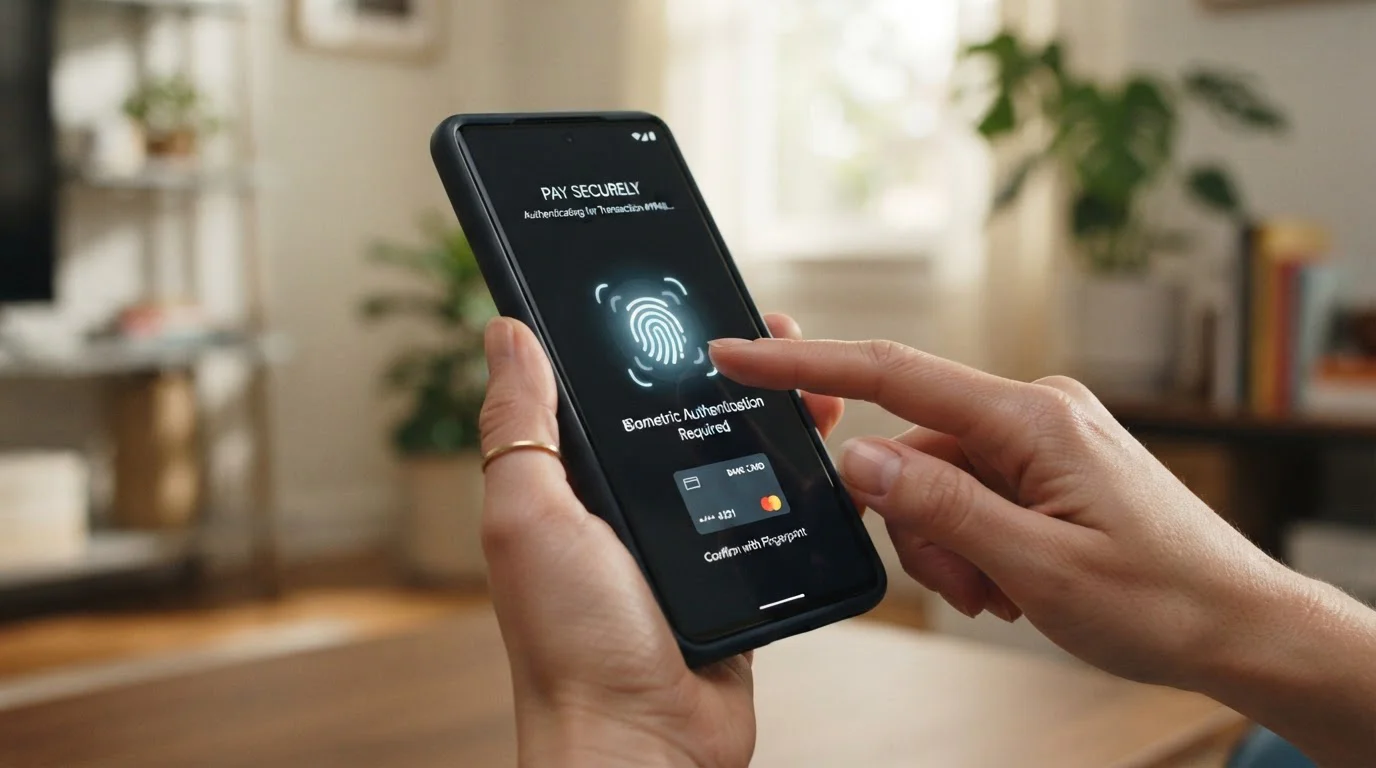
Apple Pay and Google Pay bring biometric convenience to casino deposits — Face ID or fingerprint, one-tap approval, no typing card details into a browser. The catch is bonus treatment: some UK casinos classify them as digital wallets rather than cards and exclude them from welcome offers, even though the payment runs over Visa or Mastercard.
Apple Pay: iPhone convenience with bonus trade-offs
Apple launched Apple Pay in the UK on 14 July 2015, the year after its US debut. It works on iPhone, iPad, Apple Watch and in Safari on a Mac, authorising payments with Face ID, Touch ID or the device passcode.
Acceptance among UKGC-licensed operators is growing as mobile play increases. Larger operators with mobile-first strategies integrated Apple Pay early; smaller desktop-focused casinos often skip it.
Deposits are instant once you’ve added a debit card to Apple Wallet. You tap the Apple Pay button in the casino’s mobile cashier, authenticate, and the payment clears within seconds. Minimum deposits typically start at £10, and maximum deposits follow your card’s underlying limits.
Withdrawals don’t go to Apple Pay — they go to the card behind it. Apple Pay is a way of authorising card payments, not a stored-balance account like PayPal, so the casino processes your withdrawal as a standard debit card payout taking one to three business days, or faster if Visa Fast Funds applies.
Fees are typically zero. Apple charges consumers nothing to use Apple Pay, and the transaction runs through your debit card as normal.
Google Pay: Android alternative with same restrictions
Google launched Android Pay in the UK in 2016, rebranding it Google Pay in 2018 and folding it into Google Wallet in 2022. It works on Android devices and in Chrome, with fingerprint, PIN or pattern authentication depending on your device.
Acceptance mirrors Apple Pay’s, skewed towards mobile-first brands; operators that integrate one usually integrate both. Deposits are instant once you’ve added a debit card, minimums sit at £10, and maximums follow your card’s limits. Withdrawals go to the linked card at standard debit card speed, bonus treatment follows the same mixed pattern as Apple Pay, and Google charges nothing for using it.
Tokenisation and why your card details stay private
Tokenisation replaces your 16-digit card number with a device-specific surrogate. When you add a Visa debit card to Apple Pay, your iPhone requests a Device Account Number via Apple’s servers; Visa generates a unique token, provisions it to your device and links it to your actual card on its own systems. Every Apple Pay or Google Pay transaction sends the token, not your real card number.
The casino’s payment processor receives the token and passes it to the card network, which translates it back to your real card behind the scenes. The charge appears on your card statement, but the casino never saw your card details. If the casino’s database leaked tomorrow, those tokens would be useless to a fraudster because they only work from your device.
Token management happens automatically. Remove a card from Apple Pay or Google Pay and the token is revoked. If your bank reissues your card, the token usually updates without you re-adding it. Wipe or reset your device and the tokens are deleted, so you’ll need to add your cards again.
That security comes at the cost of operator visibility. Casinos rely on card numbers to spot the same card funding multiple accounts and other fraud patterns. Tokenisation hides that information, which is why some operators restrict Apple Pay and Google Pay bonuses and group them with e-wallets, even though the payment rails and chargeback rights are the same as a regular card payment.
Prepaid and Cash Options: Paysafecard
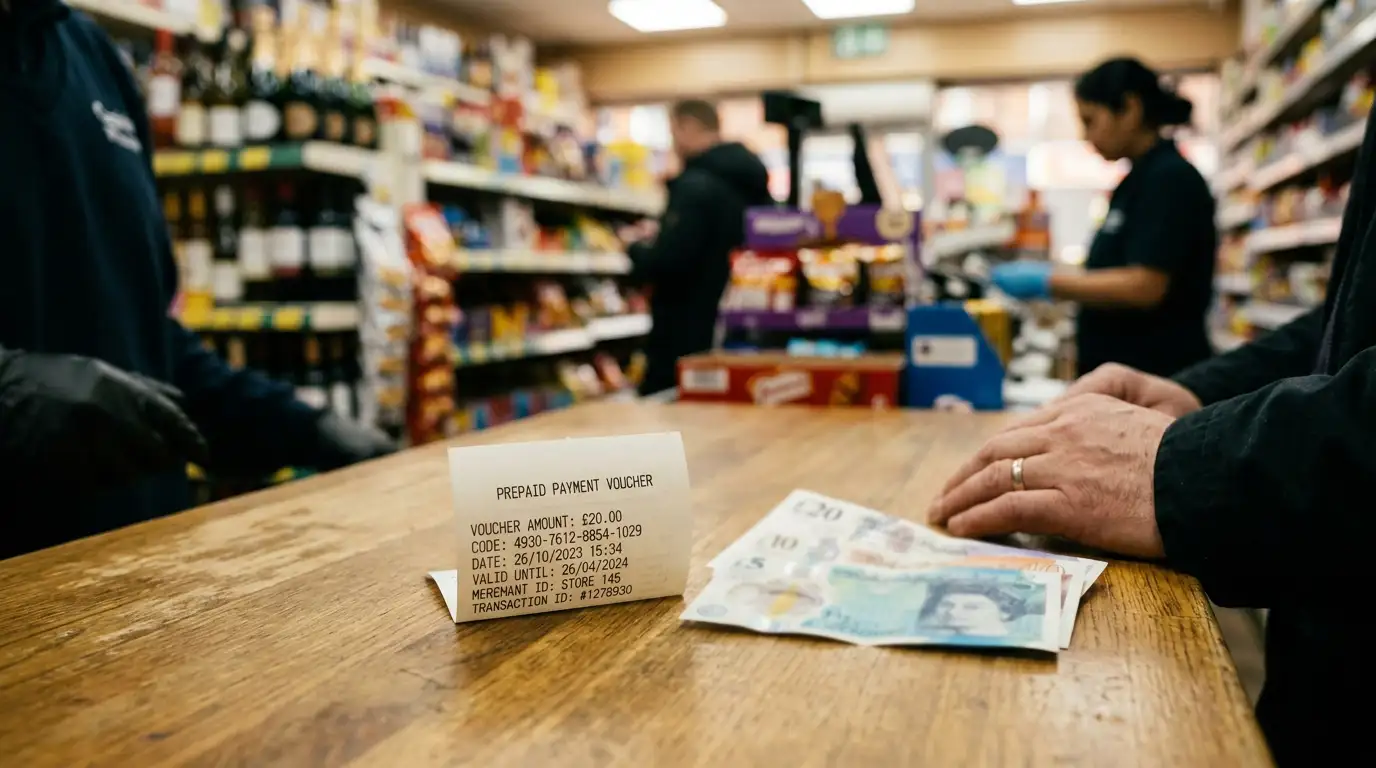
Paysafecard lets you fund a UK casino account with a voucher bought for cash, with no card details entered at the cashier. You buy a voucher with a 16-digit PIN at a newsagent, convenience store or petrol station, redeem it at the casino cashier, and your balance updates instantly. The catch: Paysafecard vouchers are deposit-only, so you need another payment method to receive payouts.
Paysafecard: Cash funding with a fixed budget
Paysafecard was founded in Austria in 2000 and is now part of Paysafe Group, the same owner as Skrill and Neteller. Skrill bought it in 2013, two years before Optimal Payments (now Paysafe) acquired Skrill. Its UK operation is regulated as an e-money issuer.
Acceptance spans a good number of UKGC-licensed operators — below debit cards and the major e-wallets. Tighter anti-money-laundering expectations have made some operators more cautious about prepaid vouchers, and those that accept them tend to have robust monitoring in place.
Deposits are instant. You select Paysafecard at the cashier, enter the 16-digit PIN, and the funds transfer immediately. Vouchers come in fixed denominations — commonly £10, £25, £50 and £100 — and you can combine several PINs in one deposit. The minimum deposit at most casinos is £10, matching the smallest voucher. Operators may cap voucher deposits more tightly than card payments.
Withdrawals to a Paysafecard voucher are not possible — there’s no mechanism to issue you a new voucher and PIN. A few casinos, DAZN Bet among them, can pay out to a registered myPaysafe account instead; most require a debit card, e-wallet or bank account. If Paysafecard is your only method, you will need to add one of those before you can cash out.
Bonus eligibility is often better than for PayPal or Skrill. Operators see vouchers as lower risk because you can’t rapidly cycle deposits and withdrawals through them.
Most UK retailers sell vouchers at face value — you pay £25 for a £25 voucher — though some add a small fee. Casinos typically don’t charge to accept Paysafecard, though a handful impose 1–2%. Paysafecard itself may charge maintenance fees on unused voucher balances after a period of inactivity, so check its current terms.
The withdrawal limitation you must know
Paysafecard’s deposit-only nature means it can’t be your only payment method for UK casino play. That catches players who pick it without realising they’ll need card or bank details at withdrawal time, on top of the identity checks the casino already ran at registration.
The myPaysafe account gives you a digital wallet that can receive withdrawals at a small number of casinos, but registering requires full identity verification. At that point you’re using Paysafecard as an e-wallet with narrower acceptance than Skrill or Neteller.
When Paysafecard makes sense (and when it doesn’t)
Paysafecard makes sense if you want to fund play with cash in fixed amounts and don’t mind withdrawing to a card or bank account. It suits players without a debit card to hand, or those who like the hard ceiling of a £25 voucher as a budget — when it’s gone, it’s gone. Pair that with a deposit limit on your casino account and the budget sticks.
It doesn’t make sense if you want to withdraw the same way you deposit, or if you’re hoping for anonymity. UK casinos verify your identity before you deposit or gamble regardless of method, so Paysafecard keeps card details out of the cashier but never avoids KYC.
Can I withdraw to Paysafecard or Boku at UK casinos?
No. Paysafecard vouchers and Boku phone billing are deposit-only methods. Withdrawals must go to an alternative such as a debit card, e-wallet or bank account, so you need a two-way payment method before you can receive casino payouts. A registered myPaysafe account can receive withdrawals at a few casinos.
Pay by Phone: Boku and Mobile Billing
Boku charges casino deposits to your mobile phone bill or deducts them from prepaid credit, offering a payment option that needs no card details. The £30 per-transaction limit on gambling payments makes phone billing suitable for small recreational deposits only. Like Paysafecard, Boku is deposit-only — you cannot withdraw winnings to your phone bill.
Boku: How phone bill deposits work
Boku was founded in the US in 2009 and listed on London’s AIM market in 2017. It provides the link between casinos and UK mobile networks such as EE, O2, Vodafone and Three, acting as the payment intermediary between operators and carriers. Its UK business is FCA-authorised.
Acceptance is moderate — behind debit cards and the major e-wallets, but common among mobile-focused brands looking for a deposit method that avoids typing card details on a small screen.
Deposits are instant. You select Boku or Pay by Mobile at the cashier, enter your UK mobile number, receive an SMS with a confirmation code, confirm, and the charge appears on your next phone bill (contract customers) or comes off your prepaid balance (pay-as-you-go). Your casino balance updates within seconds.
The £30 per-transaction limit applies to gambling deposits charged to UK phone bills, and networks add daily and monthly caps of their own. Those caps vary by network and account, so a deposit can be declined even if it is under £30.
Minimum deposits typically sit at £10, leaving a narrow £10–£30 range. Most players use Boku for £10 or £20 top-ups.
Withdrawals to mobile billing are impossible by design. Your phone bill is a one-way payment mechanism, so to withdraw winnings you must provide a debit card, e-wallet or bank account.
Bonus eligibility is often good, similar to Paysafecard, because the £30 cap limits how quickly anyone could abuse an offer.
Most UK casinos don’t charge for Boku deposits — the operator absorbs Boku’s processing fee, and your network adds no surcharge.
The £30 limit and why it exists
The £30 cap on gambling payments charged to phone bills is a consumer-protection measure designed to stop one-tap impulse spending from snowballing on a bill that arrives weeks later. Gambling sits in the strictest category for phone payments; other digital purchases can carry higher limits.
That limit makes Boku unsuitable for anything beyond small recreational deposits. With a typical daily cap around £30, funding a £100 bankroll takes four days of separate deposits. A welcome offer that needs a £50 qualifying deposit can’t be unlocked via Boku at all.
Deposit-only reality and who this suits
Boku suits two narrow use cases. First, players without a debit card to hand, such as some pay-monthly mobile customers who prefer not to enter card details on their phone. Second, players who want small, capped deposits: the £30 limit and network caps make it hard to chase losses quickly.
You still need a two-way method for payouts, and the charge shows on your phone bill, so it is not a way to keep gambling out of sight — and if you find yourself wanting to hide spending, that is a signal to use the support and blocking tools described in the safety section.
Boku doesn’t suit players who want withdrawal speed, convenience or serious bankroll management. The £30 cap, deposit-only limitation and need for an alternative payout method create too much friction for anything beyond casual low-stakes play.
Choosing the Right Method for Your Priorities
Each payment category is built around a different priority. Debit cards maximise bonus eligibility and acceptance at the cost of slower withdrawals. E-wallets maximise withdrawal speed at the cost of bonus restrictions. Trustly balances speed and verification convenience with mixed bonus treatment. Paysafecard and Boku offer cash or phone-bill deposits but cannot receive withdrawals. Apple Pay and Google Pay deliver mobile convenience with hit-and-miss bonus eligibility.
| Your Priority | Recommended Method(s) | Why | Trade-offs to Accept |
|---|---|---|---|
| Instant withdrawals | Trustly → PayPal → Skrill/Neteller | Trustly 0-2 hours where supported, PayPal and Skrill/Neteller 0-4 hours | Trustly bonus treatment mixed; PayPal/Skrill/Neteller often excluded from bonuses |
| Welcome bonus eligibility | Debit cards (Visa/Mastercard) | Almost every UK casino accepts debit card deposits for bonuses | 1-3 business day withdrawals (vs hours for e-wallets) |
| Cash budgeting | Paysafecard (cash vouchers) | Fixed-value vouchers bought with cash; no card details at the cashier | Deposit-only (need card/e-wallet/bank for withdrawals); KYC still required |
| Small deposits under £10 | Debit cards → PayPal → Skrill | £5 minimums are common for cards and e-wallets | Boku and Paysafecard start at £10 |
| No debit card | Boku (phone billing) → Paysafecard | Charge to phone bill or buy a cash voucher | Deposit-only; need card/e-wallet/bank account for withdrawals; Boku capped at £30/transaction |
| Mobile convenience | Apple Pay / Google Pay → MuchBetter | Biometric one-tap deposits; mobile-first UX | Apple/Google Pay bonus treatment mixed; withdrawals go to linked card (1-3 days) |
| E-wallet speed + bonus eligibility | MuchBetter | Friendlier bonus treatment than PayPal/Skrill + 0-24 hour withdrawals | Lower casino acceptance than PayPal or Skrill |
| Universal acceptance | Debit cards (Visa/Mastercard) | Accepted at effectively every UK casino | Slower withdrawals than e-wallets; card details shared with processor |
Priority: Instant withdrawals → Choose Trustly or PayPal
Trustly offers the fastest UK casino withdrawals at casinos that support instant payouts, typically within two hours. PayPal follows at up to four hours, with Skrill and Neteller in the same range. All three beat debit cards by at least a day.
Trustly’s edge is the first withdrawal: your bank login confirms account ownership at deposit, which can save 24-48 hours of document checks. After you’re fully verified, PayPal matches it.
The trade-off is bonuses. Trustly’s bonus treatment is mixed and PayPal, Skrill and Neteller are often excluded, so prioritising speed usually means accepting restrictions — or making the qualifying deposit by card, as described in the bonus section.
Priority: Welcome bonus eligibility → Choose debit cards
Debit cards qualify for welcome bonuses at almost every UK-licensed casino; no other method comes close. Paysafecard and Boku often qualify, MuchBetter and Trustly are mixed, and PayPal, Skrill and Neteller are frequently excluded.
The trade-off is withdrawal speed: one to three business days unless the casino supports Visa Fast Funds. Whether that’s worth it depends on the bonus. Take a £100 deposit with a 100% match: you get £100 in bonus funds and, at the 10x cap, need £1,000 in total bets to clear it. On slots with 96% RTP, the expected cost of £1,000 in bets is about £40, so the bonus is worth roughly £60 on average — though any single session can swing well above or below that. For many players that beats saving two days on a withdrawal; for small, quick sessions it may not.
Priority: Cash budgeting → Choose Paysafecard (with caveats)
Paysafecard is the simplest way to fund a casino account with cash. Buy a voucher, enter the PIN at the cashier, and your deposit lands instantly with no card number shared with the casino.
The caveats: it’s deposit-only, and it is not anonymous. The casino verifies your identity at registration, before your first deposit, and may ask for a passport or driving licence and proof of address if electronic checks fall short. You’ll also need a card, e-wallet or bank account in your name to cash out.
Paysafecard’s real value is the fixed budget: a £25 voucher is a £25 session. It does nothing to get around GamStop, bank gambling blocks or affordability checks, and it shouldn’t be used to — identity checks at registration apply whatever the deposit method.
Priority: Small deposits under £10 → Choose debit cards or e-wallets
Debit cards, PayPal, Skrill and Neteller support £5 minimum deposits at many UK casinos, with £10 the most common floor across the board. Boku and Paysafecard start at £10, Trustly typically at £10–£20, and Apple Pay and Google Pay at £10.
For £5 deposits specifically, debit cards are the best choice because they combine the lowest minimums with the widest bonus eligibility. E-wallets match the minimum but are often excluded from offers.
Priority: No debit card → Choose Boku or Paysafecard (with caveats)
Boku and Paysafecard let you deposit without a debit card: Boku charges your phone bill or prepaid credit, and Paysafecard vouchers are bought with cash. Both are deposit-only, so you still need a card, e-wallet or bank account to cash out.
If you don’t have a bank account at all, most UK banks offer basic accounts with a debit card and no overdraft, and those are suitable for receiving withdrawals. Avoid unlicensed offshore sites that pitch crypto as the answer: they are not licensed by the UKGC to serve British players and offer none of the protections, dispute routes or safer gambling tools that licensed casinos must provide.
Do UK casinos charge fees for deposits and withdrawals?
Most UKGC-licensed casinos do not charge fees for debit card, PayPal, Apple Pay or Google Pay transactions. Skrill and Neteller may carry 1-2% deposit fees at some casinos, and the wallets may charge to move money to your bank. Trustly, Paysafecard and Boku are usually fee-free at casino level. Check each casino’s banking page.
What is the minimum deposit at UK online casinos?
Minimum deposits vary by method and casino. Typical ranges: debit cards £5-£10, PayPal £5-£10, Skrill/Neteller £5-£10, Apple/Google Pay £10, Trustly £10-£20, Boku £10 (max £30/transaction) and Paysafecard £10. The most common floor across methods is £10, while only cards and established e-wallets regularly accept £5.
The tiebreaker when several methods serve your priority is bonus eligibility. If two methods deliver equal speed, pick the one that qualifies for bonuses; if two have equal bonus treatment, pick the faster one. Whichever you choose, set a deposit limit when you open the account — it’s the one setting that matters more than any payment method.

Casino Deposit Methods UK 2026 — Compare Payment Options
Content created by the «Bankrol Bridge» team