
Pay N Play Casinos UK 2026: What Actually Works (And What Doesn't)
 Available in GB

Ask about Pay N Play casinos in the UK and you’ll hear contradictory claims. Some casino listings name operators, complete with welcome bonuses and game counts. Others state flatly that Pay N Play isn’t available at all. Both are partially correct, which makes both misleading.
The actual picture: genuine Pay N Play—the instant-access model where your bank login replaces casino registration entirely—doesn’t function at UK Gambling Commission-licensed operators in 2026. It can’t. UKGC rules require identity and age verification before a player deposits or gambles, and that timing requirement breaks the core Pay N Play promise.
What does exist: UKGC-licensed casinos that accept Trustly deposits, such as SpinYoo and DAZN Bet. They use the same open-banking technology Pay N Play runs on, but they still require you to register and pass verification before your first deposit. That’s a Trustly casino, not a Pay N Play casino. The distinction matters.
The confusion clears up quickly once you look at the specific licence conditions, how real UK Trustly casinos handle sign-up, and the practical alternatives UK players can legally use right now. No marketing spin, no offshore operators presented as solutions, no pretending the Swedish model works here when it doesn’t.
Are Pay N Play Casinos Available in the UK? (The 2026 Reality)
The short answer: no, not in the form that made Pay N Play notable in Sweden and Finland.
The longer answer requires separating two things casino marketing routinely conflates: accepting Trustly as a payment method, and offering Pay N Play functionality. A casino can do the first without the second, and most UK casinos claiming “Pay N Play” do exactly that.
Pay N Play, as Trustly launched it in the mid-2010s, combines deposit, identity verification and account creation in one bank transaction. You select an amount, authenticate through your bank, approve the transfer and start playing immediately. No registration form, no waiting for verification. The bank’s strong customer authentication confirms you are the account holder, and that identity data passes through Trustly to the operator in real time.
That synchronous model cannot comply with UKGC rules, which require name, address and date of birth to be verified before a customer is allowed to gamble, and age to be verified before a licensee accepts any money. Before gambling, before accepting money—not during the deposit, and not afterwards.
So when a UK casino lists Trustly in its cashier, what you’re getting is an instant bank deposit option. You still create an account. You still verify your identity, usually via electronic checks and sometimes by uploading documents. Only after that clears can you deposit via Trustly and play. The payment is instant; the onboarding is not.
Are Pay N Play casinos available in the UK in 2026?
No. Genuine Pay N Play—instant gambling access via bank authentication instead of registration—does not operate at UKGC-licensed casinos. Some UK operators, such as SpinYoo and DAZN Bet, accept Trustly deposits, but they require separate verification before your first deposit, which rules them out of the Pay N Play definition used in Nordic markets.
What Is Pay N Play and How Does It Work?
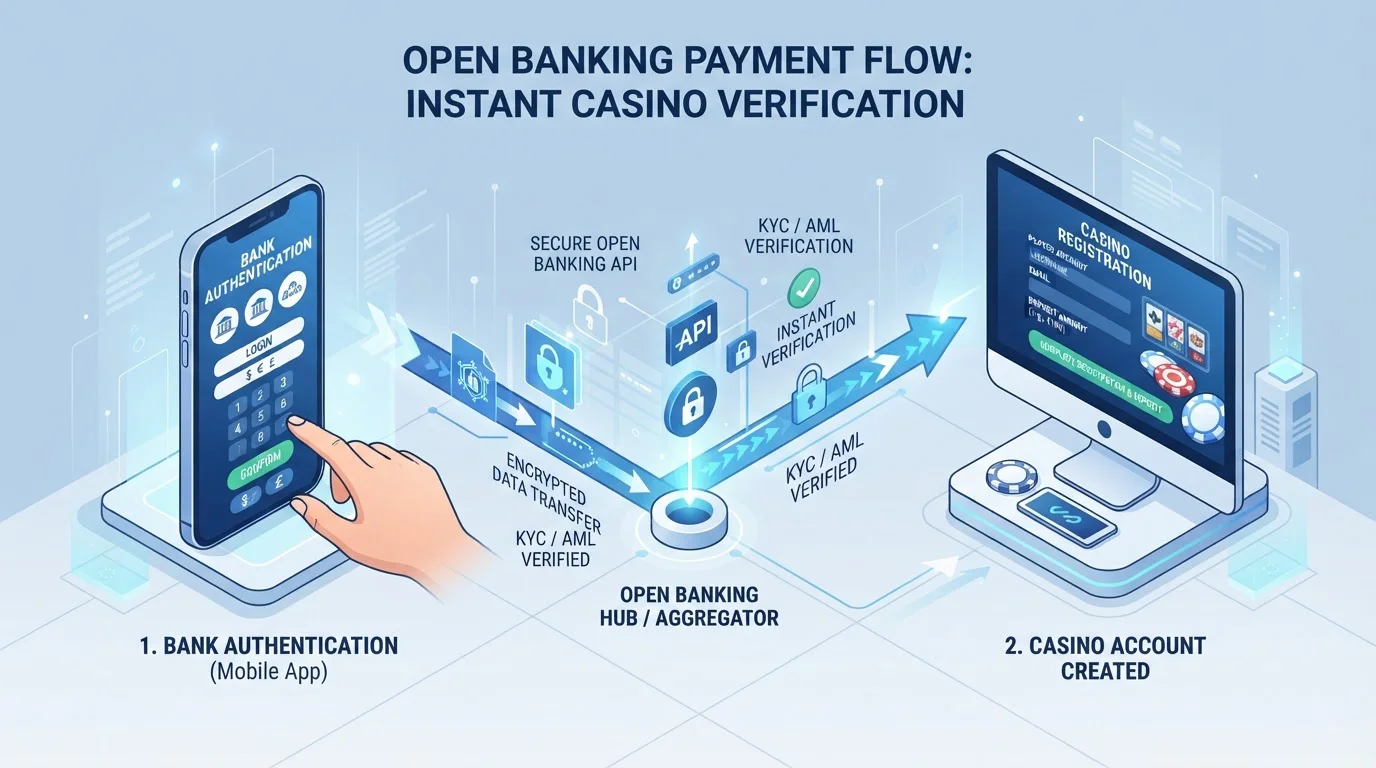
Understanding why Pay N Play doesn’t function in the UK requires understanding what it actually is. The term gets used loosely, often as a synonym for “fast registration” or “instant deposits”. Neither captures it.
Pay N Play is a product Trustly built on Europe’s open-banking rules, which require banks to give authorised third-party payment providers access to customer accounts with the customer’s consent. That created two regulated roles: payment initiation service providers, who start transfers on a user’s behalf, and account information service providers, who read account data. The UK has equivalent rules under its own Payment Services Regulations, and Trustly is authorised to operate here.
At a Nordic casino, the flow runs like this. The player picks a deposit amount and their bank. Trustly presents the bank’s own authentication screen, and the player approves the payment, typically in a mobile banking app. The bank processes the transfer and passes Trustly two things: confirmation of funds and verified account-holder details. The casino creates a session using that data. Account creation is a by-product of payment, not a first step.
The whole sequence takes well under a minute. No registration form, no password, no document upload. The player gambles immediately because the bank verified their identity when they opened the account, and approving the transfer proves the payer is that account holder.
The Technical Foundation: Open Banking and BankID
Pay N Play bypasses card networks entirely. Instead of routing a payment through Visa or Mastercard, Trustly initiates a real bank transfer using the bank’s own rails. Settlement happens in near real time, and transfers are effectively final once sent.
The crucial engineering piece is that identity verification happens at the banking layer, not the casino layer. The casino never handles banking credentials. The bank does the verification under its own licence, so compliance sits with the institution that already knows the customer.
In Sweden, BankID made this frictionless at scale. Since the market was re-regulated in 2019, Swedish licensed casinos have relied heavily on BankID, a national digital identity used across banking and public services. Finnish operators use similar bank-based authentication. Players authenticate once in the banking app they already use daily, and that single step covers both payment approval and identity confirmation.
Pay N Play in Sweden and Finland: The Original Model
Nordic regulators structured their frameworks to accommodate bank-verified identity. When a Swedish player deposits via Trustly at a licensed casino, the bank’s identity confirmation is accepted as meeting know-your-customer requirements. The operator receives verified data and a cleared deposit at the same time, satisfying anti-money-laundering and player-protection obligations in one transaction.
This works because Swedish banks have already carried out strict due diligence when opening accounts. The casino effectively inherits that compliance rather than duplicating it.
The model removed several problems regulators disliked: players abandoning registration mid-flow, operators delaying verification until withdrawal (which drove complaints), and the same identity being checked repeatedly by different operators. Pay N Play consolidated verification into one authoritative touchpoint—the bank.
The UK Difference: Why the Same Technology Doesn’t Work Here
The technology is identical. Open banking works in the UK, and Trustly operates here. What differs is when verification must happen.
Since May 2019, UKGC rules have required operators to confirm a customer’s name, address and date of birth before they are allowed to gamble, and to verify age before accepting any money. The Commission has repeatedly told operators to complete checks as early as possible in sign-up, and has highlighted that asking for documents only at the point of withdrawal is a major source of player complaints.
That timing is incompatible with Pay N Play’s synchronous model. In Sweden, bank authentication during the deposit satisfies the verification requirement and play starts immediately. In the UK, verification must already be complete before the player reaches the cashier, even if the casino would receive the same verified data from the bank during the transaction.
You can see this in how UK Trustly casinos operate. SpinYoo verifies new customers electronically, often within minutes and without documents, but before the first deposit. DAZN Bet asks for photographic ID and proof of address before accepting a first deposit. Both use Trustly for the payment itself, and both add a pre-deposit verification gate that Pay N Play, by definition, does not have.
The UK also lacks a BankID equivalent. Authentication varies from bank to bank, with no standard way of passing verified identity to a casino. Even if the UKGC changed its rules tomorrow, the infrastructure for instant identity transmission isn’t as mature as it is in Sweden.
What’s the difference between Trustly deposits and Pay N Play?
Trustly deposits at UK casinos use the same open-banking technology but come after a separate registration and verification step. Pay N Play in Sweden and Finland verifies identity during the deposit itself, giving instant access to play. UK Trustly casinos therefore offer instant bank deposits with traditional pre-deposit verification, which is a different product.
Why Pay N Play Doesn’t Work at UKGC-Licensed Casinos

The regulatory mismatch is precise, not vague. Three requirements create it.
Licence condition 17 (customer identity) requires licensees to obtain and verify a customer’s name, address and date of birth before that customer is permitted to gamble.
Social responsibility code provision 3.2.11 requires age to be verified before a licensee accepts any money from the customer.
The May 2019 verification rules made this timing explicit after years of operators treating verification as a post-deposit task: checks happen upfront at sign-up, not when the player tries to cash out.
Pay N Play delivers verified identity during the deposit transaction, which is too late under UK rules—even though the data, confirmed by a regulated bank, is as good as anything a casino would get from document checks. Faster bank logins don’t solve a sequencing problem. Pay N Play’s whole value proposition is bank authentication replacing registration; UK rules require registration and verification first. One model or the other has to give.
Swedish and Finnish regulators chose to accept bank-verified identity at the point of deposit. The UKGC has not. Whether that reflects a principled stance on player protection or caution about newer authentication methods is debatable. What isn’t debatable: the rules as written and enforced in 2026 preclude genuine Pay N Play at any UKGC-licensed operator.
The enforcement climate matters too. The Commission has criticised weak identity checks, such as relying on initials rather than full names or delaying checks until withdrawal. No licensed operator is likely to test whether “bank authentication during deposit” counts as prior verification when the regulator keeps pushing checks earlier. The compliance risk outweighs the commercial benefit.
So UK casinos that accept Trustly implement it as a payment method within a normal registration flow. Electronic checks can clear in minutes; document reviews can take hours. Either way the player waits before playing. That’s expedited onboarding with instant banking—better than waiting days for card verification, but fundamentally different from the Swedish model.
Why doesn’t Pay N Play work at UKGC-licensed casinos?
UKGC licence condition 17 requires identity verification before gambling, and social responsibility code provision 3.2.11 requires age verification before a casino accepts money. Pay N Play delivers identity data during the deposit transaction, which is too late under UK rules. Swedish and Finnish regulators accept bank-verified identity at deposit; the UKGC does not.
UK Casinos That Accept Trustly and Instant Banking (The Closest You’ll Get)
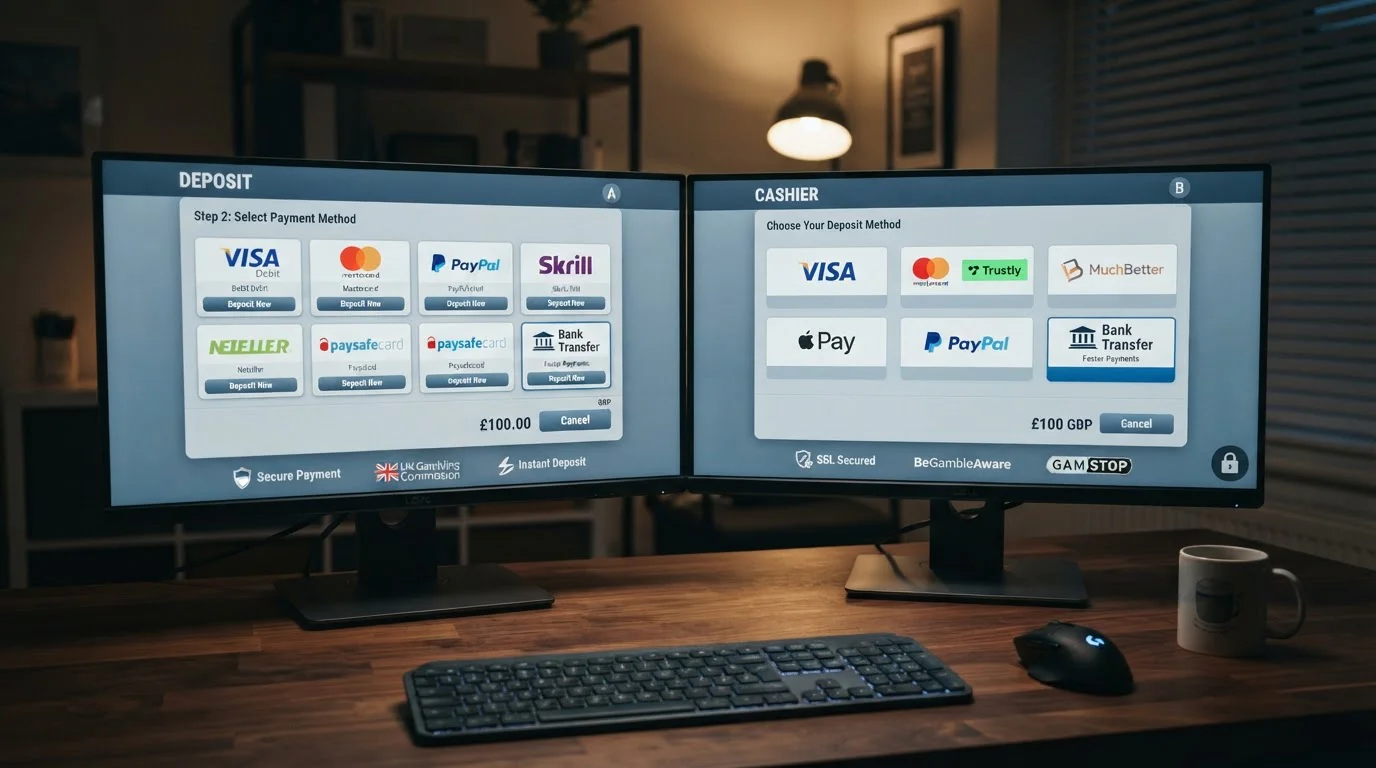
SpinYoo and DAZN Bet are two UKGC-licensed casinos that accept Trustly deposits. Neither offers Pay N Play as Swedish casinos define it, because both require verification before your first deposit. What they do offer is instant bank deposits via open banking once you’re verified, and withdrawals that are usually quicker than debit card payouts. That’s the closest UK players can legally get to the Pay N Play experience.
Here’s how the two compare:
| Operator | Licence | Verification Method | Minimum Deposit | Typical Trustly Withdrawal | Payment Methods |
|---|---|---|---|---|---|
| SpinYoo | UKGC | Electronic, often within minutes | £10 | 1–2 working days | Trustly, PayPal, Visa, Mastercard, Apple Pay, Skrill, Neteller |
| DAZN Bet | UKGC | Photo ID + proof of address | £5 | 1–2 working days | Trustly, PayPal, Apple Pay, Skrill, Paysafecard, bank transfer |
Neither charges fees for Trustly deposits or withdrawals, and both pay winnings only to a bank account in the account holder’s own name, as UK anti-money-laundering rules require.
SpinYoo Casino: Quick Electronic Verification
SpinYoo holds a UKGC licence alongside a Malta Gaming Authority licence; you can confirm the UK licence on the Commission’s public register. The game library runs to thousands of titles from a long list of providers, which puts it towards the larger end of UK operators by game count.
Electronic age and identity checks usually complete within minutes without documents, which makes SpinYoo one of the quicker Trustly casinos to get started with—though that check still comes before the first deposit. Once you’re verified, Trustly deposits credit almost immediately, and withdrawals generally reach your bank within one to two working days of the request.
The payment spread is broader than DAZN Bet’s: Trustly, PayPal, Visa and Mastercard debit, Apple Pay, Skrill and Neteller. That flexibility suits players who like instant bank deposits but prefer e-wallet withdrawals. The loyalty side leans on free spins rather than cashback or comp points, with regular promotions for existing players.
The site works in mobile browsers without a dedicated app, and customer support runs around the clock, although live chat queues can lengthen at busy times.
Who SpinYoo suits: players who want fast electronic verification rather than document uploads, and slot fans who value variety. The £10 minimum deposit sits mid-range; DAZN Bet’s £5 floor is lower.
DAZN Bet: £5 Minimum with Trustly Support
DAZN Bet is the betting arm of DAZN Group, the sports streaming company, and holds a UKGC licence. It launched in the UK in 2022 as a sportsbook-first brand, with the casino added as a secondary product, and that heritage shows in its focus on sports odds and event coverage.
Verification requires photographic ID and proof of address before your first deposit. That’s stricter than SpinYoo’s electronic route and adds friction if you don’t have documents to hand; depending on manual review, onboarding can take minutes or hours. Once cleared, Trustly deposits are instant, and the £5 minimum is half SpinYoo’s.
Withdrawal times vary by method. Trustly, PayPal and Apple Pay payouts typically take one to two working days, Skrill one to three days, and debit cards and bank transfers up to five working days.
The casino library is smaller than SpinYoo’s, a mid-sized selection rather than an exhaustive catalogue.
Who DAZN Bet suits: players with small budgets who want Trustly at the lowest entry point, and sports bettors happy to upload documents. Casino-first players will usually find SpinYoo the better fit.
How long does verification take at UK Trustly casinos?
It depends on the operator’s method. SpinYoo’s electronic checks usually finish within minutes and need no documents. DAZN Bet asks for photographic ID and proof of address upfront, so approval can take anywhere from minutes to hours. Either way, UKGC licence condition 17 means verification is completed before you can deposit.
Which UK casinos accept Trustly for instant deposits?
A number of UKGC-licensed casinos accept Trustly, including SpinYoo (£10 minimum deposit) and DAZN Bet (£5 minimum deposit). Both require you to register and pass verification before your first deposit, so they offer Trustly as a payment method within a traditional sign-up flow rather than operating as genuine Pay N Play casinos.
The Best Alternatives to Pay N Play for UK Players
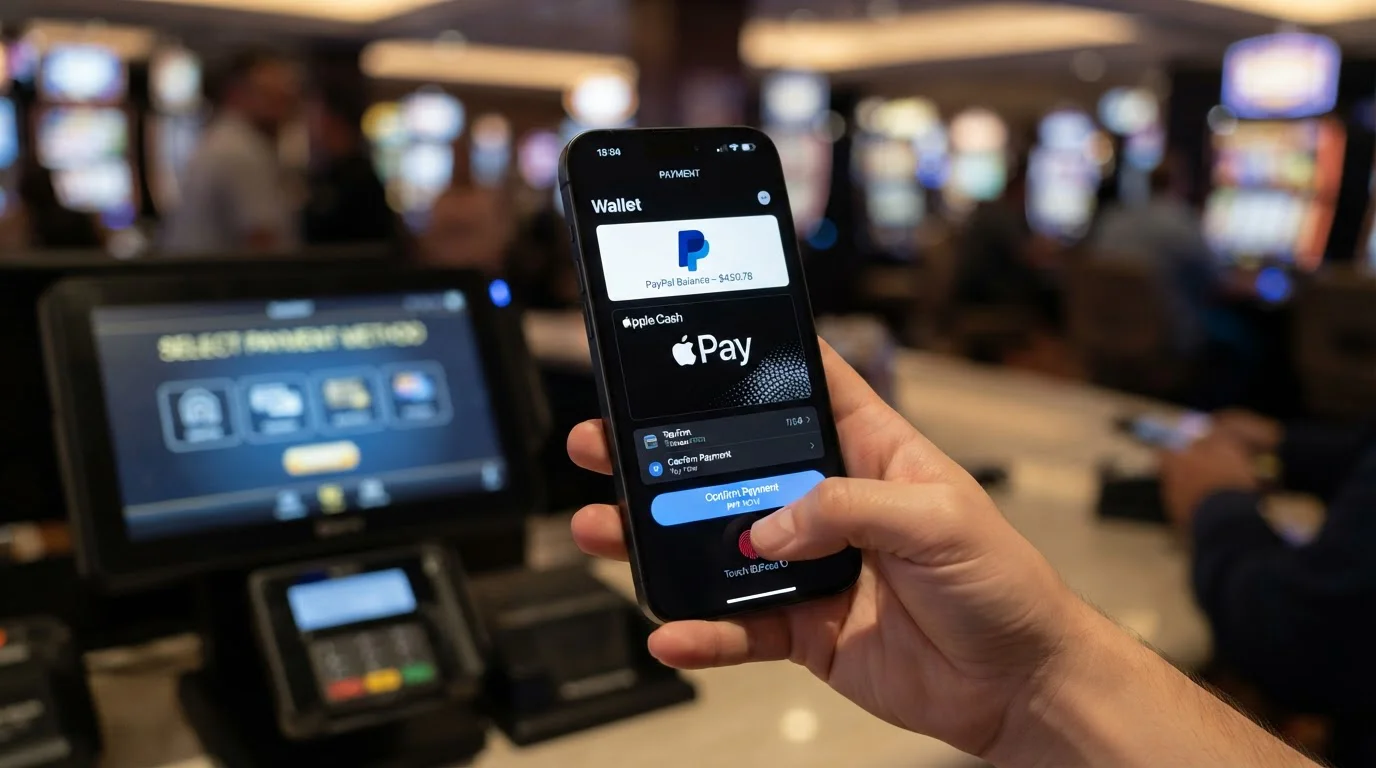
Since Pay N Play doesn’t function at UKGC casinos, UK players who want instant deposits and fast onboarding need practical substitutes. Several deliver part of the Pay N Play promise—instant payments, quick verification, streamlined access—without offshore operators or regulatory workarounds.
| Payment Method | Separate Account Needed | Deposit Speed | Typical Withdrawal Speed | Key Advantage |
|---|---|---|---|---|
| PayPal | Yes | Instant | Often within 24 hours | Widest e-wallet acceptance at UK casinos; casino never sees bank details |
| Apple Pay | No (uses your debit card) | Instant | 1–5 days (to card) | Biometric approval; tokenised card details |
| Google Pay | No (uses your debit card) | Instant | 1–5 days (to card) | Android-native; fingerprint or PIN approval |
| Skrill / Neteller | Yes | Instant | 24–48 hours | Established gambling e-wallets |
| Debit Card | No | Instant | 1–5 days | No setup; accepted everywhere |
PayPal leads on coverage and withdrawal speed. Apple Pay and Google Pay win on mobile convenience. Skrill and Neteller are fallbacks when PayPal isn’t listed, and debit cards remain the universal option but lose on payout speed.
PayPal: The Most Widely Accepted E-Wallet
PayPal is the most widely supported e-wallet at UKGC casinos, ahead of Skrill, Neteller and every other non-card method. Deposits are instant, and withdrawals at most operators land within 24 hours of the request—sometimes much faster—compared with one to five days for debit cards.
The e-wallet structure adds a privacy layer that card deposits lack: your bank and card details stay with PayPal, and the casino sees only the PayPal transaction. Withdrawals must return to a PayPal account in your own name, the same closed-loop rule that applies to Trustly and cards.
Most UK casinos charge nothing for PayPal deposits or withdrawals, and minimum deposits typically sit at £5–£10.
PayPal is also a useful licensing signal. It only processes gambling payments for operators licensed in the markets they serve, so a casino aimed at UK players that lists PayPal is very likely UKGC-licensed—though the register remains the final check.
BetMGM, Virgin Bet, MrQ, Casumo and Betway are well-regarded PayPal casinos, each with an active UKGC licence and PayPal available at accessible minimums.
Apple Pay and Google Pay: Mobile-First Instant Deposits
Dozens of UKGC casinos accept Apple Pay and Google Pay. Both tokenise your card, so the casino never sees the actual card number—only a one-time transaction code.
Apple Pay works on iPhone, iPad and Apple Watch, approving payments with Face ID or Touch ID. No typing card numbers on a mobile keyboard, no switching to a banking app.
Google Pay mirrors the model on Android, using fingerprint or PIN authentication. Most operators support both wallets or neither, depending on their mobile payment set-up.
Deposits are instant. Withdrawals go back to the underlying debit card, not the wallet, on normal card timescales of one to five working days. That slower payout is the trade-off for not needing a separate e-wallet account, and if you already use either wallet for shopping, there’s nothing extra to set up. There are no player fees, and minimum deposits are typically £5–£10.
BoyleSports, William Hill, Highbet, Betway and 888 Casino all accept Apple Pay in their mobile cashiers, and Google Pay is offered by a similar group of major brands. If you deposit exclusively from a phone, either wallet removes most of the friction; if fast withdrawals matter more, PayPal is the stronger choice.
Other Open Banking Options
Beyond Trustly, other open-banking providers operate at UK casinos, though with patchier support. They use the same account-to-account infrastructure, moving money directly between banks without card networks. Deposits are instant where accepted, and withdrawals usually clear the same or next working day once the casino releases them.
Branding is inconsistent—”Instant Bank Transfer”, “Pay by Bank” or the provider’s own name—so it pays to look closely at the cashier. The advantage over cards is that no card details are involved and payouts tend to be quicker. The disadvantage compared with PayPal is narrower acceptance and less familiar branding.
Is PayPal faster than Trustly at UK casinos?
Usually, yes. PayPal withdrawals at most UK casinos land within 24 hours of the request, while Trustly withdrawals at SpinYoo and DAZN Bet typically take one to two working days end to end. PayPal is also accepted at more UK operators. For deposits there is no difference, because both methods credit your balance instantly.
What are the best alternatives to Pay N Play for UK players?
PayPal offers the widest e-wallet acceptance at UKGC casinos and withdrawals that often land within 24 hours. Apple Pay and Google Pay provide instant mobile deposits with biometric approval. All three still need standard registration and verification, but together they deliver the instant-deposit experience Pay N Play promises within UK rules.
What About Non-GamStop Pay N Play Casinos?
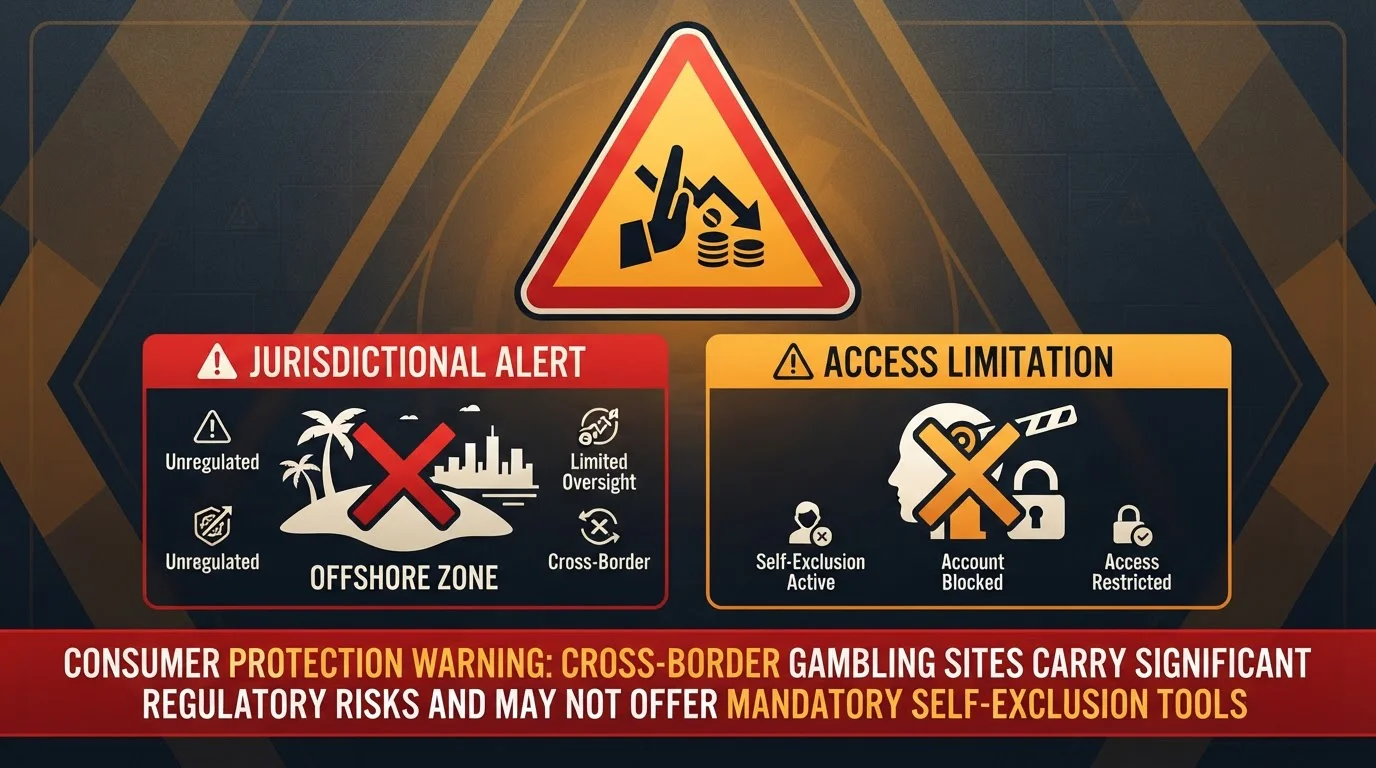
GamStop is the national self-exclusion scheme every UKGC-licensed online operator must join. Offshore operators outside it often use the Pay N Play label, marketing themselves as “Pay N Play UK” sites to players frustrated by registration checks or excluded through GamStop.
The legal position is clear: offering online gambling to people in Great Britain without a UKGC licence is unlawful under the Gambling Act 2005. The offence is the operator’s, not the player’s, but these sites are unlicensed for Great Britain and give you none of its protections.
No funds-protection disclosure. UKGC-licensed operators must tell you how well your balance is protected if the business fails (not protected, medium or high). There is no compensation scheme even in the UK, but offshore sites tell you nothing at all, and your money can be caught up in insolvency, payment disputes or account closures.
No independent dispute resolution. UKGC licensees must use an approved Alternative Dispute Resolution provider, such as IBAS, if a complaint can’t be settled. Offshore operators have no equivalent obligation; disputes end where the operator decides they end.
Getting round self-exclusion is the selling point. Many offshore “Pay N Play” sites position themselves explicitly as GamStop alternatives, framing UK player protections as obstacles rather than safeguards. If you excluded yourself because gambling was causing harm, a site that lets you carry on is exploiting that harm, not solving a problem.
Payment options tell the story. Mainstream payment providers generally refuse to process gambling transactions for operators unlicensed in the market they serve, which is why offshore casinos lean on cryptocurrency and obscure processors. That reflects regulatory non-compliance, not innovation.
If you’re looking at non-GamStop sites because you’re excluded and want to keep playing, treat that as a warning sign rather than a problem to solve. Free, confidential support is available around the clock from GamCare’s National Gambling Helpline on 0808 8020 133. GamStop can explain how your exclusion works (periods of six months, one year or five years, taking effect within 24 hours), and most UK banking apps let you switch on a gambling block for your debit card.
If you’re looking because UK verification feels invasive or slow, the frustration is understandable. But PayPal, Apple Pay and Trustly at licensed casinos all offer instant or near-instant deposits with regulatory backstops if something goes wrong. Giving up legal protection for a few minutes saved at sign-up is a poor trade.
Can I use Pay N Play casinos not registered with GamStop?
Offshore “Pay N Play” casinos that target UK players without a UKGC licence are operating unlawfully, and playing there removes funds-protection disclosure, independent dispute resolution and safer-gambling safeguards. If you self-excluded via GamStop, those sites undermine a decision you made to protect yourself, and talking to a support service is the better next step.
Deposits, Withdrawals, and Speed at UK Trustly Casinos
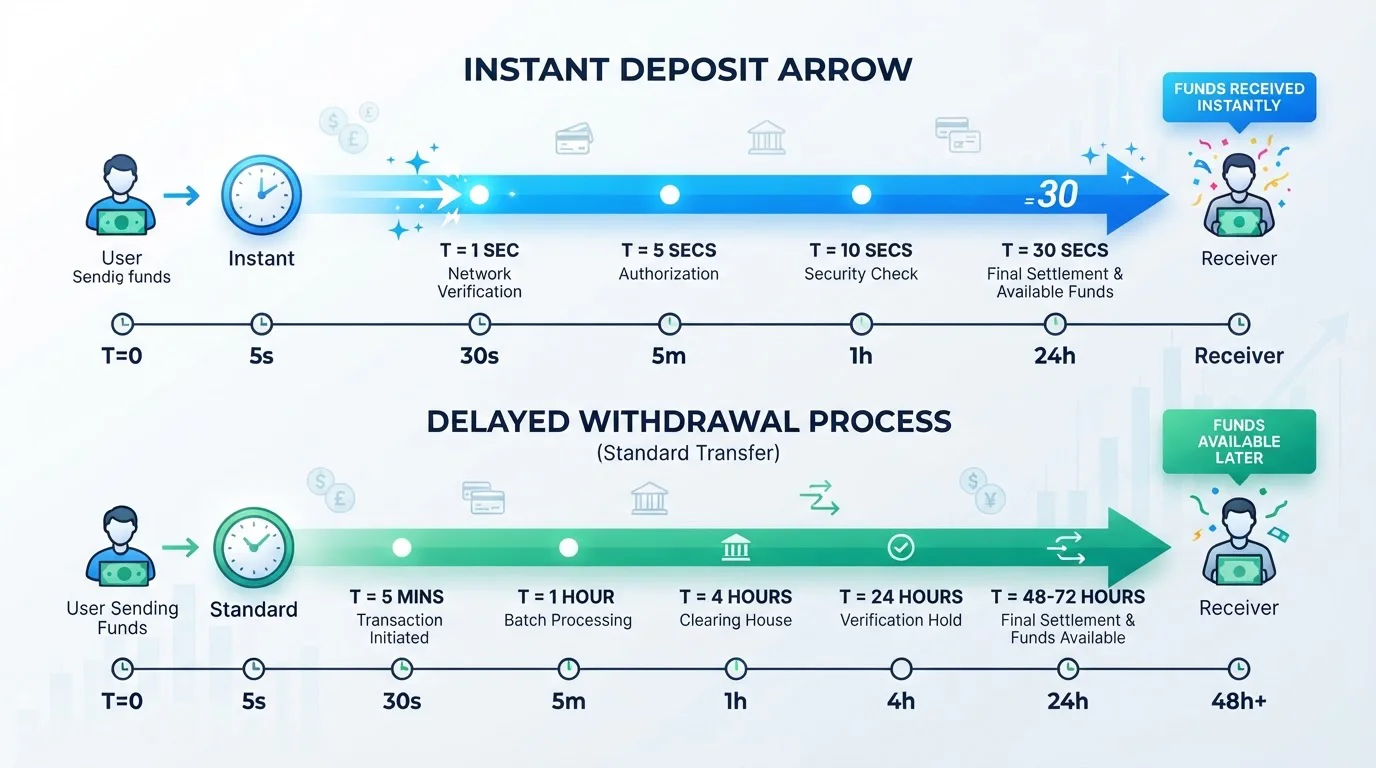
Trustly deposits credit within a minute or two at both SpinYoo and DAZN Bet—fast enough that your balance updates before you leave the cashier.
Withdrawals take longer, as they do for every method at every UK casino. The UKGC doesn’t set maximum payout times, but e-wallets and instant banking typically take up to a day or two, and cards one to five days. At SpinYoo and DAZN Bet, Trustly withdrawals usually reach your bank within one to two working days of the request.
Most of that delay sits with the casino, not Trustly. Once a casino approves a payout and sends it, the transfer itself typically completes quickly; the waiting time reflects internal processing such as fraud checks, manual reviews and batch payment schedules.
Closed-loop rules apply everywhere. Trustly withdrawals must go to a bank account in your own name, matching your casino account. The same rule governs cards, PayPal and every other method.
Limits vary by operator. SpinYoo sets a £10 minimum deposit and DAZN Bet £5. Maximum withdrawal limits depend on the account, so higher-stakes players should check the terms before depositing large sums.
No fees at either operator. Trustly doesn’t charge players, and neither casino adds a surcharge. Fee-free is the norm at competent UK casinos; a deposit or withdrawal fee is a reason to look elsewhere.
Bank compatibility is broad but not complete. Trustly supports the major UK high-street banks, but some smaller building societies and newer app-only banks may be missing. If yours isn’t supported, the bank-selection screen will show it, and a card or PayPal at the same casino is the fallback.
Your own deposit tools still apply. Every UKGC casino lets you set deposit limits. Reductions take effect immediately, while increases only apply after a cooling-off period, so it’s worth setting a limit at sign-up rather than waiting until you need one.
Do I need to create an account to use Trustly at UK casinos?
Yes. UK casinos that accept Trustly require normal account registration and pre-deposit identity checks under UKGC licence condition 17. Trustly then processes your deposit instantly once verification clears, but you are not skipping registration, and that is exactly what separates UK Trustly casinos from genuine Pay N Play in Sweden and Finland.
Making a Trustly Deposit at a UK Casino, Step by Step
The process is quick once your account is verified, but it helps to know what each screen is asking for.
Start by registering with the casino in the normal way: name, address, date of birth, email and mobile number. Most UK operators run electronic checks against credit-reference and electoral-roll data in the background, and if those match you can move straight on. If they don’t, you’ll be asked to upload a passport or driving licence and a recent utility bill or bank statement. Doing this before you want to play avoids frustration later.
Before depositing, open the safer-gambling or account-limits section and set daily, weekly or monthly deposit limits that fit your budget. It takes a minute and is much easier to do calmly at the start than mid-session.
In the cashier, choose Trustly (sometimes labelled “Pay by Bank” or “Instant Bank Transfer”), enter the amount and pick your bank from the list. On a phone you’ll usually be handed straight to your banking app; on a desktop you may scan a QR code or log in through the browser. Approve the payment with your normal banking security, and you’ll be returned to the casino with the balance updated.
Your bank statement will show the payment, typically referencing Trustly or the casino’s operating company. When you withdraw, the money goes back to the same account, which must be in your name. If anything looks wrong—a payment taken but not credited, or a withdrawal that stalls—contact the casino’s support first, then use its complaints process and, if needed, the approved dispute-resolution service named in its terms.
Bonuses and Promotions at Trustly-Accepting Casinos
SpinYoo and DAZN Bet run standard UKGC welcome offers, with wagering requirements capped at 10x the bonus since 19 January 2026. Neither offers Trustly-specific bonuses, and the payment method you choose doesn’t change bonus eligibility at either operator—contrary to the old claim that Pay N Play casinos offer “fewer bonuses”.
That claim began in Nordic markets, where some Pay N Play casinos limited welcome offers for instant-access players to deter bonus abuse: without registration friction, it is easier to open multiple accounts. UK operators don’t face the same problem, because pre-deposit verification already adds that friction back in. Whether you fund with Trustly, PayPal or a card, you’ve completed identity checks.
SpinYoo’s welcome offer is built around free spins linked to the size of your first deposit, which suits slot players. DAZN Bet’s headline offer is sportsbook-focused, with casino promotions less prominent, reflecting the brand’s sports-first positioning. Check the current terms on each site, as offers change.
Neither offer is remarkable by UK standards, and Trustly acceptance has nothing to do with bonus generosity. Ongoing promotions lean towards loyalty mechanics—free spins for regulars at SpinYoo, price boosts and similar sportsbook offers at DAZN Bet. Players choosing Trustly for deposit speed aren’t sacrificing bonus value.
Safety, Licensing, and How to Verify a UK Casino
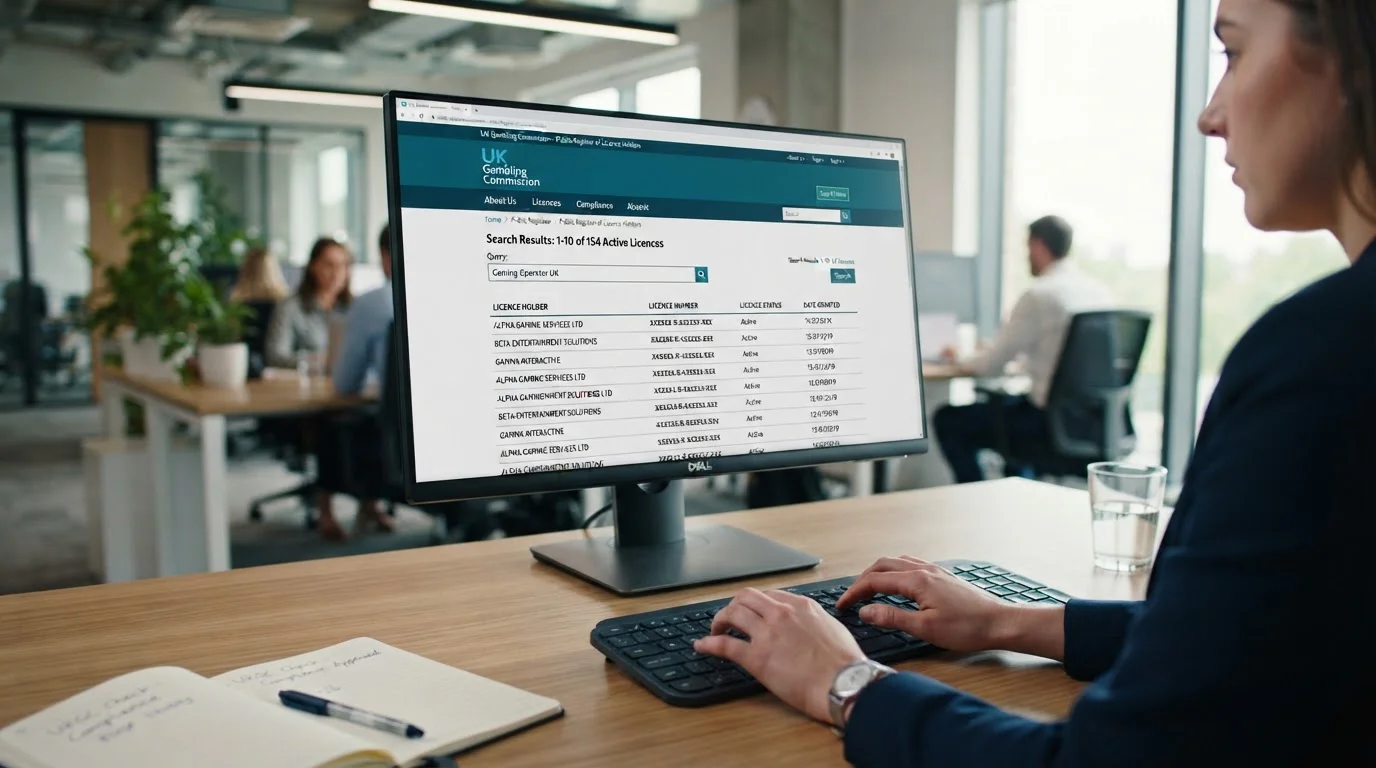
Every legal UK casino holds a licence issued by the UK Gambling Commission, searchable in the public register at gamblingcommission.gov.uk. Any website can claim to be licensed; the register is the ground truth. Checking takes three steps:
| Step | What to do |
|---|---|
| Find the legal entity | Note the casino’s operating company, usually named in the footer or terms, rather than the brand name |
| Search the register | Search the UKGC public register by company name or account number |
| Check the details | Confirm the licence is active, covers remote gambling and includes casino activities rather than only software supply or ancillary services |
Operators without UKGC licences cannot legally serve UK customers, regardless of which payment methods they list or what their marketing claims.
Red flags signalling unlicensed operation:
- No licence number in the footer or terms
- A licence from Curaçao, Malta or elsewhere with no matching UKGC licence for British customers
- Payment options dominated by cryptocurrency or obscure processors
- Marketing references to “non-GamStop” or bypassing UK self-exclusion
- A recently registered domain with anonymous ownership
Licensed operators must:
- Disclose how well player funds are protected if the business fails (not protected, medium or high)
- Use an approved Alternative Dispute Resolution provider
- Participate in GamStop and enforce self-exclusions
- Carry out financial-risk checks and provide safer-gambling tools
- Verify age and identity before accepting deposits
- Display licence details and safer-gambling resources
Those requirements exist because gambling harms a minority of players, and unregulated operators have no incentive to reduce that harm. UKGC licensing isn’t perfect—complaints still arise and operators still push boundaries—but it is a floor that unlicensed sites don’t meet.
A familiar payment logo is not proof of legitimacy either. Always confirm UKGC licensing separately, whatever appears in the cashier.
Will Pay N Play Ever Be Available at UK-Licensed Casinos?
Possible, but not imminent as of 2026.
Two things would need to change. First, the UKGC would need to accept bank-verified identity received during a deposit as satisfying its verification rules, allowing instant play without a separate pre-deposit check. Second, UK banking would need a standard way of passing verified identity to operators, comparable to Sweden’s BankID.
Neither looks likely in the near term.
Digital identity frameworks are advancing slowly. The government’s UK digital identity and attributes trust framework sets standards for certified digital verification services, and that could one day support bank-issued or certified digital IDs being used for gambling checks. But the UKGC has not signalled any move in that direction; its emphasis remains on verifying early and thoroughly.
Operator incentives are mixed. Instant access would reduce onboarding friction and could lift sign-ups. But verification also filters out fraud and bonus abuse, and some operators value that. Without a regulatory green light, the question is academic.
Nordic precedent doesn’t transfer neatly. Sweden built its re-regulated market around bank-based identity from the start, making Pay N Play a design feature rather than a retrofit. UK gambling regulation predates open banking, and retrofitting an instant-access model would need regulatory appetite the UKGC hasn’t shown.
The likely outcome: UK Trustly casinos keep pre-deposit verification for the foreseeable future, while PayPal and mobile wallets handle much of the instant-deposit market. Pay N Play, as a distinct instant-access model, stays Nordic-specific unless the regulator changes course.
Will Pay N Play ever be available at UK-licensed casinos?
Unlikely in the near term. The UKGC would need to accept bank-verified identity received during a deposit, and UK banking would need a BankID-style way of sharing verified identity with operators. The regulator’s current emphasis is on verifying earlier, not later, so pre-deposit verification will almost certainly remain the UK norm.
The Pros and Cons of Trustly and Instant Banking at UK Casinos
| Advantages | Disadvantages |
|---|---|
| Instant deposits. Trustly credits your balance within a minute or two. | Patchier coverage than PayPal. Fewer UK casinos list Trustly than PayPal, so check the cashier first. |
| No card details involved. Payments are approved in your banking app; the casino never handles card numbers. | Not actually Pay N Play. SpinYoo and DAZN Bet both require pre-deposit verification. |
| Faster withdrawals than cards. Typically one to two working days versus up to five for debit cards at many operators. | Often slower than PayPal for withdrawals. PayPal payouts frequently land within 24 hours. |
| No fees at SpinYoo or DAZN Bet. Trustly doesn’t charge players and neither operator adds surcharges. | Verification unchanged. You still register, complete checks and wait for approval. Trustly speeds up the payment, not the onboarding. |
| Bank-grade security. Strong customer authentication through your own banking app. | Bank compatibility varies. Some smaller building societies and app-only banks may not be supported. |
Trustly makes sense for players whose bank is supported and who prefer paying straight from their bank account over setting up an e-wallet, and for SpinYoo or DAZN Bet customers who want the quickest deposit method those sites offer.
For most other players, PayPal or a mobile wallet is the simpler choice: PayPal is accepted at more UK casinos and usually pays out faster, while Apple Pay and Google Pay give mobile users instant deposits with biometric approval and no extra account. Trustly is a solid option where it is offered—just don’t expect it to recreate the Swedish Pay N Play experience in a UK cashier.
Casino Deposit Methods UK 2026 — Compare Payment Options
Content created by the «Bankrol Bridge» team