
Credit Card Casinos and UK Players in 2026: Why the Door Is Shut and What It Costs to Force It
 Available in GB
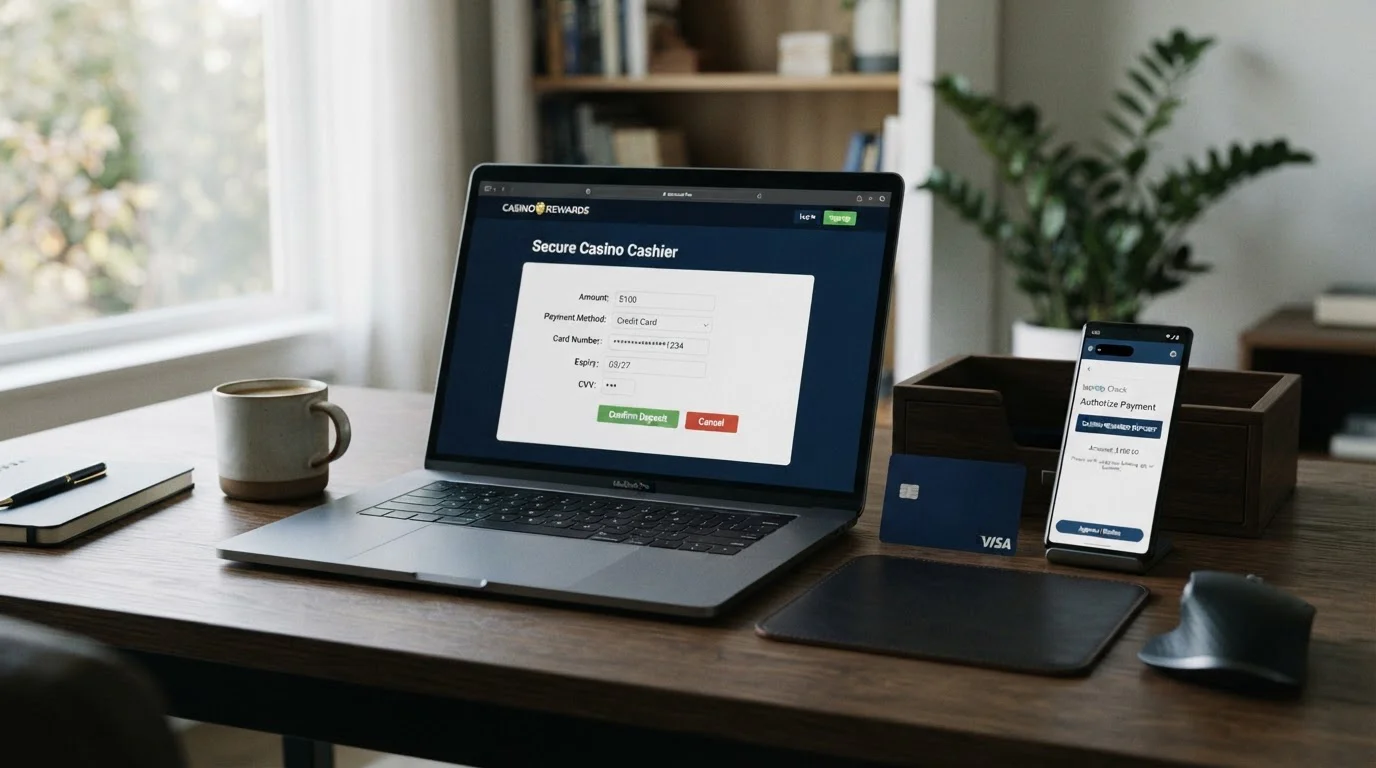
Search for a UK casino that takes credit cards and you’ll find a wall of green ticks and “Claim Bonus” buttons. What almost nobody says plainly, up top, is the one fact that governs the whole subject: no casino licensed by the UK Gambling Commission will take your credit card. Not bet365, not William Hill, not any of the household names. That door shut on 14 April 2020 and it has stayed shut.
So when a site promises credit card deposits to UK players, it is telling you something about itself, whether it means to or not. It has no UKGC licence. It usually trades on a Curaçao licence, a company registration somewhere that doesn’t license gambling at all, or no verifiable licence whatsoever. An operator that takes bets from people in Great Britain without a Commission licence is acting unlawfully. The offence is the operator’s rather than yours, but the consequences land on you, because none of the British protections come with the account.
The real story, then, is about why the ban exists, what an offshore card casino actually is, what borrowing to gamble costs once a card issuer applies cash advance terms, and why getting money back from an unlicensed site is harder than putting it in. Just as important are the lawful ways to pay at a licensed casino, and the free tools and services that help if gambling on credit has already started to bite.
Why UK Casinos Stopped Accepting Credit Cards in 2020
The Gambling Commission announced the ban on 14 January 2020, gave operators three months to prepare, and enforced it from 14 April 2020. Every operator holding a British licence, online and land-based, had to stop accepting credit cards for gambling. The rule reached beyond the card itself: any route through an e-wallet or other payment processor that was funded by a credit card was caught too.
The rationale was harm reduction. Commission data showed that 22% of online gamblers who used credit cards were classed as problem gamblers, against 11% across all payment methods. Credit lets people gamble with money they don’t have, and it removes the natural stopping point of an empty current account. Combine that with fast online slots and the outcome is predictable.
Evaluation after the ban suggested the policy did what it set out to do: credit card gambling fell among people who had used cards before, without a matching rise in harmful borrowing through other routes. Card issuers moved in the same direction. Several major UK card issuers decline gambling transactions on their credit cards, and they identify those payments by merchant category code 7995, the code card networks assign to betting and casino merchants. Because the code travels with the payment, an issuer block catches gambling transactions wherever the merchant is based, not just at UK-licensed sites.
In practical terms for 2026: if a casino holds a UKGC licence and appears on the Commission’s public register, it will not take your credit card, by any route. A credit card option in a cashier is therefore one of the quickest tells that a site is operating outside the British system.

Does the credit card ban also cover e-wallets and other payment routes?
Yes. The ban covers any payment to a UKGC-licensed operator that is funded by a credit card at any point, so topping up PayPal, Skrill or another e-wallet with a credit card and then paying a casino from it is blocked too. Debit cards, bank transfers and debit-funded wallets remain fully permitted.
What Offshore Card Casinos Are, and Why They Can’t Lawfully Serve GB Players
The operators that still process Visa and Mastercard payments from people in Britain are mostly Curaçao-licensed. A few lean on a Costa Rican company registration, an Anjouan licence, or show no licence at all. None of them appears on the UKGC register, none is enrolled in GamStop, and none is permitted to take British customers. The Gambling Act 2005 requires anyone providing remote gambling to people in Great Britain to hold a Commission licence, and these businesses don’t.
They tend to look polished. Large game libraries from well-known studios, live dealer tables, sportsbooks, generous-sounding welcome packages and a cashier full of familiar logos are standard. None of that tells you anything about who stands behind the money. The questions that matter are duller: who owns the company, which regulator (if any) licenses it, whether that licence can be checked, and what happens if the operator refuses a withdrawal or closes your account.
Licence claims are the first thing to examine, and they vary more than the slick front ends suggest. Here’s what the common ones mean for a player in Great Britain:
| What the site’s footer shows | What it actually means | Position for a GB player |
|---|---|---|
| UKGC account number that matches the public register | Licensed for Great Britain | Cannot accept credit cards; full UK protections apply |
| Curaçao Gaming Authority licence (OGL/2024 numbers) | Regulated in Curaçao under the regime introduced in 2024 | Unlicensed for GB; no GamStop, no UK-approved dispute service |
| 8048/JAZ-style sublicence reference | Issued under Antillephone’s former master licence; the master-licence system ended in 2024 | Status may be out of date; only the CGA’s current register settles it |
| Costa Rica company registration | A company registration, not a gaming licence; Costa Rica issues none | No gambling regulator at all |
| Anjouan licence | Licence from a small offshore jurisdiction with limited oversight | Unlicensed for GB; very little external scrutiny |
| Malta or Gibraltar licence only | Respected regulators, but no authority to permit GB play | Still unlawful to serve GB without a UKGC licence |
| No licence number shown | No identifiable regulator, often no named owner | No recourse beyond the operator’s own goodwill |
Two patterns deserve particular suspicion. The first is inconsistency: a site that cites a Curaçao licence on one page and a Costa Rican registration on another has already failed the most basic test of transparency, because the licensing jurisdiction decides who, if anyone, will hear your complaint. The second is the brand network. Some offshore companies run half a dozen near-identical casinos from the same platform, so a problem with one usually means a problem with all of them, and a closed account at one may follow you to its siblings.
Campaigners and the Commission itself have repeatedly highlighted unlicensed operators targeting British players, sometimes using games supplied by studios that hold UK licences. Licensed suppliers are not allowed to provide games to operators targeting Britain without a licence, and the Commission has stepped up work to disrupt illegal sites through payment blocking, search-engine removals and pressure on suppliers. None of that recovers a player’s balance; it simply means the ground under an unlicensed site can shift at any moment.
If any part of the interest in card casinos is about getting round a GamStop exclusion or a bank block you set yourself, that is the moment to pause. GamCare’s National Gambling Helpline on 0808 8020 133 is free, confidential and open 24 hours a day, and GamStop together with your bank’s gambling block are the tools built to keep that door shut.
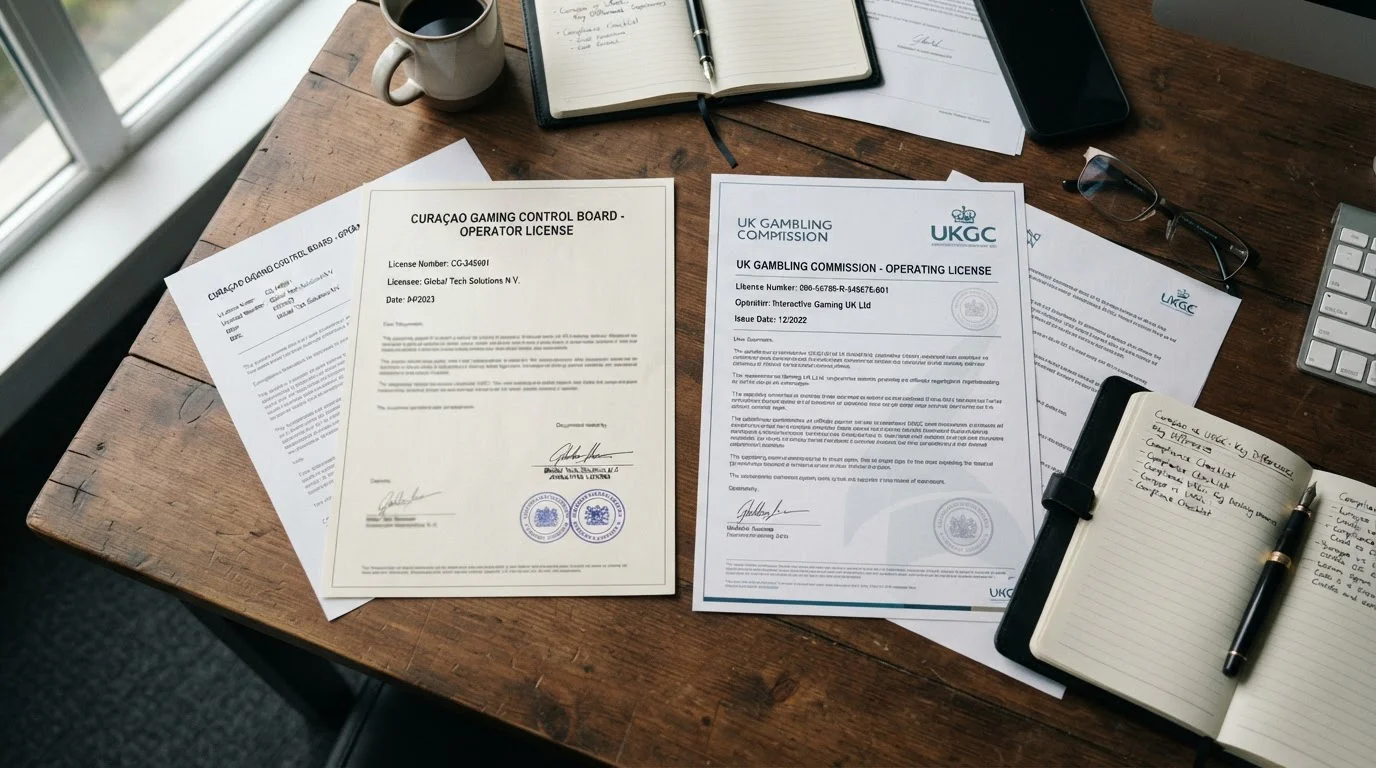
Is it legal to use an offshore casino with a credit card from the UK?
Playing is not a criminal offence for you, but the operator is breaking British law, because anyone providing gambling to people in Great Britain needs a UKGC licence. You are left with no GamStop coverage, no UK-approved dispute service, no funds-protection disclosure and a card issuer that may decline the payment anyway.
What Happens When You Try to Pay a Casino by Credit Card
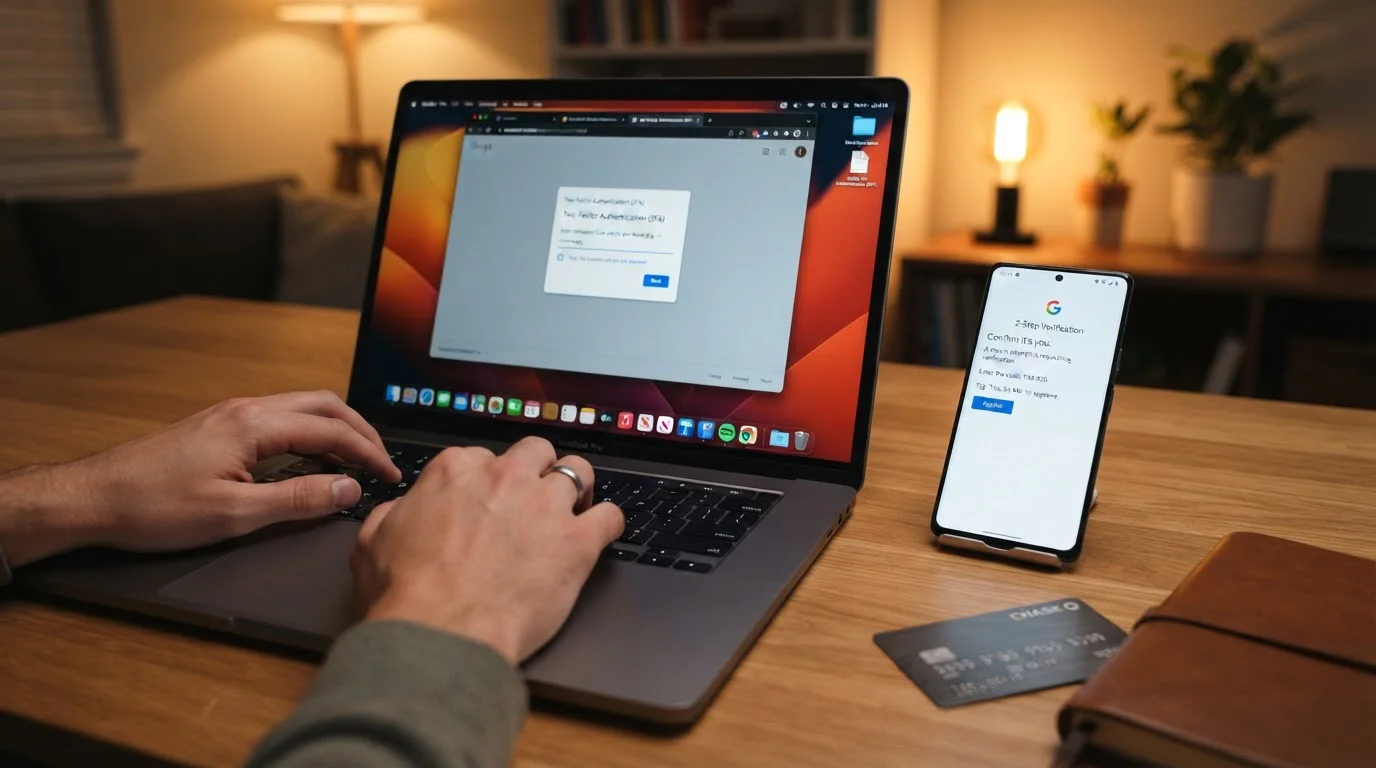
A credit card payment to any online merchant passes through several hands before it lands: the merchant’s payment processor, the card network and your card issuer. At a gambling merchant, each of those parties has reasons to say no, and the issuer usually has the final word.
The first hurdle is strong customer authentication. UK and European payment rules require card issuers to verify most online card payments with two independent factors, which in practice means 3D Secure: an approval in your banking app, a one-time code by text, or a biometric check. Visa brands this as Visa Secure and Mastercard as Identity Check. It is the issuer’s requirement, applied to online card payments generally, and it would apply whether the merchant were a supermarket or a casino. It cuts fraud and adds friction, and it has a consequence people often miss: once you’ve approved a payment through 3D Secure, the card network treats it as authorised by you. A later chargeback because you regret the deposit, or because an unlicensed site won’t pay out, is very hard to win.
The second hurdle is the issuer’s gambling policy. Because merchant code 7995 identifies the payment as gambling, issuers that decline gambling on credit simply refuse it, and the casino’s cashier shows nothing more helpful than “payment failed”. Issuers have sound commercial reasons for this beyond customer welfare: offshore gambling merchants attract high chargeback rates, frequent fraud claims and regulatory scrutiny.
The third is cross-border processing. Offshore casinos often route card payments through processors in other countries, sometimes under merchant descriptors that don’t obviously say “casino”. That can mean a foreign-currency transaction on your statement, an unfamiliar company name, and confusion if you later need to dispute the payment.
American Express is rarely seen at offshore casinos at all. Its merchant agreements are stricter and its fees higher than Visa’s or Mastercard’s, and few offshore operators bother with it.
Why was my credit card declined at an online casino?
Usually because your card issuer declines gambling on credit, recognising the payment through merchant code 7995 wherever the casino is based. A gambling block you switched on yourself, or a failed 3D Secure check, are the other common causes. Treat a decline as a protection working as designed, not a fault to engineer around.
The Real Cost of Gambling on Credit
An offshore casino may not charge anything to accept a credit card deposit. The bill arrives from your card issuer instead, and it is steep. Most issuers treat gambling transactions as cash advances rather than purchases, and that triggers three separate costs: a cash advance fee, interest from the day the transaction posts, and usually a higher interest rate than your standard purchase rate.
Cash advance fees typically run at 3% to 5% of the transaction, with a minimum of around £3 to £5. Deposit £100 and £3 to £5 has gone before a single spin. The fee isn’t refunded if you withdraw five minutes later, or if the casino reverses the payment. Ordinary purchases usually enjoy an interest-free period of up to 56 days when you clear the balance in full; cash advances get no such grace. The cash advance APR commonly sits between 25% and 30%.
Take a £100 deposit with a 3% fee (£3) and a 27.99% APR, a common cash advance rate, with interest compounding daily. After 30 days you owe roughly £2.33 in interest on top of the fee, a total cost of £5.33. After 60 days the total reaches £7.71, and after 90 days £10.14. Leave it untouched for a full year and the interest alone comes to about £32.29, so the £100 has cost £35.29 before any result at the tables is counted. That assumes no payments at all, which isn’t how most people run a card, but it shows the direction of travel.
| Timeframe | Principal | Cash Advance Fee (3%) | Interest (27.99% APR) | Total Cost | Cost as % of Deposit |
|---|---|---|---|---|---|
| Day 1 | £100 | £3.00 | £0.00 | £3.00 | 3.00% |
| 30 days | £100 | £3.00 | £2.33 | £5.33 | 5.33% |
| 60 days | £100 | £3.00 | £4.71 | £7.71 | 7.71% |
| 90 days | £100 | £3.00 | £7.14 | £10.14 | 10.14% |
| 365 days | £100 | £3.00 | £32.29 | £35.29 | 35.29% |

Foreign exchange adds another layer when an offshore site processes in euros or dollars. Your issuer converts at its own rate, and many cards add a non-sterling transaction fee of around 2.5% to 3%. The cashier shows the amount in the casino’s currency and your statement shows only the final sterling figure, so the charge is easy to overlook.
Put the pieces together for a £100 deposit: a £3 cash advance fee, £2.33 of interest over 30 days and a 2.5% foreign transaction fee (£2.50) come to roughly £7.83 in the first month. Carry the balance for 90 days and the total passes £12 (£3 + £7.14 + £2.50 = £12.64). That is roughly 8% to 13% of the deposit gone in charges, whatever happens in the game. A debit card deposit at a UKGC-licensed casino typically costs nothing.
Frequency is where the arithmetic turns ugly. Four £100 deposits in a month cost £12 in cash advance fees alone, and each one starts accruing interest immediately. Gamblers rarely deposit once; the pattern that worries regulators is the repeat top-up after a loss, and on a credit card every one of those top-ups carries its own fee and its own interest clock.
The house edge compounds the problem. Every casino game has a built-in margin, so over time the expected result of play is a loss. On a debit card that loss is capped by what’s in your account. On a credit card it becomes borrowed money that keeps growing after the session ends. A player who loses £200 on credit and pays only the minimum each month can still be servicing that loss long after the game itself has been forgotten, with interest calculated on the whole outstanding balance.
Minimum repayments deserve a word of their own. Card minimums are typically set at a small percentage of the balance plus interest, which keeps monthly payments low and the debt long-lived. Paying only the minimum on a balance built from gambling cash advances is one of the most common routes into persistent debt, and lenders are required to contact customers whose balances stay high for long periods precisely because it is so hard to escape.
There are knock-on effects too. High credit utilisation and any missed payments drag down your credit score, which affects the price of future borrowing. Mortgage and loan underwriters routinely ask for bank and card statements, and regular gambling transactions on them can count against an application. Gambling on credit rarely stays in the casino.
Does gambling on a credit card affect my credit score?
Credit files record balances, credit utilisation and missed payments rather than the merchants you paid, but gambling cash advances push utilisation up and make missed payments more likely, both of which lower your score. Mortgage lenders also review statements, and regular gambling transactions on them can count against an application.
What You Give Up Outside the UKGC System
A UKGC licence means the operator is enrolled in GamStop, must offer deposit limits and other safer gambling tools, verifies your age and identity before you can deposit (a requirement since May 2019), is subject to audits and enforcement, and must tell you how well your balance is protected if the business fails. If a dispute arises, you use the operator’s complaints process and then an approved independent adjudicator such as IBAS. The Financial Ombudsman Service does not handle disputes with gambling operators, so the ADR route is the one that matters. The system isn’t perfect, because enforcement can be slow and some penalties look light, but it exists, and it works more often than not.
An operator without a UKGC licence offers none of that to British players. Curaçao, Anjouan and other offshore jurisdictions regulate gambling to varying degrees, but their obligations run to their own licence conditions rather than to UK consumers. Malta and Gibraltar are stricter regulators, yet an operator licensed there still needs a UKGC licence to serve Great Britain, which is why the established ones hold both. A Curaçao-licensed site doesn’t have to join GamStop, doesn’t have to meet British safer gambling standards, and makes no UK-regulated promise about how player funds are held.
Curaçao did overhaul its system. Before 2024 most operators held sublicences under a handful of master licences, such as Antillephone’s 8048/JAZ, and oversight was light to the point of being nominal. The new regime, run by the Curaçao Gaming Authority under licence numbers beginning OGL/2024, brings stricter anti-money-laundering rules, some mandatory player protection measures and a formal complaints process. That is a genuine improvement on paper. It is still not a UKGC licence, and it still gives a British player no domestic route to recover a disputed balance.
Financial protection differs as well. The UKGC doesn’t require every operator to segregate player funds, but it does require each one to disclose the level of protection your balance has if the business fails: not protected, medium or high. There is no compensation scheme behind those ratings, so they are worth reading. Offshore operators usually face no comparable disclosure rule. If one folds, your balance is an unsecured debt, and you are a small creditor in a foreign insolvency with very little standing.
Bonus terms show the gap in a single number. Since 19 January 2026, wagering requirements on UKGC-licensed casino bonuses have been capped at 10x. Offshore packages commonly carry 35x or more, often with maximum-bet rules, game exclusions and win caps buried in the terms. A large headline bonus that is practically impossible to clear is a retention tool rather than a gift, and on an unlicensed site there is no regulator checking whether its terms are fair.
What happens if an offshore casino refuses to pay out?
You have no UK route to recover the money. IBAS and other UK-approved adjudicators only handle complaints against licensed operators, and a 3D Secure-approved card deposit makes a chargeback unlikely to succeed. At best you can complain to the site’s overseas regulator, if it has one, and report the operator to the Gambling Commission.
Getting Money Back Out: Why Cards Only Work One Way
Card network rules and payment processor policies stop most gambling operators paying winnings to credit cards. Reversing an earlier transaction is one thing; sending a fresh payout of winnings to a credit account is another, and processors in a high-risk sector treat it cautiously because of anti-money-laundering obligations. In practice, a credit card is a deposit-only method for gambling, even at sites that would happily take it.
Offshore casinos deal with this in different ways. Some refund up to the original deposit back to the card and send any remainder by e-wallet, bank transfer or crypto. Others skip the card entirely and route everything elsewhere. Policies vary by operator and processor, and they are not always written down clearly at the point of deposit. The result is often a winning balance stuck “pending” while the player is asked for documents, a second payment method or further play.
Pending periods are part of the same picture. Many offshore sites hold a withdrawal request for 24 to 72 hours, sometimes longer, and let you cancel it during that window. A reversible withdrawal mostly serves the operator, because money sitting in limbo is easy to play back. UKGC-licensed operators must not put unnecessary obstacles in the way of withdrawals and must treat customers fairly when they do; offshore sites face no British rule of that kind.
Some offshore casinos also insist that a deposit is wagered at least once before any withdrawal. Deposit £100, place one £5 bet, ask for the money back, and you may be told the remaining £95 must be played through first. It is a common anti-money-laundering control, but combined with a credit card it means borrowed money that has to be gambled before it can be returned, with the cash advance fee and interest already running.
All of this sits on top of the basic exposure. A balance held at an unlicensed site has no funds-protection disclosure, no UK dispute route and no regulator in Britain with power over the business. If a payment processor withdraws its service, a bank blocks the merchant, or the operating company disappears, the balance can vanish with it. The safest offshore balance is no offshore balance.
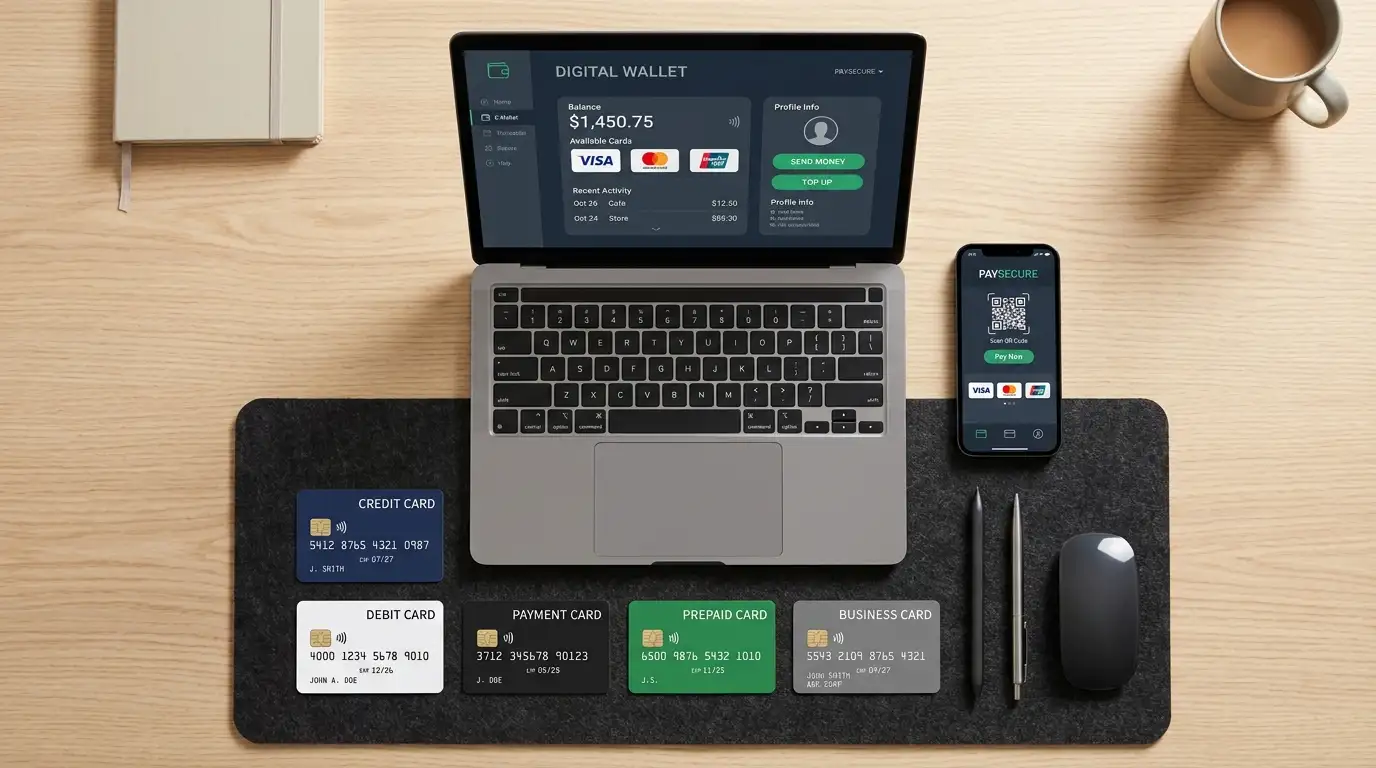
Can I withdraw winnings back to my credit card?
Almost never. Card network rules, processor policies and anti-money-laundering controls restrict gambling payouts to credit cards, which is one reason the method suits deposits far better than withdrawals. At UKGC-licensed casinos the question doesn’t arise, since debit cards, e-wallets and bank accounts all receive withdrawals, often within hours once the operator approves them.
Slots, Stake Limits and the “Non-GamStop” Label

Offshore casinos tend to advertise huge slot libraries built on familiar studios. The same slot runs on the same random number generator whether it is hosted by a licensed or an unlicensed site, although some games come in several return-to-player versions and operators choose which one to run. Either way, the games themselves are rarely the difference. The guardrails around them are.
UKGC-licensed online slots have been capped at £5 per spin for players aged 25 and over since April 2025, and at £2 per spin for 18- to 24-year-olds since May 2025. Licensed sites also enforce a minimum spin cycle of 2.5 seconds, ban autoplay and turbo features, stop celebrating losses disguised as wins, and show reality checks during play. Offshore sites apply none of that unless their own regulator demands it: stakes can run to £100 or more per spin, autoplay is routine, and loss-tracking or time-limit tools exist only if the operator chooses to offer them. Curaçao’s post-2024 licences do require some safer gambling tools, but they are lighter and less prominent than the British baseline.
Put fast, high-stakes slots together with a credit card that keeps saying yes, and every barrier the British system has built is gone at once: no stake cap, no spin-speed limit, no affordability check and no empty account to call time.
“Non-GamStop casino” is a marketing label, not a regulatory category. It simply means the site isn’t enrolled in the UK’s self-exclusion scheme because it holds no UKGC licence, so every offshore operator that takes UK credit cards falls into it. Advertising those sites as a selling point to people who have asked to be blocked from gambling targets the very group self-exclusion exists to protect. The absence of GamStop is a missing safeguard, nothing more.
Lawful Ways to Pay at UKGC-Licensed Casinos
If you want to gamble with money you can afford to lose, licensed casinos offer plenty of ways to pay that involve no borrowing, no cash advance fee and the full set of British protections. The 2020 ban was aimed at credit, not at gambling as such, and the alternatives are mostly quicker and cheaper than an offshore card deposit ever was.
Debit cards
A Visa or Mastercard debit card is the standard option, and almost every licensed casino accepts one. Deposits draw on your own current account balance, so there is no cash advance fee and no interest. Many operators can pay winnings back to a debit card too, sometimes within hours of approval through the card networks’ fast payout services, though one to three business days is still common. Debit card payments run on the card networks rather than on Faster Payments, which is why payout times vary between operators and banks.
Open Banking and pay-by-bank
Pay-by-bank services use Open Banking to move money straight from your current account to the casino. You choose your bank, approve the payment in your banking app, and the deposit lands in seconds without card details being entered anywhere. Many licensed operators offer this through providers such as Trustly, and withdrawals through the same route often arrive quickly because the operator already holds verified account details. Because the money leaves your current account directly, there is no credit involved, and any gambling block on that account still applies.
Apple Pay and Google Pay
Mobile wallets are increasingly common at licensed casinos. Apple Pay and Google Pay store a tokenised version of a card on your phone, and the casino sees the payment as coming from that underlying card. With a debit card behind the wallet, the deposit works like any debit card payment, with biometric approval on top. With a credit card behind it, the payment is refused, because the ban looks through the wallet to the card. Apple Pay and Google Pay are usually deposit-only at casinos, so withdrawals go to a bank account or debit card instead.
E-wallets
PayPal, Skrill, Neteller and MuchBetter are widely accepted at licensed sites. You fund the wallet by bank transfer or debit card, then pay the casino from it. Paying a casino from a wallet usually costs nothing, though wallets charge for some top-ups, transfers to a bank and currency conversion, so the fee schedule is worth a look. Deposits are instant; withdrawals back to the wallet typically land within 24 to 48 hours of approval, then take one to three business days to reach your bank if you move the money on. A credit card can’t be used to fund a wallet that then pays a licensed casino, because the ban covers that route as well.
Bank transfer and prepaid vouchers
Manual bank transfers work at most licensed casinos. Within the UK they usually arrive within minutes via Faster Payments, though some operators still quote longer, and withdrawals typically take one to three business days once approved. Prepaid vouchers such as Paysafecard let you deposit a fixed amount bought in a shop or online. They are deposit-only and still sit behind full age and identity checks, so they don’t make play anonymous. Their real value is as a hard spending cap: when the voucher is used up, the session ends.
Here’s how the main options compare at a UKGC-licensed casino:
| Method | Accepted at UKGC casinos | Typical deposit cost | Typical withdrawal time | Notes |
|---|---|---|---|---|
| Credit card | No (banned since April 2020) | n/a | n/a | Offshore use adds cash advance fee and interest |
| Debit card | Yes, almost everywhere | Usually free | Hours to 3 business days | Many operators pay out to debit cards quickly |
| Open Banking / pay-by-bank | Yes, at many sites | Usually free | Often same day | Approved in your banking app; no card details shared |
| Apple Pay / Google Pay | Yes, at a growing number of sites | Usually free | Not used for withdrawals | Works only with a debit card behind it |
| E-wallet (PayPal, Skrill, Neteller, MuchBetter) | Yes, at most sites | Usually free to pay a casino; wallet fees on some transfers | 24–48 hours after approval | Can’t be funded by credit card for gambling |
| Bank transfer | Yes, at most sites | Usually free | 1–3 business days | UK deposits usually fast via Faster Payments |
| Prepaid voucher (e.g. Paysafecard) | Yes, at some sites | Check voucher terms | Not available for withdrawals | Useful as a hard spending cap |
| Crypto | No | n/a | n/a | Offshore only; volatile and irreversible |
Crypto is on that list only to be ruled out. No UKGC-licensed casino accepts it, and at offshore sites it combines the risks of an unlicensed operator with price swings and transfers that can’t be reversed. A balance that rises at the tables can still shrink in sterling terms if the coin falls before you cash out, and there is no chargeback or UK complaint route when a crypto payout doesn’t arrive.
Before depositing anywhere, a few quick checks confirm you are inside the licensed system:
- The site’s footer shows a Gambling Commission account number, and the same business appears with an active licence on the Commission’s public register.
- The cashier offers no credit card option and asks for age and identity verification before your first deposit.
- Deposit limits, time-outs and self-exclusion are easy to find in your account settings, and the site displays its funds-protection level.
- The terms name an approved ADR provider, such as IBAS, for disputes the operator can’t resolve.
Can I use Apple Pay or Google Pay with a credit card at a UK casino?
No. Apple Pay and Google Pay pass through the details of the card stored behind them, and UKGC-licensed casinos must refuse any gambling payment funded by a credit card. Add a debit card to the wallet instead and the payment works normally, with fingerprint or face approval adding a useful layer of security.
Safer Gambling Tools and Support
Whatever payment method you use, the protections attached to a UKGC licence are worth switching on rather than merely knowing about. They work best when set in a calm moment, before the session that tests them.
Deposit limits come first. Every licensed casino must let you set daily, weekly or monthly caps. A decrease takes effect immediately, while an increase only applies after a cooling-off period, which is exactly the friction that helps on a bad night. Set the limit at the amount you would be comfortable losing, not the amount you hope to win with.
Time-outs and reality checks are the next layer. A time-out locks an account for a short period, from a day to several weeks. Reality checks interrupt play at intervals you choose to show how long you have been playing and how much you have spent. Account history is there too, and an honest look at a month’s net deposits is often more sobering than any warning.
GamStop is the national online self-exclusion scheme, and every UKGC-licensed online operator is enrolled. Register once and you can’t open an account or deposit at any of them for the period you choose: six months, one year or five years. Registration can take up to 24 hours to take effect, and it can’t be cancelled early. If you have excluded yourself, an offshore site’s willingness to take your card is the clearest possible sign it ignores the safeguard you chose, and that is the moment to talk to someone rather than look for an exception.
Bank gambling blocks add a second layer that works at the card level, whichever site you try. Most UK banking apps let you switch one on yourself, including Monzo, Starling and Revolut alongside the high-street banks. The block declines payments coded as gambling on that card. Several banks make removal deliberately slow; Monzo, for example, applies a 48-hour delay before a block can be switched off, so a late-night impulse can’t undo a daytime decision.
Blocking software closes the gap on devices. Tools such as Gamban and BetBlocker stop gambling sites and apps loading on your phone, tablet or computer, including offshore ones that sit outside GamStop. BetBlocker is free; Gamban is a paid service, though some support organisations can arrange access to it. Used together with GamStop and a bank block, they make an impulsive deposit much harder to complete.
Support is free and available at any hour. GamCare runs the National Gambling Helpline, plus live chat and counselling, and can refer you on to longer-term treatment. The NHS runs specialist gambling clinics across England for people with more serious problems, and Gamblers Anonymous offers peer support meetings around the country. GamAnon supports family members and friends affected by someone else’s gambling.
Debt needs its own help when credit has been involved. StepChange, National Debtline and Citizens Advice all give free, confidential debt advice, and none of them will judge how the debt arose. In England and Wales, a debt adviser can apply for Breathing Space, a scheme that pauses most creditor action and freezes most interest and charges for 60 days while a plan is worked out. Your card issuer must also treat you fairly if you are in financial difficulty, and telling it early usually leads to better options than missing payments quietly.
Here’s where to turn, depending on the problem:
| Problem | Where to go | What it offers |
|---|---|---|
| Urge to gamble or worry about your play | National Gambling Helpline (GamCare), 0808 8020 133 | Free, confidential advice 24 hours a day, plus referral to treatment |
| Want to stop access to licensed sites | GamStop | Self-exclusion from all UKGC-licensed online operators for 6 months, 1 year or 5 years |
| Want to stop gambling payments | Your bank’s gambling block | Declines gambling transactions on your cards, often with a delay before removal |
| Want to block sites on your devices | Gamban or BetBlocker | Blocking software covering licensed and offshore gambling sites |
| Credit card or other gambling debt | StepChange, National Debtline, Citizens Advice | Free debt advice and, in England and Wales, access to Breathing Space |
| Worried about a family member | GamAnon or GamCare | Support for people affected by someone else’s gambling |
Which UK banks block gambling transactions on credit cards?
Several major UK card issuers block gambling transactions on credit cards as standard, and policies change, so the simplest check is your issuer’s website or app. Many banks, including Monzo, Starling and Revolut, also let you switch on a gambling block for debit cards yourself, often with a delay before removal.
Where can I get help if gambling on credit has left me in debt?
Start with free debt advice from StepChange, National Debtline or Citizens Advice, which can negotiate with lenders and, in England and Wales, arrange Breathing Space. Tell your card issuer early, switch on a gambling block, and call the National Gambling Helpline on 0808 8020 133 for support with the gambling itself.
Casino Deposit Methods UK 2026 — Compare Payment Options
Content created by the «Bankrol Bridge» team