
No Account Casino UK 2026: Why They're Banned & Which Legal Alternatives Actually Work
 Available in GB

The pitch sounds perfect: deposit, play, withdraw. No forms, no document uploads, no waiting for account approval. Just your bank login and you’re in.
That’s how no account casinos work in Sweden and Finland. In the UK, though, they don’t work at all — at least not legally. The Gambling Commission made that impossible in 2019, and nothing has changed in 2026. True no-registration casinos cannot hold a UK licence. Any operator skipping identity checks for British customers is unlicensed, unregulated and acting unlawfully in this market.
What exists instead are UKGC-licensed operators that streamline the process: instant electronic KYC, Trustly’s bank-login sign-up, and automated database checks against credit files and the electoral roll. These deliver near-instant access within legal boundaries — not literally zero registration, but close enough that most players barely notice. Two to ten minutes from landing page to lobby, assuming your details match the records.
Here’s what no account casinos actually are, why they’re prohibited under UK rules, which technology gets closest to the experience legally, and which ten UKGC-licensed operators offer the quickest sign-up and payouts in 2026. No offshore sites with Curaçao licences and no player protection — just licensed operators where your balance is actually yours.
What Are No Account Casinos — And Why They Don’t Exist in the UK
A no account casino, in its original Scandinavian form, eliminates the registration stage entirely. You click deposit. You’re redirected to your bank. You log in with the credentials you already use for online banking. You authorise the payment. The casino receives your identity data directly from the bank — name, date of birth, address — and creates an account in the background. You land in the lobby playing. Sixty seconds, start to finish.
No username. No password. No form asking for your postcode. The bank has already verified who you are, and the casino relies on that verification. When you withdraw, the money goes back to the account it came from, and the next time you deposit, the bank login identifies you again.
That’s the model Trustly pioneered in 2015 under the name Pay N Play. It works in Sweden, Finland and Norway because those markets have national digital identity infrastructure — BankID — and regulators that permit it. Players love it. Operators save on onboarding friction. Everyone wins.
Why True No-Account Casinos Are Illegal Under UKGC Rules
The UK Gambling Commission does not permit it. Full stop.
The Gambling Act 2005 gives the Commission the power to attach conditions to operating licences, and the Licence Conditions and Codes of Practice (LCCP) bind every licensee. They require operators to verify a customer’s name, address and date of birth before accepting deposits or bets. Not after. Not during play. Before.
This is not a suggestion. Operators that skip it face enforcement action, fines and licence suspension. A site offering gambling to British customers without verification can only be doing so without a UKGC licence, which means it is operating unlawfully. Any casino advertising genuine “no account” play to UK players is either misdescribing what it does or breaking the law.
The rationale is straightforward: money-laundering prevention, age verification, responsible gambling and self-exclusion. None of those work if the operator doesn’t know who you are. The regulator isn’t interested in convenience that creates gaps for fraud and harm.
The 7 May 2019 Regulatory Change That Ended UK No-Account Possibilities
Before 7 May 2019, some wiggle room existed. Operators could let players deposit and play first, then verify identity before processing the first withdrawal. That “play now, verify later” model wasn’t quite no-account, but it delivered a similar experience. New customers landed in the lobby immediately, and the paperwork came later — only if they won something and wanted to cash out.
On 7 May 2019, the Gambling Commission closed that loophole. New LCCP provisions required age and identity verification before any gambling takes place, for all remote gambling licensees.
The change targeted underage gambling and money-laundering gaps. If a 16-year-old could deposit and play before verification, the damage was done by the time the operator caught it. If a launderer could cycle funds through an account before proving identity, the whole KYC framework collapsed. The Commission decided upfront verification was non-negotiable.
That rule remains in force in 2026, with no exceptions for Trustly or any other payment method. True no-account casinos, as Scandinavia knows them, are structurally incompatible with UK regulation.
Can you legally play at a no account casino in the UK?
Not at a licensed one. True no-account casinos, where you deposit and play without registering, cannot operate under a UK Gambling Commission licence, because identity verification before the first deposit has been mandatory since 7 May 2019. Any site offering genuine no-account play to UK customers is unlicensed or misrepresenting itself.
Why did the UK ban true no-account casinos?
The UK Gambling Commission banned true no-account casinos to close gaps in anti-money laundering enforcement, underage gambling prevention, and self-exclusion protections. Verifying identity before play ensures operators can block users on GamStop, enforce age checks before harm occurs, and meet regulatory AML requirements that depend on knowing who the customer is upfront.
How Trustly Pay N Play Delivers Near-Instant Access — Legally

Trustly is a Swedish fintech company that built its business on direct bank transfers. You pay merchants through your existing online banking login: no card details, no separate e-wallet, no new credentials to remember. Just your bank’s own interface, the same one you use to check your balance or pay bills.
Pay N Play is Trustly’s casino-onboarding product. It bundles payment and identity data into a single transaction. Where regulators permit it, the result is genuinely registration-free play. In the UK, where they don’t, it still streamlines sign-up more than any alternative.
How Pay N Play Works Technically (Step-by-Step)
You land on a Trustly-enabled casino and click “deposit” or “play now.” The site redirects you to Trustly’s payment interface, where you select your bank — Barclays, HSBC, Monzo, Nationwide, whatever you use. You’re redirected again, this time to your bank’s own login page. Not a replica. Your actual bank, serving its own login screen from its own domain.
You log in, complete two-factor authentication if your bank requires it, and see a pre-filled payment authorisation: the casino’s name and the deposit amount. You confirm. Your bank releases two things via Trustly: the payment itself, and identity data — your name, date of birth and address — drawn from the verified records your bank holds.
Trustly forwards both to the casino. The payment lands in the casino’s merchant account; the identity data lands in its compliance system. What happens next depends on the jurisdiction.
In Sweden, the casino creates an account with no further input from you, and you’re redirected straight to the lobby. Literally zero registration.
In the UK, one additional step appears. The casino runs the identity data through an automated KYC check, usually querying credit reference agencies such as Experian or Equifax and the electoral roll. If the data matches, your account is approved and you land in the lobby. If it doesn’t — perhaps you moved recently and the address is stale — you’re flagged for manual document review, which can take anywhere from a few hours to a couple of days.
Assuming your details match, the whole process takes two to five minutes. Longer than Sweden’s sixty seconds, but much faster than typing out a registration form and waiting for a compliance officer to review your driving licence.
What Happens in the UK vs Scandinavia (The Registration Difference)
The core technical flow is identical; the difference is what the casino must do with the data. A Scandinavian operator can rely on the bank’s verification alone. A UK operator has to run its own check against independent records before you can play, and if the match isn’t clean, the friction multiplies: passport photo page, recent utility bill, proof of address — exactly the paperwork no-account casinos were supposed to eliminate.
Trustly still accelerates things compared with a traditional sign-up. Bank data pre-fills the registration form, so you’re not typing your address by hand, and the automated check returns a result in seconds. But the promise of zero registration can’t be kept in the UK. The regulation won’t allow it.
It’s also worth separating two things that often get blurred. Many UK casinos — Betway, Casumo and William Hill among them — accept Trustly simply as a way to pay by bank. Far fewer use Trustly’s bank-login flow to pre-fill registration itself. Among the fast-registration operators here, SpinYoo and DAZN Bet are the ones that integrate Trustly into sign-up.
How does Trustly Pay N Play work for UK players?
It redirects you to your bank login, where you authorise a deposit and your bank shares verified identity data with the casino via Trustly. The casino then runs an automated KYC check against credit reference files and the electoral roll. A clean match gets you playing in two to five minutes.
What’s the difference between Pay N Play in Scandinavia and the UK?
In Scandinavia, regulators let casinos create accounts from bank-verified identity data with no further checks, so play starts within about sixty seconds. In the UK, the operator must run its own verification against independent records even when the data comes from a bank, which adds a few minutes and ends the instant-access promise.
The 10 Fastest UKGC-Licensed Alternatives — Operator Breakdown

True no-account play is off the table. These ten are what’s left: licensed operators that push registration speed as far as UK law allows, with Trustly integration where available, automated eKYC that queries databases in seconds, and e-wallet withdrawals measured in hours rather than days. None will get you playing in sixty seconds, but all will get you in and out faster than the industry average.
| Operator | UKGC Licensee (Group) | Withdrawal Speed | Min Deposit | Distinguishing Feature |
|---|---|---|---|---|
| SpinYoo | Mirage Corporation N.V. | PayPal typically under 3 hours | £10 | Trustly bank-login sign-up |
| DAZN Bet | DZBT Ltd (DAZN Group) | Trustly up to 48 hours | £10 | Sports-casino hybrid, Trustly bank-login sign-up |
| MrQ | Lindar Media Ltd | E-wallet 2–24 hours | £10 | No-wagering bonuses, 30-second sign-up form |
| Betfair | PPB Entertainment Ltd (Flutter) | E-wallet same-day | £5 | 50 free spins with no deposit |
| Sky Vegas | Sky Betting & Gaming (Flutter) | E-wallet 2–24 hours | £5 | No-deposit offers, no-wagering spins |
| 888 Casino | 888 UK Ltd (evoke plc) | E-wallet 2–24 hours | £10 | Online since 1997, established eKYC |
| Betway | Betway Ltd (Super Group) | Trustly under 1 hour, PayPal under 4 hours | £5 | £5 minimum across all methods |
| bet365 | Hillside (New Media) Ltd | E-wallet 2–6 hours | £10 | UK market leader |
| William Hill | WHG (International) Ltd (evoke plc) | E-wallet within 24 hours | £10 | Heritage brand since 1934 |
| Casumo | Casumo Services Ltd | PayPal often under 2 hours | £10 | Among the quickest PayPal payouts |
SpinYoo — Trustly Casino with Sub-3-Hour Withdrawals
SpinYoo launched in 2021 and holds both a UKGC licence and a Malta Gaming Authority licence. It’s one of the few UK casinos that builds Trustly’s bank login into sign-up, so if you fund that way your registration fields pre-populate and age verification completes before the first transaction clears. The platform carries around 4,000 games from major studios. PayPal withdrawals typically arrive in under three hours. Paysafecard deposits are accepted, but withdrawals route through bank transfer, not back to the voucher.
The welcome structure ties free spins to deposit size: one Yoo Spin per pound deposited, up to 100 spins on Big Bass Bonanza. Some promotions carry no wagering, which is still rare enough in the UK market to be worth flagging. The five-tier Yoo Club loyalty programme adds monthly cashback, faster withdrawal processing and exclusive offers as you climb.
SpinYoo’s real strength is the exit as much as the entry. A “frictionless” casino that takes five days to release your balance isn’t frictionless, and SpinYoo’s payout times are consistently quick.
DAZN Bet — Sports-Casino Hybrid with 48-Hour Trustly Payouts
DAZN Bet is the other Trustly sign-up option here. It’s operated by DZBT Limited within the DAZN Group — the sports streaming business — and launched in the UK earlier this decade. The platform splits between sportsbook and casino, with around 1,500 casino games alongside live betting markets, and Trustly deposits come with the mandatory age verification before the first deposit.
Trustly withdrawals can take up to 48 hours, slower than the quickest e-wallet routes, while e-wallet withdrawals sit in the usual 2-to-24-hour window. The welcome offer leans towards sports — bet £10, get £20 in free bets — with a secondary casino offer of 20 free spins on Big Bass slots for a £10 deposit. Registration completes in under ten minutes for users whose details match electoral roll records cleanly.
DAZN Bet suits cross-vertical users who came for the sports odds and stayed for the slots. The Trustly sign-up delivers the near-instant deposit experience the original no-account pitch promised, even if withdrawals revert to standard processing windows.
MrQ — No-Wagering Bonuses and 30-Second Registration
MrQ is run by Lindar Media Limited, an independent UKGC-licensed operator. The platform carries around 1,000 games with a slots-and-bingo focus and made its name on no-wagering promotions. Most UK casinos attach rollover requirements to free-spin winnings; MrQ drops them. Win £10 from bonus spins, withdraw £10. Even with wagering capped at 10x since 19 January 2026, that’s still a differentiator.
The sign-up form itself takes around 30 seconds: email and password, then name and date of birth, then address. Automated KYC runs in the background while you fill it in, so approval usually lands within minutes if your details match credit reference data. The welcome offer grants 100 free spins on Big Bass Splash for deposits of £10 or more, with no wagering on winnings.
MrQ is mobile-first, and its “instant withdrawal” marketing translates in practice to 2 to 24 hours for e-wallets. Payment methods include PayPal, Visa, Mastercard, Apple Pay and Easy Bank Transfer. For players allergic to rollover clauses, MrQ is the cleanest option here.
Betfair — Instant Verification with 50 Free Spins No Deposit
Betfair is run by PPB Entertainment Limited, part of Flutter Entertainment. The brand has been in the UK market since 2000, originally as a betting-exchange pioneer, with the casino added later. The exchange model — betting against other punters rather than the house — still sets the sportsbook apart. The casino side is more conventional, with around 1,000 slots and live dealer tables.
Betfair’s welcome offer is one of the few genuine no-deposit bonuses left in the UK: 50 free spins with no deposit required, although winnings carry wagering. Many competitors dress up deposit-linked offers as “no deposit” and hope you don’t read the small print. Verification happens at registration through automated database checks, and if your name, address and date of birth match the credit bureaus’ records, approval is near-instant.
E-wallet payouts clear the same day in most cases, and Visa, Mastercard, PayPal, Skrill, Neteller and bank transfer are all accepted. Flutter ownership — the same group behind Paddy Power and Sky Bet — signals financial depth. For new players testing the water, a no-deposit entry removes the upfront risk.
Sky Vegas — Genuine No-Deposit Offers and No-Wagering Spins
Sky Vegas is a Sky Betting & Gaming brand within Flutter Entertainment. Unlike most multi-vertical platforms, it’s casino-focused rather than a sportsbook with slots bolted on, so the game library gets more attention.
Sky Vegas is one of the few UK operators that regularly runs genuine no-deposit offers — not “deposit £10, get spins back” dressed up in misleading copy, but bundles that cost nothing to claim. Paddy Power and Betfair do the same. Everywhere else, read the terms twice.
Some promotions come with no-wagering free spins, and Sky Vegas carries some exclusive slots you won’t find elsewhere. Payment methods include Visa, Mastercard, PayPal and Apple Pay. Registration follows the standard UKGC route — name, address, date of birth, automated database check — and e-wallet withdrawals clear within 2 to 24 hours. The Sky name carries weight with players who’ve never gambled online before.
888 Casino — Online Since 1997, Established eKYC Infrastructure
888 Casino launched in 1997, making it the oldest online casino here and one of the longest-established in the world. It’s operated by 888 UK Limited, which holds a UKGC licence (account number 39028), and the parent company, formerly 888 Holdings, now trades as evoke plc. The game library spans around 2,000 titles from NetEnt, Evolution and Pragmatic Play, plus in-house exclusives.
Registration asks for an email address or mobile number, then your name, date of birth and address, and the site makes clear that these will be checked for security, safer-gambling and anti-money-laundering purposes. Its eKYC set-up has been running longer than most competitors have existed, so automated checks complete quickly for users whose data matches credit-bureau records. Payment methods cover Visa, Mastercard, PayPal, Neteller, Skrill and bank transfer, with e-wallet withdrawals in 2 to 24 hours.
Nearly three decades of operation translates into permanence. The regulatory record isn’t spotless — 888 UK paid a £9.4 million penalty in 2022 over safer-gambling and anti-money-laundering failings — but its compliance systems have had a long time to mature. For players who value longevity over the latest gamification gimmick, 888 is a sensible pick.
Betway — £5 Minimum Deposit Across All Methods, Trustly-Compatible
Betway Limited, a Super Group subsidiary established in 2006, holds UKGC account number 39372 alongside a Malta Gaming Authority licence. It’s a multi-vertical platform covering sports, casino and esports, with around 1,500 casino games. The standout for budget-conscious players is a £5 minimum deposit across all payment methods, where most competitors set £10.
Payment methods include Visa, Mastercard, Apple Pay, PayPal, Trustly and Instant Bank Transfer. Trustly withdrawals can land in under an hour, and PayPal typically clears in under four hours, while bank transfer and debit card take one to two banking days. Withdrawing the same way you deposited gives the fastest cycle. The low minimum matters for players trying a new platform or managing a tight bankroll.
Registration is UKGC-standard: name, date of birth, address and automated KYC. Trustly here works as a pay-by-bank deposit and withdrawal method rather than a pre-filled sign-up, so you’ll still complete the short form first.
bet365 — Market Leader with 2–6 Hour E-Wallet Withdrawals
bet365 is the largest online bookmaker in the UK by market share. It’s operated by Hillside (New Media) Limited, founded in 2000, privately owned by the Coates family and headquartered in Stoke-on-Trent, and it holds licences in many jurisdictions. The platform spans sports, casino, poker, bingo and games, with more than 1,000 casino titles.
For most accounts whose name, address and date of birth match credit-bureau records, verification completes within minutes at sign-up. If automated checks flag something, you upload documents — passport, driving licence, proof of address — through the My Account section. E-wallet withdrawals typically take 2 to 6 hours, and payment methods include Visa, Mastercard, PayPal, Apple Pay and bank transfer.
The name is synonymous with online betting in the UK, and its verification systems handle millions of customers, so clean accounts clear KYC quickly. For first-time online players wary of unfamiliar brands, bet365 is an obvious place to start.
William Hill — 90-Year Heritage Brand, Trustly Payment Integration
William Hill traces its lineage to 1934 as a bookmaker, predating the internet by decades, and its online operation launched in 1998. It’s run by WHG (International) Limited under UKGC account number 39225, and since 2022 it has belonged to the group now called evoke plc. The platform covers sports, casino, Vegas, bingo and poker, with more than 1,000 casino titles.
Payment methods include Visa, Mastercard, PayPal and Trustly, the latter as a pay-by-bank option rather than a pre-filled sign-up. The compliance record has blemishes: in 2023 the William Hill group agreed to pay a record £19.2 million over safer-gambling and anti-money-laundering failures. Its high-street betting shops give the brand an offline presence few online operators can match.
The welcome offer has typically been sports-led, built around free bets for a qualifying stake. With roughly ninety years of history, William Hill predates legal online gambling by seven decades. For players who grew up with its shopfronts, the online platform is a known quantity — though heritage signals permanence, not perfect conduct.
Casumo — Among the Fastest Withdrawals (Under 2 Hours)
Casumo Services Limited, founded in 2012 and headquartered in Malta, holds UKGC account number 39483 alongside a Malta Gaming Authority licence; its compliance history is on the Commission’s public register. The game library runs to several thousand titles, with the exact count shifting as provider deals change, and gamification sets it apart: adventure mechanics, progress tracking and a cartoon mascot.
Withdrawal speed is the headline. PayPal payouts typically clear within 24 hours and often in under two hours once approved, among the quickest of any operator here. Registration takes around two minutes. The welcome offer for 2026 is a 50% bonus up to £100 on the first deposit, with 10x wagering.
Payment methods include PayPal, Visa, Mastercard, Trustly and other e-wallets, and debit card payouts take 1 to 3 working days. The gamified lobby appeals to players who want more than a static list of games. For anyone prioritising quick PayPal withdrawals, Casumo is hard to beat.
How Fast Is “Instant” Verification Really? — The eKYC Reality

Marketing copy throws “instant” around like confetti. Instant verification. Instant withdrawals. Instant access. Reality is slower.
Electronic KYC — eKYC — means automated identity checks against third-party databases. Instead of a compliance officer reviewing your passport photo, a system queries a credit reference agency with your name, address and date of birth, and gets back a match-confidence score. High confidence: account approved. Low confidence or no match: flagged for manual review.
Fast, yes. Instant, no. Here’s how the routes compare:
| Verification route | Typical time to the lobby | When it applies |
|---|---|---|
| Scandinavian Pay N Play (BankID) | About 60 seconds | Sweden, Finland and Norway only; not permitted in the UK |
| Trustly Pay N Play with UK eKYC | 2–5 minutes | Clean data match at a Trustly-enabled UKGC casino |
| Standard form plus automated eKYC | 2–10 minutes | Most UKGC casinos, details matching credit and electoral roll records |
| Manual document review | 24–72 hours | Data mismatch, recent move, name variations or high-value deposits |
Automated Database Checks (2–10 Minutes)
The check itself completes in seconds on the backend: the casino submits your details, the credit bureau queries its records, and a response comes back with a match result and any red flags.
The perceived delay comes from the registration flow around it. You fill in a form, submit, the system runs the check, and another page tells you whether you’re approved or need to supply documents. From your side, that’s two to ten minutes, depending on how fast you type and how responsive the site is.
If your details match cleanly — you’re on the electoral roll, your address is current, your name is spelled identically on your bank records and credit file — approval feels instant. If they don’t, the delay multiplies. Perhaps you moved recently and the electoral roll hasn’t caught up, your bank uses your middle name but your credit file doesn’t, or there’s a typo. The automated system can’t resolve ambiguity, so it hands you to manual review.
When Manual Document Review Gets Triggered
Manual review means uploading documents: passport photo page or driving licence, plus a recent utility bill or bank statement as proof of address. A compliance officer looks at them, usually within 24 to 72 hours. If something’s wrong — an expired document, a mismatched address, a blurry photo — you’re asked to resubmit.
Common triggers for manual review:
- Data mismatch between your registration form and credit bureau records
- Recent address change not yet reflected in credit files or the electoral roll
- Name variations (middle names present on one record, absent on another)
- High-value deposits that cross the operator’s risk threshold
- Flagged payment methods (prepaid cards, certain e-wallets)
- Location red flags (IP address doesn’t match stated address)
Manual review isn’t failure; it’s caution. Operators are legally obliged to verify identity, and if automated checks can’t do it confidently, a person steps in. From the player’s side, though, it’s friction — the “instant” promise collapses into a two-day wait. Typing your details exactly as they appear on your bank account is the simplest way to avoid it.
Digital ID and What It Could Change
The UK government runs a trust framework that certifies digital identity providers to set confidence levels, and certified digital age and identity checks are starting to be accepted in more everyday settings, such as age-restricted sales in shops and pubs. Online casinos already rely on electronic checks, but reusable, certified digital IDs could cut the number of players pushed into manual document review.
What it won’t change is the principle. Verification still happens before your first deposit; a certified digital ID would simply be another way of proving who you are, faster for you and with less manual work for the operator. It’s not a route back to true no-account play — the regulator still needs to know who you are before you gamble.
How long does casino verification take at fast-registration sites?
At fast-registration casinos using automated eKYC, verification completes in 2 to 10 minutes if your name, address, and date of birth match credit bureau and electoral roll records. Manual document review is triggered by data mismatches or high-value deposits and takes 24 to 72 hours, requiring passport or driving licence uploads and proof of address.
Do UK casinos with instant verification still require ID documents?
Usually not. These casinos run automated checks against credit reference files and the electoral roll first; if your details match cleanly, approval takes minutes with no upload. Documents are requested only when the checks flag mismatches, a recent address change, or high-value activity crossing the operator’s risk threshold.
Offshore “No-KYC” Casinos — What UK Players Risk

Curaçao-licensed crypto casinos advertise “no KYC” as a selling point. Deposit Bitcoin, play slots, withdraw to your wallet: no passport upload, no proof of address, no friction.
They’re not lying about the lack of verification. They’re lying by omission about everything else.
Any operator serving customers in Great Britain needs a UKGC licence — including one licensed in Malta or Curaçao. Under the Gambling Act 2005, offering gambling to UK consumers without one is an offence, and the offence is the operator’s. Players aren’t prosecuted, but that’s where the good news ends: an unlicensed site gives you none of the protections UK regulation provides.
There’s no funds-protection disclosure, so your balance may sit in the same account the operator uses for running costs; if the company goes under, your money can go with it. There’s no independent dispute resolution either. UKGC licensees must give you access to an approved ADR service such as IBAS, which investigates complaints the operator won’t resolve. Offshore casinos have no such obligation, and the overseas regulators behind them rarely step in.
Payments are fragile too. Many UK banks decline card payments to unlicensed gambling sites, which is why offshore operators push cryptocurrency. But crypto withdrawals depend entirely on the operator choosing to process them, and “no KYC” sites have a habit of demanding documents after all when a player tries to withdraw a large balance — then finding reasons to reject them.
The Gambling Commission works with search engines, payment providers and web hosts to disrupt unlicensed sites that target UK customers, and that pressure keeps rising. The tighter enforcement gets, the more likely an offshore site is to vanish, change domain or freeze withdrawals — not because you face legal consequences, but because your money is in a system with no legal recourse.
These sites also accept players who have self-excluded via GamStop. If that’s you, they are the wrong answer: the exclusion exists because you decided you needed a break, and GamCare’s free helpline is the better call.
Is it safe to use offshore no-KYC casinos that accept UK players?
No. Offshore no-KYC casinos serving UK players without a UKGC licence are operating unlawfully, offer no UK funds-protection disclosure or regulated dispute resolution, and face no real obligation to process withdrawals. Banks increasingly block payments to them, and if a balance is confiscated or a withdrawal refused, players have no recourse.
Bonuses and Promotions at Fast-Registration Casinos
Fast registration doesn’t guarantee generous bonuses. Some of the quickest sign-ups here — MrQ, Betfair, Sky Vegas — do offer strong welcome deals: no-wagering spins, genuine no-deposit offers and transparent terms. Others put speed first and offer standard deposit matches with rollover up to the legal 10x maximum.
The no-wagering angle matters more than it seems. Most UK casino bonuses still carry playthrough requirements — capped at 10x since 19 January 2026, down from the 35x that was common before. Win £100 from free spins with 10x wagering and you need to place £1,000 in bets before that £100 becomes withdrawable. Lose it along the way, as most players do, and the “bonus” was worth nothing.
No-wagering bonuses skip that: win £10 from free spins, withdraw £10. MrQ built its brand on that model, and Sky Vegas offers no-wagering spins on some promotions. Betfair’s 50 free spins need no deposit, though their winnings do carry wagering. Even so, a no-deposit bonus with wagering beats a deposit bonus with wagering, because you risked nothing upfront.
Deposit bonuses at fast-registration casinos follow industry norms: a 50% to 100% match on the first deposit, up to £50 or £100, wagering of up to 10x, and expiry windows of 7 to 30 days. Game weighting varies — slots usually count 100% towards rollover, table games 10% or not at all. Read the terms; the detail lives in the contribution percentages and expiry clauses.
Loyalty programmes exist at most platforms here — Casumo’s adventure mechanics, SpinYoo’s five-tier Yoo Club, bet365’s tiered points. They deliver cashback, faster withdrawals and exclusive offers, but the value depends on volume, and none of it makes up for slow payouts or a weak game selection. Bonuses are icing; the cake is the core experience.
Mobile Access — Apps and Browser Play
Every operator here supports mobile, some through dedicated iOS and Android apps and some through responsive sites that adapt to phone screens. The distinction barely matters in 2026: browser-based mobile casinos deliver the same functionality as apps without a download, and many UK players never install an app at all.
Apps offer faster load times, push notifications and biometric login via Face ID or Touch ID. Browsers need no install, take no storage and work across devices. Pick based on preference; both work.
UKGC-licensed operators must provide the same safer-gambling tools on mobile as on desktop: deposit limits, reality checks, time-outs and self-exclusion. If a casino’s mobile experience leaves them out, it’s breaching its licence conditions, and you can report it to the Gambling Commission.
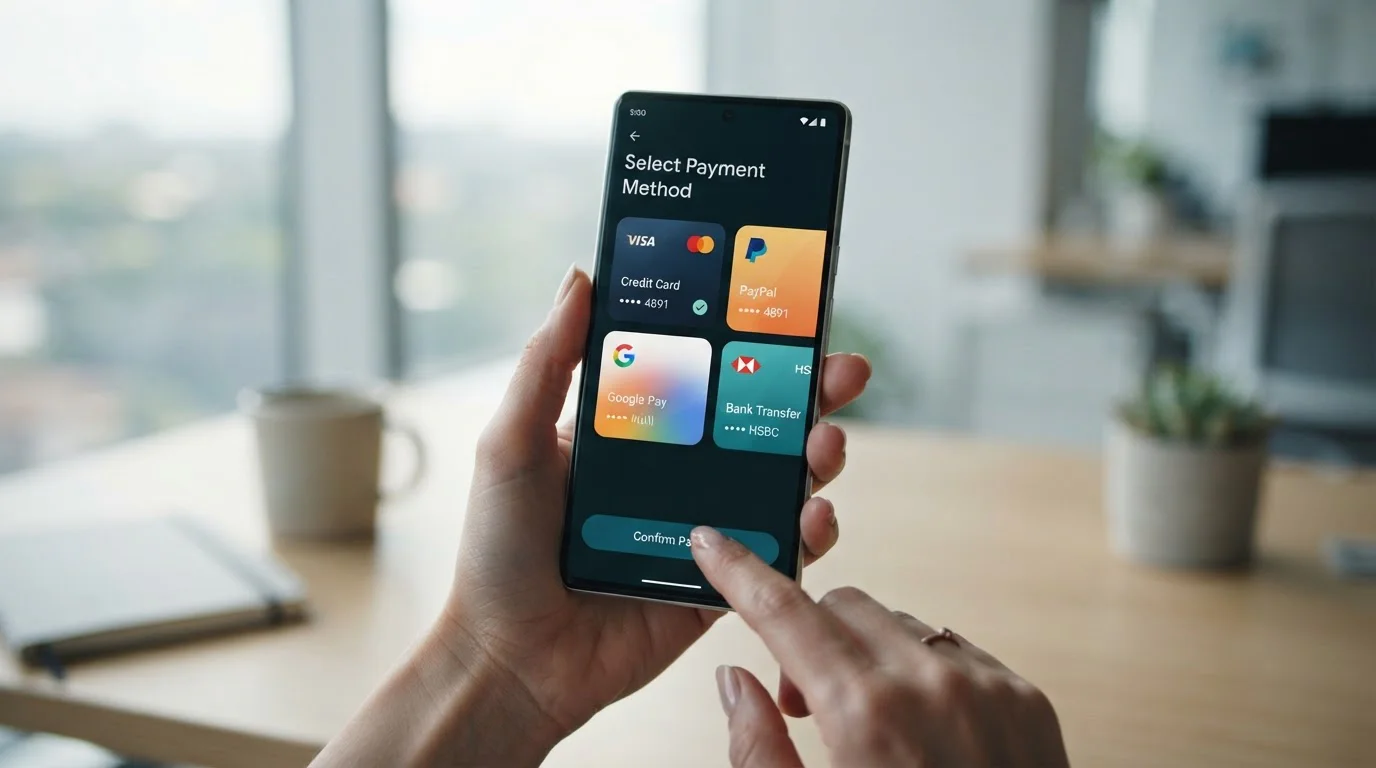
Registration is just as fast on mobile, because the same automated checks run whether you fill the form on a phone or a laptop. Trustly works the same way too — you’re handed to your bank’s app, you authenticate, and you’re returned to the casino. Withdrawal times don’t depend on the device.
Game libraries occasionally differ. A few operators serve trimmed-down mobile catalogues, usually because older titles don’t render well on small screens. If a specific game matters to you, check it’s available on mobile before depositing.
Payment Methods That Speed Up Access
Trustly’s bank-login sign-up delivers the fastest deposit-to-lobby cycle among UK-legal payment methods, but only a few operators, such as SpinYoo and DAZN Bet, use it that way. Bank login, identity handoff, automated KYC: two to five minutes if your data matches cleanly.
PayPal ranks next. Most major UKGC-licensed casinos accept it, deposits are instant, and withdrawals range from under two hours at the quickest operators, such as Casumo, to 24 hours. It’s slower than Trustly on the sign-up leg, but far more widely available.
Apple Pay and Google Pay offer instant deposits and are convenient for mobile users with cards already stored on their phone. Withdrawals go back to the underlying debit card, so allow 1 to 3 banking days.
Debit cards — Visa and Mastercard — are universal but slow on the way out. Deposits are instant; withdrawals take 1 to 3 banking days, sometimes longer if the operator’s processor batches requests. Visa Fast Funds shortens that at participating operators, but availability is patchy. If speed matters, deposit and withdraw by PayPal.
Open banking and pay-by-bank deposits are instant, and withdrawals by the same route can arrive within hours where the casino supports them. Cryptocurrency isn’t part of the picture: UKGC-licensed operators don’t offer crypto deposits or withdrawals.
Paysafecard is prepaid, so deposits are instant but withdrawals must go elsewhere — SpinYoo, for instance, pays Paysafecard depositors by bank transfer. That makes it useful for funding with a fixed budget, but not for cashing out.
What payment methods offer the quickest casino account setup in the UK?
Trustly’s bank-login sign-up is quickest at the casinos that offer it, such as SpinYoo and DAZN Bet, because bank-verified identity data pre-fills registration and speeds automated KYC to 2–5 minutes. Elsewhere, PayPal is the fastest widely available option, with instant deposits and e-wallet withdrawals typically within 24 hours.
Can I withdraw instantly from a no account casino?
No UK casino offers truly instant withdrawals. The quickest operators here, such as Casumo, can clear PayPal payouts in under two hours once approved; most e-wallet withdrawals arrive within 2 to 24 hours, and debit cards take 1 to 3 banking days. “Instant” in marketing usually means approval speed, not arrival.
Safer Gambling Tools to Set Up at Sign-Up
The best time to set limits is during registration, when you’re thinking clearly and haven’t yet deposited. Every UKGC-licensed casino must let you set daily, weekly or monthly deposit limits. Lowering a limit takes effect immediately; raising one only applies after a cooling-off period, usually 24 hours. Reality checks — pop-up reminders showing how long you’ve played and what you’ve spent — and time-outs from a day to several weeks are also standard.
Fast sign-up and instant deposits cut both ways. The same speed that makes a Trustly or PayPal deposit convenient also removes the natural pause in which you might reconsider. A limit set in advance does that job for you, and it’s one of the things licensed sites offer that “no KYC” sites don’t.
If you need a complete break, GamStop lets you exclude yourself from every UKGC-licensed gambling site for six months, one year or five years. Registration is free and can take up to 24 hours to take effect. Pair it with your bank’s gambling block — most UK banks and app-based accounts let you switch one on in seconds, and many add a delay before it can be turned off — so that card payments to unlicensed sites are stopped too.
Free, confidential support is available from the National Gambling Helpline, run by GamCare, on 0808 8020 133, 24 hours a day. BeGambleAware and Gamblers Anonymous offer further help, and UKGC-licensed operators must signpost these services on their sites.
Before signing up anywhere, it’s worth a one-minute check on the Gambling Commission’s public register. Search the operator’s name or domain, confirm the licence is active, and glance at any published enforcement action. Combined with deposit limits and GamStop, that’s the legal version of “no account” convenience: quick to join, quick to pay out, and protected when it matters.
Casino Deposit Methods UK 2026 — Compare Payment Options
Content created by the «Bankrol Bridge» team